DIY Bath Salts: 12 Easy Recipes and Blends
Quick summary
- Stirring the fragrance into a spoonful of oil first is what stops it sitting in one fierce patch.
- Whole petals look lovely in the jar and then sit in the drain trap, so keep them in a bag.
- Nothing here draws anything out of anyone, and the honest reason to make it is that a warm soak is pleasant.
Quick answer: Mix two cups of Epsom salt with half a cup of coarse sea salt and a quarter cup of baking soda, then stir in five to ten drops of essential oil that you have first blended into a teaspoon of carrier oil. Spoon it into a jar, label it, and it is finished. There is no heating, no curing and no waiting, which makes it the easiest handmade gift on this site.
Have you ever meant to make something small for someone and run out of time because every project needed a week to set? You are not alone. This site has seventeen articles about candles and one about soap, and both of those ask you to melt something and then wait. This one takes fifteen minutes from start to lid.
These twelve blends all use the same base. Each lists what goes in, who it suits, and the detail that decides whether it smells the way you intended.
What You Need
Four things, and the first two do most of the work.
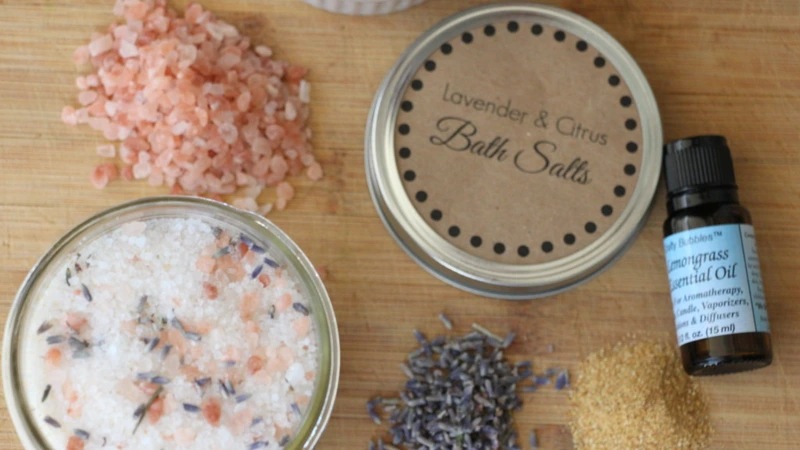
- Epsom salt. The bulk of the mixture and the cheapest part. It dissolves quickly and has no scent of its own, which is what you want underneath everything else.
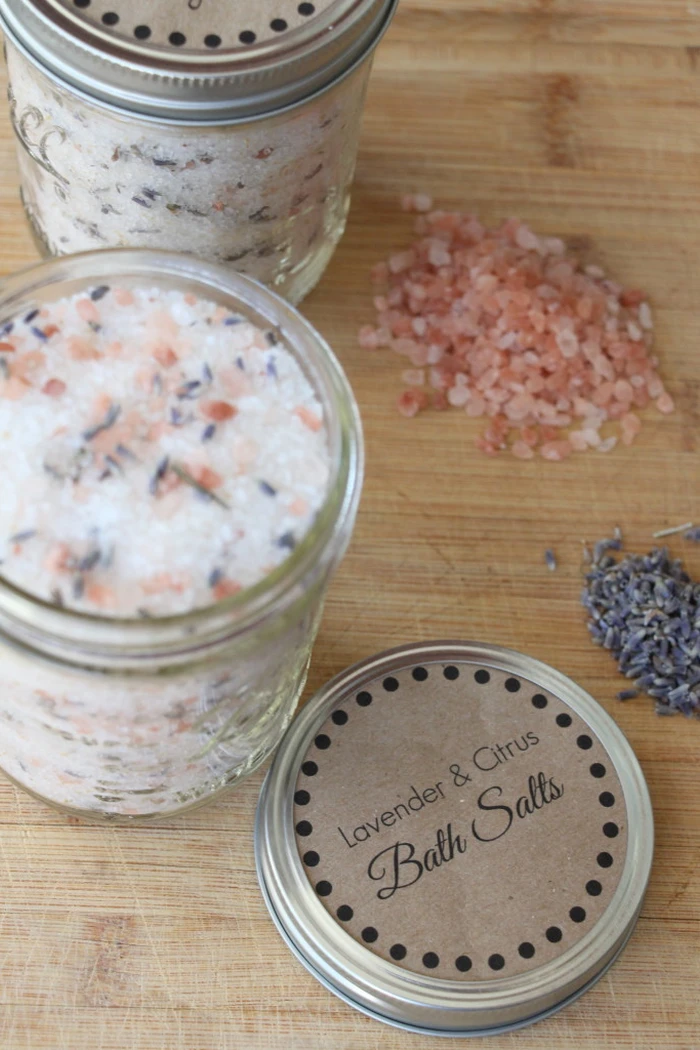
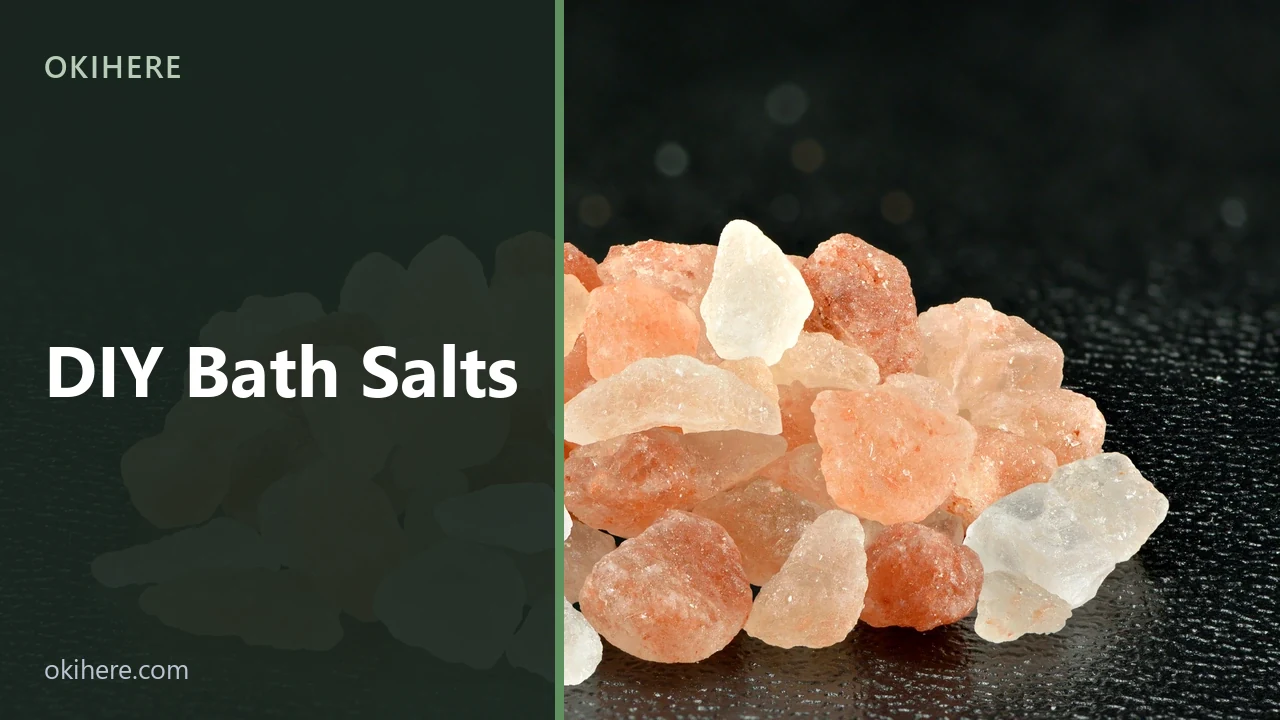
- Coarse sea salt or pink Himalayan salt. Added for texture and colour rather than for anything it does in the water. Buy it coarse rather than fine: large grains stay visible against the Epsom salt, while fine salt disappears into it and the finished jar ends up one flat colour. This is the only decision here that changes how the gift looks.
- Baking soda. A quarter cup per batch. It softens how the water feels against skin and keeps the mixture loose.
- Essential oil and a carrier oil. Sweet almond, jojoba or fractionated coconut all work as the carrier. Buy one small bottle of fragrance to start, because scents are the expensive part and tastes differ wildly.
Jars matter more than they should. A plain screw-top jar with a kraft label looks handmade; a mismatched food jar with the sauce label half scraped off looks like leftovers. The wider question of stocking a craft cupboard is in the best craft supplies for beginners.
The Base Recipe
Every blend below is this, with the scent changed.
- Measure the dry parts. Two cups Epsom salt, half a cup coarse salt, a quarter cup baking soda. Stir them together in a dry bowl.
- Blend the scent into oil first. Put a teaspoon of carrier oil in a cup, add the drops of essential oil, and stir. Skipping this is the single most common mistake, and the reason is in the next section.
- Combine. Drizzle the oil mixture over the salts and stir for a full minute, longer than feels necessary, until no damp clumps remain.
- Jar and rest. Spoon it in, seal, and leave it a day before using or giving. The scent settles into the salt and evens out.
- Label it. Name and date. A blend you cannot identify in three months is a jar nobody uses.
12 Blends to Try
1. Lavender and Citrus
Scent: 6 drops lavender, 3 drops sweet orange. The standard, and the one to make first if you are making a batch for several people.
2. Eucalyptus and Peppermint
Scent: 5 drops eucalyptus, 2 drops peppermint. Sharp and cold-weather. Keep the peppermint low, because it reads as much stronger in hot water than it does in the bowl.
3. Rose and Vanilla
Scent: 4 drops rose absolute, 4 drops vanilla. The most expensive blend here by some distance, which is why it suits a single gift rather than a batch.
4. Chamomile and Oat
Add: two tablespoons of finely ground oats. Scent: 6 drops chamomile. The gentlest of the twelve, and the one to pick if you do not know how someone’s skin behaves. Grind the oats properly in a blender rather than chopping them, because anything coarser than flour floats rather than dissolving.
5. Grapefruit and Rosemary
Scent: 5 drops grapefruit, 3 drops rosemary. Bright rather than relaxing, which makes it the odd one out and a good morning jar.
6. Cedarwood and Orange
Scent: 5 drops cedarwood, 4 drops sweet orange. Warm and woody. The blend most people assume they will dislike and then do not.
7. Plain Epsom Soak
Scent: none. Worth making deliberately rather than treating as a failure, because plenty of people want the soak without any fragrance at all.
8. Green Tea and Lemon
Add: a tablespoon of loose green tea in a muslin bag. Scent: 6 drops lemon. Light, and the tea gives the jar something to look at.
9. Coconut and Lime
Scent: 4 drops lime, plus coconut-scented carrier. Summery and the most popular with people who do not usually like scented things. Lime is a citrus oil, so keep this one for evening baths: several citrus oils raise skin sensitivity to sunlight for a few hours afterwards.
10. Pine and Clove
Scent: 5 drops pine, 1 drop clove. One drop of clove, not two. It is the most overpowering oil in common use and it does not fade.
11. Sea Salt and Seaweed
Add: a teaspoon of powdered kelp. Scent: none needed. It turns the mixture a soft green and smells faintly of the coast on its own. A teaspoon is the whole amount; kelp is strong enough that doubling it makes the jar smell less like a beach and more like low tide.
12. Milk Bath
Add: half a cup of coconut milk powder. Scent: 5 drops of anything mild. The most luxurious-feeling of the twelve and the one with the shortest shelf life, so make it close to giving.
What Goes Wrong, and Why
Five problems account for nearly all of it, and the first is the one everybody meets.
- One spoonful smells overwhelming and the rest smells of nothing. The oil went in neat and soaked into whatever grains it landed on. Blending it into carrier oil first spreads it across the batch, which is why that step is separate in the recipe above.
- The drain blocks. Whole dried petals and flower heads do not dissolve. Put botanicals in a muslin bag or a tea infuser, or keep them in the jar for looks and fish them out before the water goes.
- The bath is slippery. Carrier oils coat the tub. Use a teaspoon per batch rather than a tablespoon, and wipe the base afterwards.
- The salts set into a solid block. Moisture got in. Store airtight, keep the jar out of the bathroom itself, and break a set block up with a fork rather than throwing it away.
- Colour stains the tub. Food colouring can mark grout and older acrylic. Skip it entirely: the salt and the botanicals already give the jar its colour.
The broader pattern behind most of these is in beginner crafting mistakes and how to avoid them.
What These Do and Do Not Do
Bath salts are sold with a lot of claims attached, and it is worth being straight about them before you give a jar to someone.
A warm soak is genuinely relaxing, and scent affects mood in ways most people recognise from experience. What the evidence does not support is the idea that magnesium passes through skin in any meaningful quantity, or that a bath draws toxins out of a body. Those claims are everywhere and they are not why this is worth making.
It is worth making because it takes fifteen minutes, costs very little, looks considered in a jar, and a warm bath at the end of a cold day is its own argument. That is enough.
Two practical limits: keep essential oils off broken or irritated skin, and leave them out altogether for young children, during pregnancy, or for anyone with a skin condition unless a doctor has said otherwise. A plain Epsom soak with no fragrance suits all of those cases.
Common Questions
How much do you use in a bath?
Roughly half a cup to a full cup in a standard tub, added under running water so it dissolves as the bath fills. More is not better; it simply uses the jar up faster.
How long do homemade bath salts keep?
Around six months for a plain salt blend kept dry and sealed. Scent fades first, well before anything else changes. Anything with milk powder or ground oats in it is shorter, closer to a month or two.
Can you use fragrance oil instead of essential oil?
Yes, and it is cheaper and holds its scent longer. Choose one labelled as skin safe rather than one meant only for candles, since the two are not interchangeable. The same logic applies when choosing fragrance oils for candles, where skin contact is not a consideration at all.
What jars work best?
Anything airtight with a wide mouth, so a spoon fits. Screw-top preserving jars are the obvious choice. Avoid cork stoppers, which let moisture in and turn the batch into a brick.
Is it cheaper than buying them?
Per jar, yes, once you own the oils. The first batch is not cheap, because a bottle of essential oil costs more than a shop jar of salts. By the fourth batch the arithmetic has turned round.
Where to Start This Week
Make the lavender and citrus blend. It uses two common oils, it suits almost everybody, and it is the one to test the carrier-oil step on before you commit a batch of gifts to a scent you have not smelled in hot water.
From there the natural companions are handmade soap for beginners, which uses the same shelf of fragrance, and candle making ideas. A jar of each makes a set, and these gift wrapping ideas and handmade home decor gifts cover what to do with them once they are made.
Featured image: Ivar Leidus / Wikimedia Commons, CC BY-SA 4.0, title text added by OKI HERE.