How to Use Mod Podge for 10 Different Craft Projects That Actually Look Amazing

Have you ever stared at that bottle of Mod Podge in your craft supplies wondering what magical things you could actually create with it? You’re definitely not alone. This versatile all-in-one glue, sealer, and finish has been a crafter’s secret weapon since 1967, and once you learn how to use Mod Podge for 10 different craft projects, you’ll understand why it remains a staple in every serious crafter’s toolkit.
Whether you’re looking to transform old furniture, create personalized gifts, or simply want to explore new creative outlets, Mod Podge opens up endless possibilities. The best part? Most of these projects require minimal experience and basic supplies you probably already have at home.
In this comprehensive guide, you’ll discover ten incredible ways to use this adhesive wonder, along with tips and techniques that will make your projects look professionally done. Ready to unlock your creative potential? Let’s dive into these exciting Mod Podge projects that will transform ordinary items into extraordinary keepsakes.
Understanding Mod Podge Basics Before You Start Crafting

Before jumping into projects, understanding Mod Podge fundamentals will save you frustration and improve your results dramatically. This decoupage medium comes in various formulas, each designed for specific purposes. Matte finish provides a flat, non-reflective surface perfect for vintage-style projects.
Glossy finish adds shine and makes colors pop vibrantly. Outdoor formula withstands weather elements, ideal for garden decorations. Hard Coat formula offers extra durability for frequently handled items.
The application technique matters just as much as choosing the right formula. Always work in thin, even layers rather than one thick coat. Thick applications lead to bubbling, wrinkling, and extended drying times.
Allow each layer to dry completely—typically 15-20 minutes—before adding the next.
Project 1: Stunning Photo Transfer Canvases
Creating photo transfer canvases ranks among the most impressive ways to learn how to use Mod Podge for different craft projects. This technique transforms your favorite photos into artistic canvas displays that look store-bought. Start by printing your chosen image on regular paper using a laser printer—inkjet won’t work for this technique.
Apply a generous coat of Mod Podge Photo Transfer Medium directly onto the printed side of your image. Press it firmly onto your canvas, smoothing out any air bubbles. Here’s where patience becomes crucial.
Let your project dry for 24 hours completely. Then, wet the paper thoroughly with a damp sponge and gently rub away the paper backing. Your image magically remains on the canvas with a beautiful vintage appearance.
Pro Tips for Perfect Photo Transfers
Mirror your image before printing if it contains text. Use high-resolution photos for crisp transfers. Work slowly when removing paper to avoid damaging delicate details.
These photo canvases make wonderful DIY handmade gifts that recipients will treasure.
Project 2: Decoupage Furniture Makeover

Transform tired furniture pieces into conversation starters through decoupage. This technique involves adhering paper or fabric to surfaces, then sealing everything with Mod Podge. Choose your design materials first—napkins work beautifully for delicate patterns, while scrapbook paper offers durability.
Maps, sheet music, and book pages create stunning vintage effects. Clean your furniture surface thoroughly and apply a base coat of Mod Podge where you’ll place your design. Position your paper carefully, then apply another coat on top, brushing from center outward to eliminate bubbles.
For furniture, apply at least four coats of Mod Podge Hard Coat formula, sanding lightly between coats for professional results. If you’re looking for home craft projects quick enough to complete over a weekend, smaller furniture pieces like nightstands or chair seats are perfect starting points.
Project 3: Custom Decorative Plates

Decorative plates add personality to any room, and creating your own costs a fraction of designer pieces. This project showcases how to use Mod Podge for craft projects that double as home decor. Purchase clear glass plates from dollar stores for this project.
Work on the back side of the plate, which means your design will show through the glass while remaining protected. Cut decorative napkins or tissue paper to fit, removing any backing layers so only the thin printed layer remains. Apply Mod Podge to the back of the plate, position your design, then apply more Mod Podge over everything.
Add a final layer of acrylic paint to create an opaque backing. These plates are perfect for display purposes—remember they’re not food-safe for actual dining.
Project 4: Personalized Tile Coasters

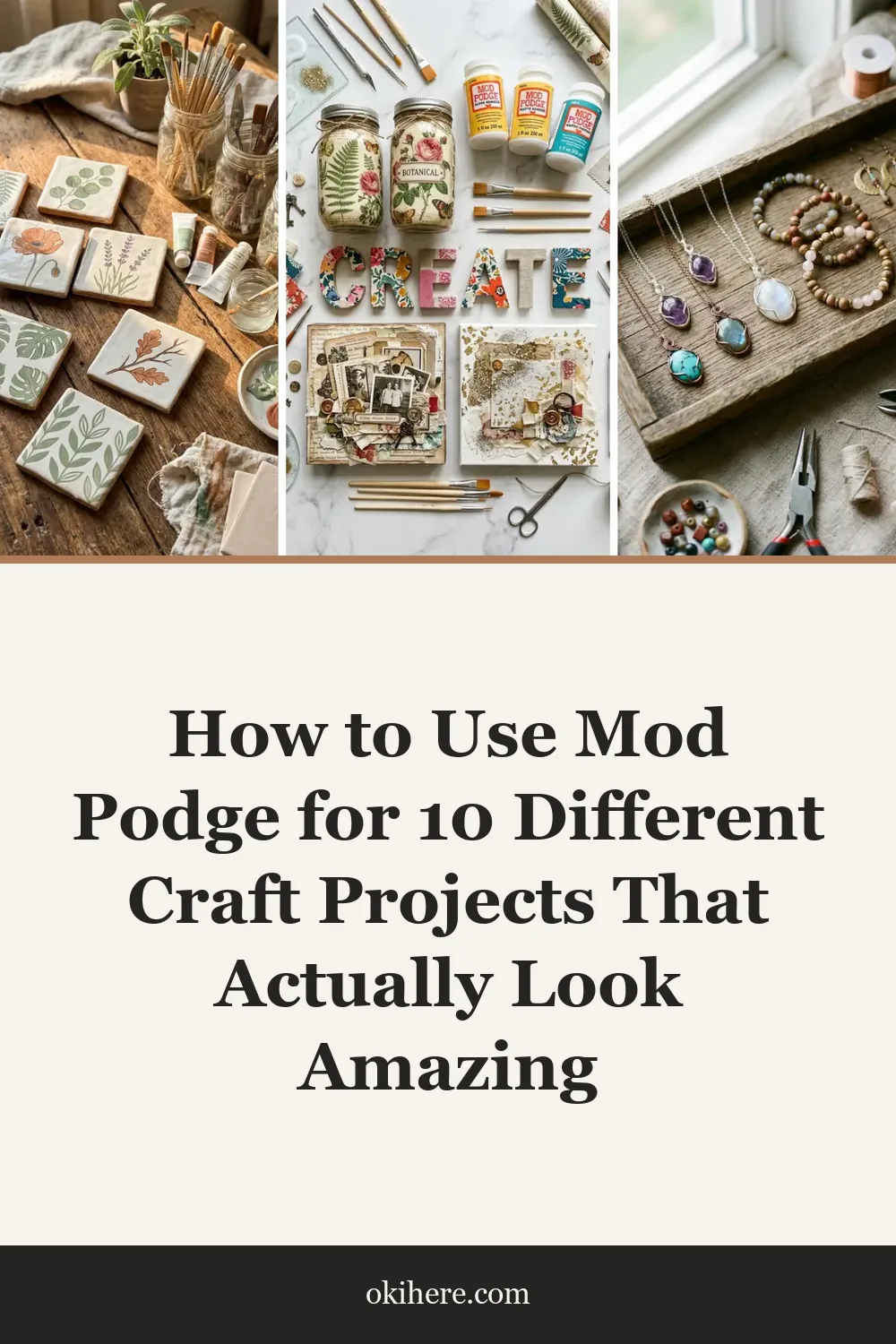
Tile coasters represent one of the most popular Mod Podge projects, and for good reason. They’re quick, inexpensive, and make fantastic gifts for any occasion. Gather plain ceramic tiles from any hardware store—they typically cost less than 20 cents each.
Cut scrapbook paper, printed designs, or photos to fit your tiles precisely. Apply Mod Podge to the tile surface, carefully position your paper, then apply two to three additional coats over everything. After drying completely, spray with acrylic sealer for water resistance.
Attach felt pads or cork backing to protect furniture surfaces. These coasters work perfectly as handmade gift craft ideas for housewarmings, weddings, or holiday presents.
Design Ideas for Coasters
Consider creating themed sets: vacation photos for travel lovers, vintage botanical prints for garden enthusiasts, or monogrammed designs for personalized gifts. Coordinate patterns for cohesive sets or mix complementary designs for eclectic appeal.
Project 5: Glitter-Dipped Mason Jars

Mason jars decorated with glitter become instant eye-catchers, and Mod Podge makes the glitter actually stay put. This project demonstrates the adhesive’s versatility beyond traditional decoupage. Clean your mason jar thoroughly with rubbing alcohol to remove any oils.
Apply painter’s tape to create a crisp line where the glitter will end. Brush Mod Podge onto the area you want glittered, working in sections for better control. While the Mod Podge remains wet, roll the jar in glitter or use a spoon to press glitter onto the surface.
Let dry completely, then seal with another coat of Mod Podge to prevent glitter shedding. Use Mod Podge Sparkle formula for added shimmer.
Project 6: Fabric-Covered Storage Boxes
Turn ordinary cardboard boxes into stylish storage solutions using fabric and Mod Podge. This practical project solves organization challenges while adding decorative flair. Select a sturdy box and coordinating fabric.
Cut fabric pieces for each panel, adding one inch extra on all sides for wrapping. Apply Mod Podge Fabric formula to the box surface, position your fabric, then smooth carefully to eliminate wrinkles and bubbles. Wrap excess fabric to the inside of the box, securing with additional Mod Podge.
Line the interior with coordinating paper or fabric for polished results. These storage solutions exemplify fun crafts to make at home that serve practical purposes.
How to Use Mod Podge for 10 Different Craft Projects: Advanced Techniques
As you gain confidence, advanced techniques expand your creative possibilities even further. These next projects incorporate more sophisticated methods that yield impressive professional-quality results.
Project 7: Dimensional Paper Clay Creations
Did you know you can make paper clay using Mod Podge? This moldable medium opens up sculptural possibilities for jewelry, ornaments, and decorative accents. Mix shredded toilet paper with Mod Podge until you achieve a clay-like consistency.
Add small amounts of flour if needed for better moldability. Shape your creations and allow several days for complete drying—larger pieces may take longer. Once dry, this paper clay becomes surprisingly durable.
Paint, sand, or add additional Mod Podge embellishments. Create custom cabinet knobs, decorative frames, or holiday ornaments using this versatile homemade medium.
Project 8: Faux Stained Glass Windows

Create stunning faux stained glass effects using Mod Podge and tissue paper. This technique transforms plain glass surfaces into colorful light-catching displays. Gather various colors of tissue paper and cut or tear into desired shapes.
Plan your design on paper first, then transfer to clean glass. Apply Mod Podge directly to the glass, position tissue paper pieces, then apply another coat on top. Overlapping tissue paper colors creates new shades—yellow over blue makes green, red over yellow produces orange.
Outline sections with black acrylic paint or liquid leading for authentic stained glass appearance. This technique works beautifully on picture frames, vases, and window panels.
Project 9: Decoupage Pumpkins and Seasonal Decor
Seasonal decorating becomes more personalized when you create custom pieces using Mod Podge. Decoupage pumpkins offer a no-carve alternative that lasts throughout the entire season. Use faux craft pumpkins for durability and reusability.
Cover with fabric, napkins, or specialty paper using standard decoupage techniques. Apply multiple thin coats rather than one thick layer for smooth, professional results. Expand this technique to other seasonal items: Easter eggs, Christmas ornaments, Valentine’s hearts, and more.
Many of these supplies come from unexpected sources—check out dollar store crafts ideas for budget-friendly seasonal decorating inspiration.
Project 10: Custom Jewelry and Accessories

Mod Podge Dimensional Magic allows you to create custom jewelry pieces with raised, glass-like domes. This formula transforms flat images into professional-looking pendants, earrings, and accessories. Start with pendant blanks, bezel settings, or flat button bases.
Cut images to fit perfectly—precision matters for polished results. Apply your image with regular Mod Podge, allow to dry, then squeeze Dimensional Magic over the top. The formula self-levels to create a smooth dome.
Avoid touching or disturbing while drying, which takes 24 hours. The finished effect resembles glass or resin at a fraction of the cost and complexity.
Essential Tips for Mod Podge Success
Regardless of which projects you tackle, certain techniques ensure consistent success. Following these guidelines helps you master how to use Mod Podge for 10 different craft projects and beyond. Surface preparation cannot be overlooked.
Clean all surfaces with rubbing alcohol before starting. Remove dust, oils, and residue that could prevent proper adhesion. Sand glossy surfaces lightly for better grip.
Brush selection affects your finish quality. Use foam brushes for smooth applications without brush strokes. Flat bristle brushes work for textured effects.
Keep dedicated brushes for Mod Podge—clean immediately after use. Drying conditions impact your results significantly. Work in low-humidity environments when possible.
Use a hair dryer on low setting to speed drying between coats, but don’t rush—properly cured Mod Podge is more durable.
Troubleshooting Common Mod Podge Problems
Even experienced crafters encounter occasional issues. Knowing how to prevent and fix problems saves projects from disaster. Bubbles forming usually result from applying coats too thickly or not smoothing properly.
Work in thin layers and brush deliberately from center outward. Pop small bubbles with a pin immediately and smooth flat. Wrinkling paper happens when paper absorbs too much moisture.
Use thicker papers for wet applications or seal thin papers with a light coat on both sides first. Napkins work best when you remove backing layers. Sticky finish that never fully cures indicates humidity issues or coats applied too heavily.
Work in climate-controlled environments and apply thinner layers. Add a final spray sealer for consistently smooth results.
Conclusion: Your Mod Podge Journey Begins Now
Learning how to use Mod Podge for 10 different craft projects opens doors to endless creative possibilities. From simple coasters to sophisticated photo transfers, this versatile medium adapts to countless applications and skill levels. The key to success lies in starting simple, mastering basic techniques, then gradually tackling more advanced projects.
Don’t fear mistakes—they’re valuable learning opportunities that teach you how this medium behaves under different conditions. Remember that practice truly makes perfect with Mod Podge. Your first project might not be gallery-worthy, but each attempt improves your skills and builds confidence.
Soon you’ll develop your own techniques and discover unique applications we haven’t even covered. Now it’s your turn to grab that bottle of Mod Podge and start creating! Which project will you tackle first?
Share your creations in the comments below, or tell us about your favorite Mod Podge techniques we should try. Happy crafting!
Frequently Asked Questions
Q: How long does Mod Podge take to dry completely? A: Mod Podge typically dries to the touch within 15-20 minutes, but full curing takes 24-72 hours depending on humidity and coat thickness. For best results, allow projects to cure completely before heavy handling or adding additional embellishments.
Q: Can I use Mod Podge on outdoor projects? A: Yes, but you must use Mod Podge Outdoor formula specifically designed for exterior use. This formula withstands weather elements and UV exposure.
Regular Mod Podge will break down when exposed to outdoor conditions. Q: How to use Mod Podge for craft projects involving photographs? A: For photos, always use laser-printed images rather than inkjet, as inkjet ink will smear when wet.
Apply Mod Podge in thin, even coats and allow complete drying between applications. Photo Transfer Medium works best for transferring images onto surfaces. Q: Is Mod Podge waterproof once dried?
A: Standard Mod Podge is water-resistant but not fully waterproof. Items can handle occasional moisture but shouldn’t be submerged or left in wet conditions. For water-exposed items, add a waterproof spray sealer over your finished Mod Podge project.
Q: What’s the difference between Mod Podge formulas for craft projects? A: Each formula serves specific purposes. Matte and Gloss affect finish appearance.
Fabric formula remains flexible on textiles. Hard Coat provides extra durability. Outdoor resists weather.
Dimensional Magic creates raised domes. Choose based on your project’s final use and desired appearance.