How to Calculate Fragrance Load for Soy Candles (Easy Formula)
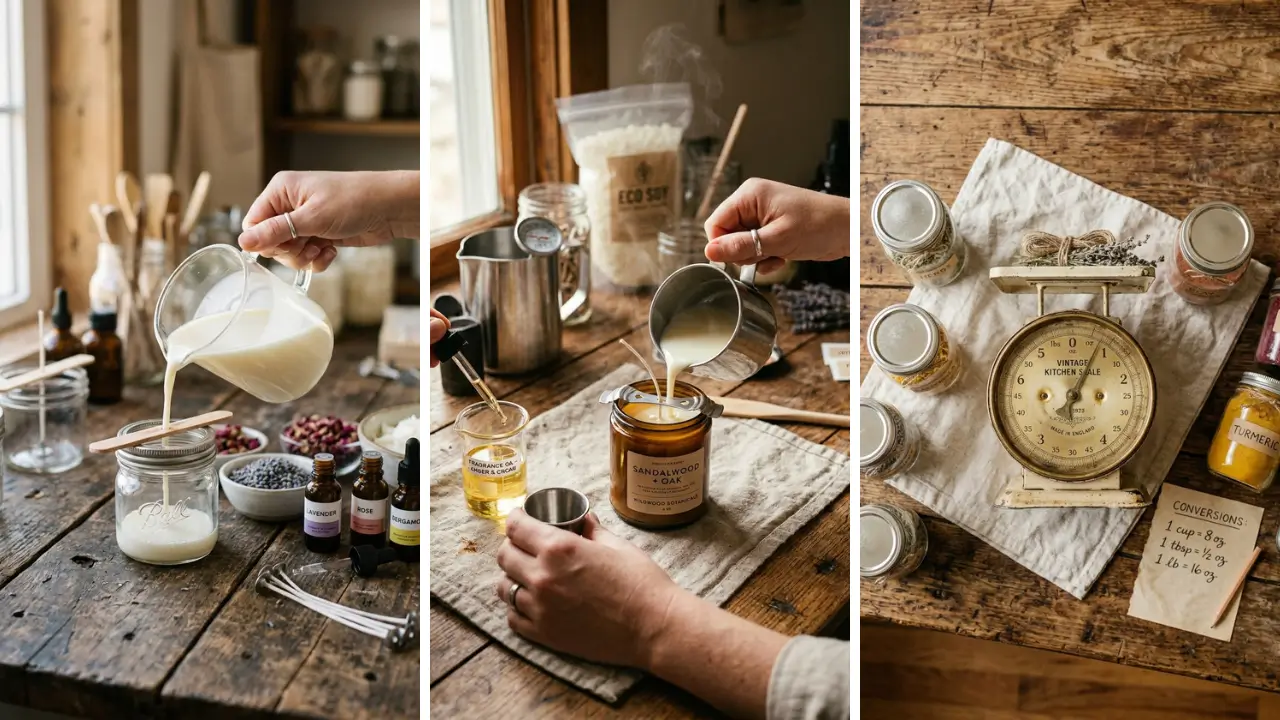
Have you ever poured a soy candle that smelled amazing in the pot — but burned almost scentless once it hardened? You’re not alone. One of the most common mistakes beginner candle makers make is guessing the fragrance amount instead of calculating it properly.
That’s exactly why knowing how to calculate fragrance load for soy candles (easy formula) is the single most important skill you can learn before you pour your next batch. In this guide, you’ll get a clear, beginner-friendly breakdown of fragrance load math, tips for avoiding common mistakes, and practical guidance to help your candles smell incredible from the first burn to the last.
What Is Fragrance Load and Why Does It Matter for Soy Candles?

Fragrance load refers to the percentage of fragrance oil relative to the total weight of wax used in your candle. It’s not about how much you want a candle to smell — it’s about how much fragrance the wax can actually hold without causing problems like seeping, poor adhesion, or fire hazards. Soy wax is beloved for being natural, clean-burning, and eco-friendly.
But it has a lower fragrance load capacity compared to paraffin. Most soy waxes can hold between 6% to 10% fragrance oil by weight. Going over that threshold doesn’t make your candle smell better — it actually causes the excess oil to pool on the surface or clog the wick.
Understanding fragrance load protects your candles, your customers, and your reputation as a maker. Whether you’re crafting DIY handmade gifts or selling at a local market, precision matters.
The Easy Formula: How to Calculate Fragrance Load for Soy Candles
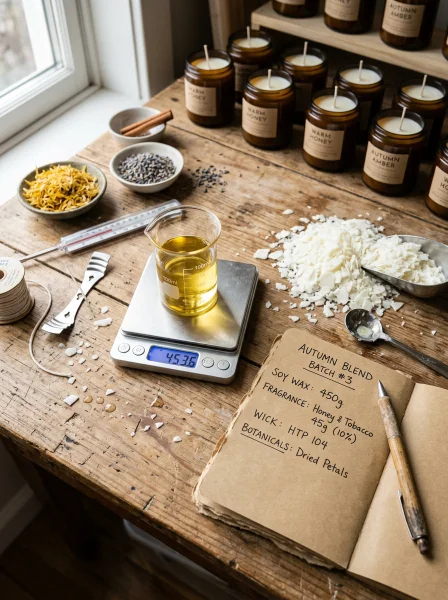
Here’s the formula you need — simple, straightforward, and easy to memorize: Fragrance Oil Weight = Wax Weight × Fragrance Load Percentage That’s it. Let’s break it down with a real example so it clicks immediately.
Step-by-Step Example
Say you’re making a batch of soy candles and you have 500 grams of soy wax. You want to use a 8% fragrance load (a safe, popular choice for most soy waxes).
- Wax weight: 500g
- Fragrance load: 8% (or 0.08)
- Fragrance oil needed: 500 × 0.08 = 40 grams
So for every 500g of soy wax, you’d add 40g of fragrance oil. Simple math, massive impact on your final product.
Working in Ounces? No Problem
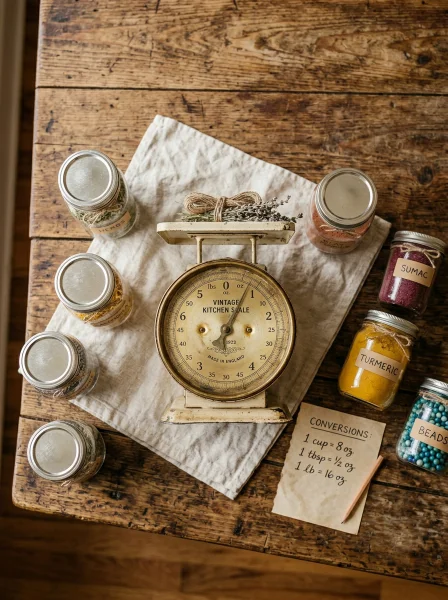
The formula works exactly the same way with imperial measurements. If you have 16 oz of soy wax and want an 8% load:
- 16 × 0.08 = 1.28 oz of fragrance oil
Always use a digital kitchen scale for accuracy. Volume measurements like cups or tablespoons are unreliable for candle making because fragrance oils vary in density.
Choosing the Right Fragrance Load Percentage for Your Soy Wax
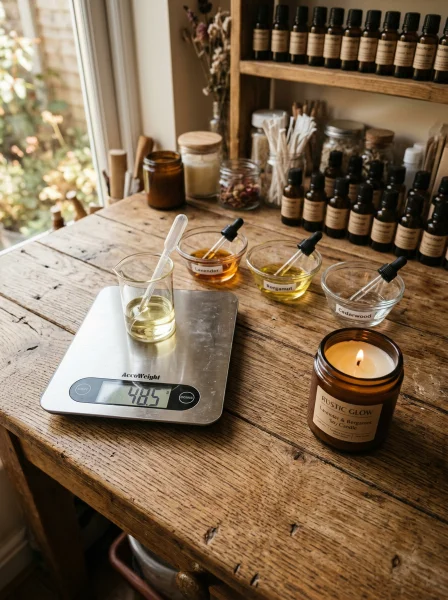
Not all soy waxes are created equal. Different soy wax brands and blends have different maximum fragrance load capacities. Always check the manufacturer’s specs before experimenting. Here’s a general guideline by wax type:
- 100% natural soy wax (container): 6%–10%
- Soy blend waxes: 8%–12%
- Soy pillar wax: 3%–6%
Starting at the lower end of the range (like 6%) is smart when you’re testing a new fragrance oil. Some fragrance oils are very potent and smell fantastic even at lower percentages. Others need to be closer to the 10% max to project well.
Also keep in mind that the type of fragrance oil matters. High-quality fragrance oils designed specifically for candles will perform better at lower loads than cheap, diluted alternatives.
Common Mistakes That Throw Off Your Fragrance Load Calculation
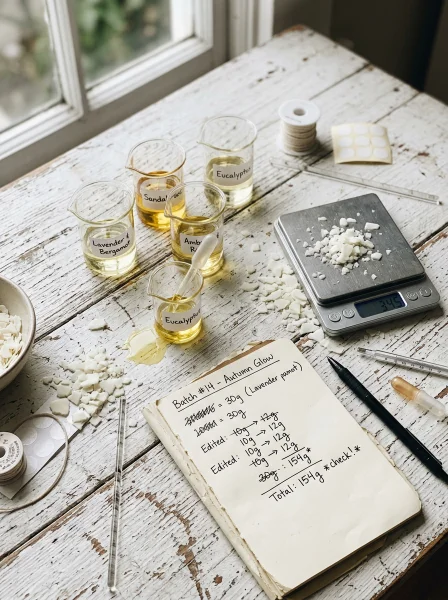
Even with the right formula, a few sneaky errors can mess up your results. Watch out for these:
Mistake #1: Weighing Wax After Melting
Always weigh your wax before melting, not after. Wax loses trace amounts of weight as it melts and evaporates slightly. Weighing pre-melt keeps your formula accurate.
Mistake #2: Adding Fragrance Oil at the Wrong Temperature
Fragrance load calculation is only half the equation. You also need to add your fragrance oil at the correct pour temperature — typically between 160°F–185°F (71°C–85°C) for soy wax. Adding it too hot burns off the scent.
Too cool, and it won’t bind properly.
Mistake #3: Ignoring the Flash Point of Your Fragrance Oil
Every fragrance oil has a flash point — the temperature at which it can ignite. Always add fragrance oil at a temperature below its flash point. Reputable fragrance oil suppliers always list this information on the product page.
Mistake #4: Not Testing Small Batches First
Before you pour 50 candles, test with a small batch of 2–3 candles first. Burn test them for 4 hours, then evaluate scent throw, wick performance, and appearance. This saves time, money, and frustration.
How Fragrance Load Affects Scent Throw
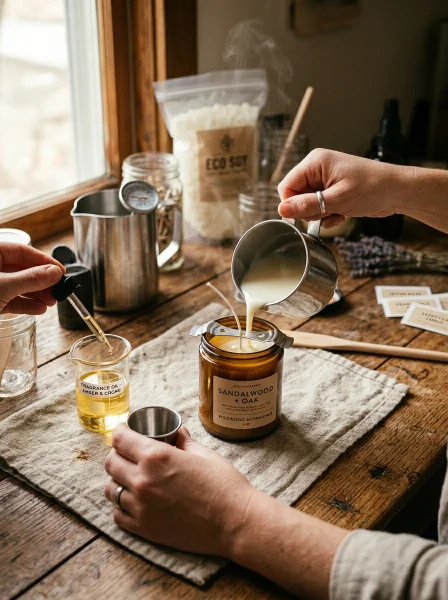
Scent throw refers to how well a candle disperses fragrance — both when unlit (cold throw) and when burning (hot throw). Fragrance load directly impacts both. A candle with too little fragrance oil will have a weak hot throw.
A candle with too much will likely have fragrance oil pooling at the surface, a sputtering wick, and potentially unsafe burning conditions. The sweet spot for most soy candles is 8%. This gives a strong cold throw and a pleasant, room-filling hot throw without overwhelming the senses or causing wax adhesion issues.
If you’re making scented candles as handmade gift craft ideas, getting the scent throw right makes the difference between a gift that impresses and one that disappoints.
Quick Reference: Fragrance Load Chart for Soy Candles

Here’s a handy chart you can bookmark or print for your craft space:
- 100g wax @ 6% = 6g fragrance oil
- 100g wax @ 8% = 8g fragrance oil
- 100g wax @ 10% = 10g fragrance oil
- 500g wax @ 6% = 30g fragrance oil
- 500g wax @ 8% = 40g fragrance oil
- 500g wax @ 10% = 50g fragrance oil
- 1000g wax @ 6% = 60g fragrance oil
- 1000g wax @ 8% = 80g fragrance oil
- 1000g wax @ 10% = 100g fragrance oil
Scaling up a batch? Just multiply. The formula stays the same no matter your batch size.
Soy Candle Making as a Fun Home Craft and Gift Idea
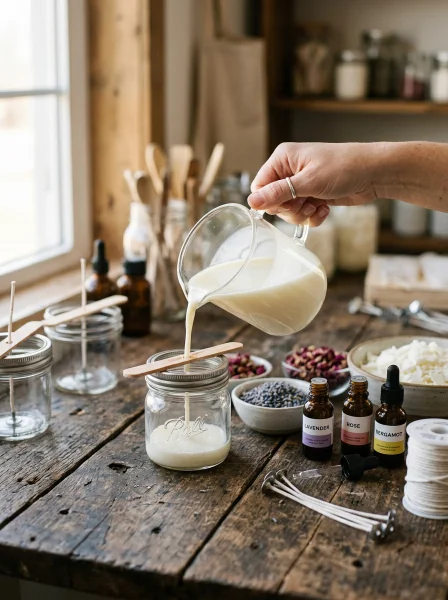
Once you nail your fragrance load formula, candle making becomes one of the most satisfying and creative hobbies you can pick up. It’s one of those fun crafts to make at home that feels impressive but is completely beginner-friendly with the right guidance. You don’t need a professional setup.
A double boiler, a digital scale, some soy wax, quality fragrance oils, wicks, and glass jars are enough to get started. You can even keep your supply costs low by sourcing materials creatively — there are tons of dollar store crafts ideas that show how to stretch your budget without sacrificing quality. Candle making also fits beautifully into a wider creative lifestyle.
If you enjoy home craft projects quick wins, scented soy candles deliver fast, tangible results you can actually use or give away.
Tips for Maximizing Scent Performance in Soy Candles
Beyond the fragrance load formula, a few extra habits will take your candles to the next level:
- Cure your candles for at least 48 hours before burning or gifting. Soy wax needs time to fully bind with the fragrance oil.
- Use the right wick size for your jar diameter. A wick that’s too small produces a weak melt pool; too large creates a sooty, dangerous flame.
- Store finished candles away from direct sunlight to prevent discoloration and scent degradation.
- Label your batches with the date, wax type, fragrance load percentage, and fragrance name. This makes troubleshooting much easier.
Conclusion
Mastering how to calculate fragrance load for soy candles (easy formula) is a game-changer for anyone serious about candle making. The math is simple — wax weight multiplied by your desired fragrance percentage — but the impact on your candles is enormous. Get this right, and you’ll produce candles with consistent, beautiful scent throw every single time.
Start with an 8% fragrance load, always weigh your ingredients on a digital scale, and test small batches before scaling up. These three habits alone will put you ahead of most hobby candle makers. Whether you’re making candles for yourself, as presents, or to sell, precision is what separates a good candle from an unforgettable one.
Now that you have the formula, it’s time to put it into practice. Gather your supplies, fire up your double boiler, and pour your best batch yet! Ready to level up your craft game?
Share your candle-making results in the comments below — we’d love to hear what fragrance load percentage works best for your soy wax blend. And if you found this guide helpful, share it with a fellow maker who could use the help!
Frequently Asked Questions
Q: What is the standard fragrance load for soy candles? A: Most soy waxes support a fragrance load between 6% and 10% by weight. The most commonly recommended starting point is 8%, which provides a strong scent throw without overloading the wax.
Always check your specific soy wax manufacturer’s guidelines, as maximum capacity can vary by brand. Q: How do I calculate fragrance load for soy candles if I’m working in ounces? A: The formula is exactly the same regardless of your unit of measurement.
To calculate fragrance load for soy candles in ounces, simply multiply your wax weight (in oz) by your desired fragrance percentage (as a decimal). For example, 16 oz of wax at 8% = 16 × 0.08 = 1.28 oz of fragrance oil. Q: Can I use more than 10% fragrance oil in soy wax to get a stronger scent?
A: It’s generally not recommended. Exceeding the maximum fragrance load causes the wax to become oversaturated, leading to oil pooling on the surface, wick clogging, poor adhesion to the jar, and potential fire hazards. If your candle isn’t throwing enough scent at 10%, consider switching to a higher-quality fragrance oil rather than increasing the load.
Q: Does the type of soy wax affect how to calculate fragrance load for soy candles? A: Yes, different soy wax formulations have different fragrance load capacities. Container soy waxes typically hold more fragrance (up to 10%) compared to pillar soy waxes (which max out around 6%).
Soy blend waxes may hold up to 12%. Always refer to the product specifications from your wax supplier before finalizing your fragrance load calculation. Q: How long should I wait before testing the scent throw of a new soy candle?
A: You should cure your soy candles for a minimum of 48 hours before testing, though many experienced makers recommend waiting 3–7 days for the most accurate results. During curing, the fragrance oil fully integrates into the wax matrix, resulting in a stronger and more consistent cold throw and hot throw during burn testing.