How to Choose Light Bulbs: Warmth, Lumens and Fit
Have you ever repainted a lamp base, recovered the shade, found the perfect spot for it, switched it on, and felt that the room still looked like a waiting room? You are not alone. The lamp was never the problem. The bulb inside it was.
Knowing how to choose light bulbs is the least glamorous part of decorating and the one that changes a room fastest. Two bulbs can draw the same power, cost the same, and make the same space feel either warm and settled or flat and clinical.
This guide covers the numbers printed on every box, what warm and cool actually look like at home, why watts stopped meaning brightness, and the mistakes that make good lamps disappointing.
Quick summary
- Kelvin sets the mood: lower numbers glow golden, higher ones turn the room grey and office-like.
- Brightness is measured in lumens now, so the wattage on the box tells you almost nothing.
- Cheap bulbs render colour poorly, which is why wood turns grey and fabric looks muddy under them.
- Mixing warm and neutral bulbs in one space is the mistake people notice first without knowing why.
- Dimmer switches built for old filament lamps often buzz or flicker once a modern replacement is fitted.
- Sealed fittings trap heat, and bulbs not rated for them quietly fail months ahead of schedule.
Quick answer: For living rooms and bedrooms, buy bulbs marked 2700K with a colour rendering index of 90 or more. Pick brightness by lumens rather than watts, roughly 800 for a reading lamp. Use the same colour temperature throughout one room, and check the base size before leaving the shop.
What the Numbers on the Box Mean
Every bulb carton carries four pieces of information. Once you can read them, buying the right bulb takes about ten seconds.
Kelvin: the Colour of the Light
Kelvin describes whether the light leans yellow or blue. Around 2700K is the warm golden tone of an old filament lamp. By 4000K the light has gone neutral, and at 5000K and above it reads as daylight, which indoors mostly reads as a shop.
Lumens: the Actual Brightness
Lumens measure the light produced. Roughly 800 lumens matches what an old 60-watt bulb gave, and about 1600 matches a 100-watt one. This is the number to compare when two bulbs look identical on the shelf.
Base and Shape: Whether It Fits
Screw bases are labelled E27 in Europe and E26 in North America, with E14 for smaller fittings and B22 for the bayonet caps common in the UK. Shape matters too, since a globe or candle bulb that looks right in an open fitting may not clear a narrow shade.
CRI: How Honest the Colour Is
The colour rendering index runs to 100 and describes how truthfully the light shows colour. Most cheap bulbs sit at 80, which is where wood goes grey and fabric goes muddy. Anything marked 90 or above costs slightly more and is the single upgrade people notice.
Warm or Cool: Choosing a Colour Temperature
This is the decision that sets the feeling of the room, and it is the one most often made by accident, by grabbing whatever multipack was nearest.
2700K for Living Rooms and Bedrooms
Warm, slightly golden, forgiving on skin tones and flattering to wood and warm paint. It is what people mean when they describe a room as cosy, and it suits almost every bedroom lighting scheme.
3000K for Kitchens and Bathrooms
Still warm but a little crisper, which helps where you are chopping or shaving. Going warmer here is not wrong, only slightly sleepier.
4000K and Above Where You Work
Neutral light suits a garage, a utility room, or a craft table where colour accuracy matters more than atmosphere. In a living room the same bulb makes the walls look faintly blue and everything in the room look unloved.

Lumens, Not Watts
Watts measure how much energy a bulb consumes, not how much light comes out. That distinction barely mattered when every bulb was a filament, because the two moved together. With LEDs it matters a great deal: an 8-watt bulb and a 15-watt bulb can both produce 800 lumens, and the cheaper one is simply less efficient.
As a rough guide, a bedside or reading lamp wants 400 to 800 lumens, a main ceiling light in an average room wants 1500 or so spread across its fittings, and a task lamp over a work surface wants 800 to 1000 pointed where you need it.
If you still think in old wattages, these are the rough equivalents worth memorising:
- 25 watts is about 250 lumens, which suits an accent lamp or a nightlight.
- 40 watts is about 450 lumens, enough for a bedside table.
- 60 watts is about 800 lumens, the standard reading and side-lamp figure.
- 75 watts is about 1100 lumens, useful over a kitchen worktop.
- 100 watts is about 1600 lumens, which is a lot of light for one fitting.
Buying by old wattage habits is how rooms end up glaring. A 100-watt-equivalent bulb in a small bedside lamp is not cosy at any colour temperature.
Clear or Frosted
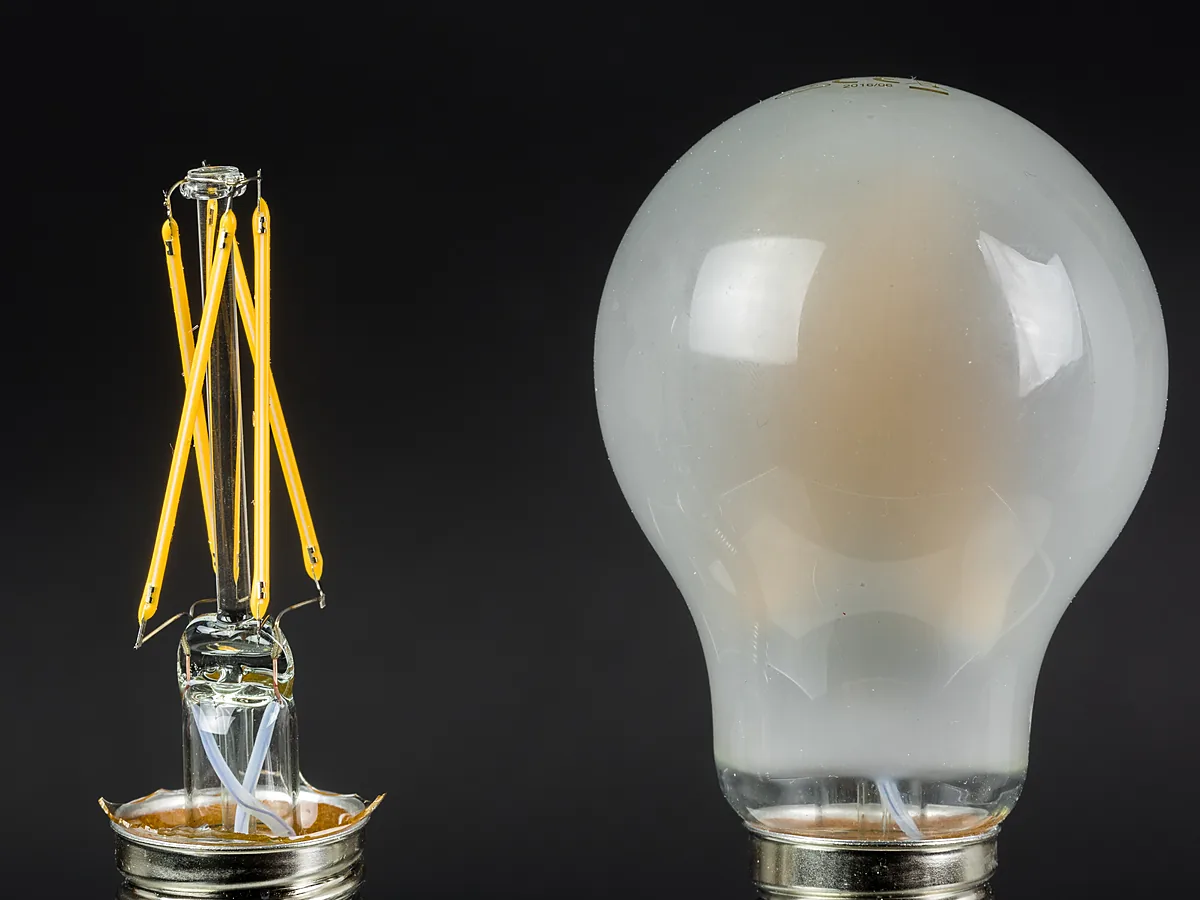
A clear bulb shows its filament and throws small sharp shadows, which looks wonderful in an open fitting hung well above eye level and feels like staring into a headlight when it is not. A frosted bulb spreads the same light evenly and hides the source.
The rule of thumb is simple: if the bulb will be visible and at or below eye level, choose frosted. Save clear filament bulbs for high pendants and cage fittings, which is exactly where an exposed bulb chandelier earns its keep.
Dimming Without the Buzz
Dimmable bulbs say so on the box, and fitting one that does not will give you flicker, a narrow useless range, or an audible hum. That part is easy to avoid.
The harder part is the dimmer itself. Switches made for filament bulbs expect a much larger electrical load than an LED draws, so a modern bulb on an old dimmer often flickers at low settings or refuses to go dim at all. A dimmer described as LED-compatible fixes it, and fitting one is mains wiring, which means an electrician unless you genuinely know what you are doing.
Smart bulbs sidestep the dimmer entirely by dimming themselves, which suits a rented flat where rewiring is not an option. The trade-off is that the wall switch must stay on for them to listen.
What Usually Goes Wrong
Two Temperatures in One Room
One 4000K bulb among a set of 2700K ones is the most visible lighting mistake there is, and most people register it as something being broken rather than as a colour difference. Replace bulbs in matched sets, and keep the box so you can buy the same ones again.
A Beautiful Lamp With a Cheap Bulb
A thrifted base, a new shade, and a low-CRI bulb will still look dull, because the light itself is flattening every colour it touches. This is worth knowing before starting any lamp makeover, since the bulb costs a fraction of the project.
LEDs in Sealed Fittings
Many LED bulbs are not rated for enclosed fixtures. Heat builds up inside a sealed glass shade, the electronics cook, and a bulb sold as lasting fifteen years dies in one. The packaging says whether it is rated, usually in very small print.
Bulbs Chosen Before the Shade
Shade colour changes everything the bulb does. A warm bulb under a stark white drum stays fairly neutral, while the same bulb under a linen or parchment shade turns noticeably golden, which is worth testing before you recover a shade in new fabric.
A Bulb for Each Room
- Living room. 2700K, CRI 90+, dimmable where possible, spread across several lamps instead of one ceiling fitting.
- Bedroom. 2700K and no brighter than 450 lumens at the bedside. Brightness here is the enemy of sleep.
- Kitchen. 3000K overhead for the room, plus a brighter task light where you actually chop.
- Bathroom. 3000K, high CRI, and placed beside the mirror rather than above it so faces are lit evenly.
- Hallway. 2700K and modest. Hallways are passed through, not inhabited.
- Craft table or desk. 4000K, 800 lumens or more, close to the work. Accuracy beats atmosphere here.
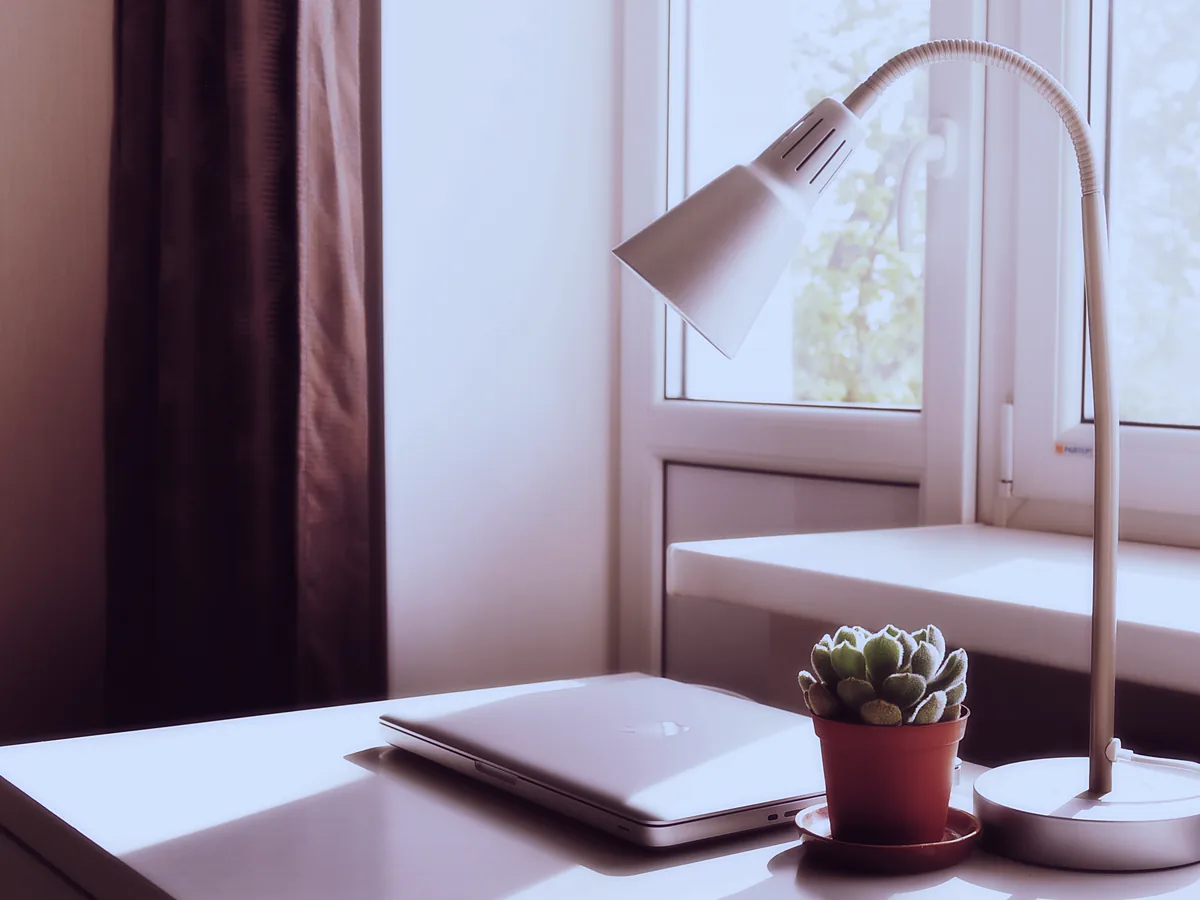
Thinking room by room is also what makes a layered lighting scheme work. The layers only sit together if the bulbs inside them agree with each other.
Conclusion
Bulbs are the cheapest change you can make to a room and the one with the shortest delay between buying and noticing. A single warm, high-CRI bulb in a lamp you already own will do more for a corner than a new cushion ever will.
Start by reading one box properly. Find the Kelvin number, find the lumens, check the CRI, check the base. Buy two, live with them for a week, and the next purchase takes no thought at all.
Then the lamps themselves become worth the effort, whether that means a charity shop base brought back to life or a pendant hung for drama.
Frequently Asked Questions
What is the best colour temperature for a living room?
2700K for almost everyone. It matches the warm light people associate with evenings at home. Step up to 3000K only if the room doubles as a workspace and the extra crispness earns its place.
How many lumens does a reading lamp need?
Between 400 and 800, depending on how close it sits. Position matters as much as output: a modest bulb at the shoulder beats a bright one across the room, and it spills less light at bedtime.
Why does the new bulb flicker on the dimmer?
Either the bulb is not dimmable, or the dimmer was made for filament lamps and cannot cope with the tiny load an LED draws. Check the box first, since that is the free fix, then look at replacing the switch.
Do expensive bulbs actually last longer?
Often, though the bigger difference is colour quality and how steady the light stays over time. Cheap LEDs tend to drift cooler and dimmer after a year or two, which is more noticeable than outright failure.
Can any LED bulb go in a closed glass fitting?
No, and this is a common cause of early failure. Look for wording about enclosed or sealed fixtures on the packaging, and if it is absent, assume the bulb is not rated for one.
Featured image: eberhard grossgasteiger / Wikimedia Commons, CC0, title text added by OKI HERE.