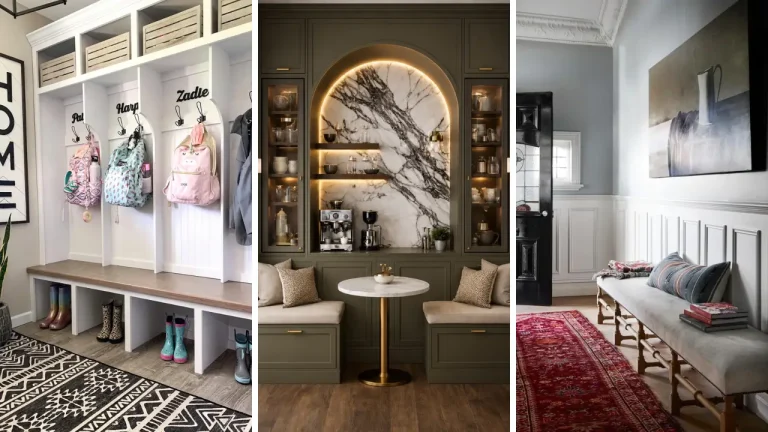
How to Layer Lighting in a Room Like an Interior Designer
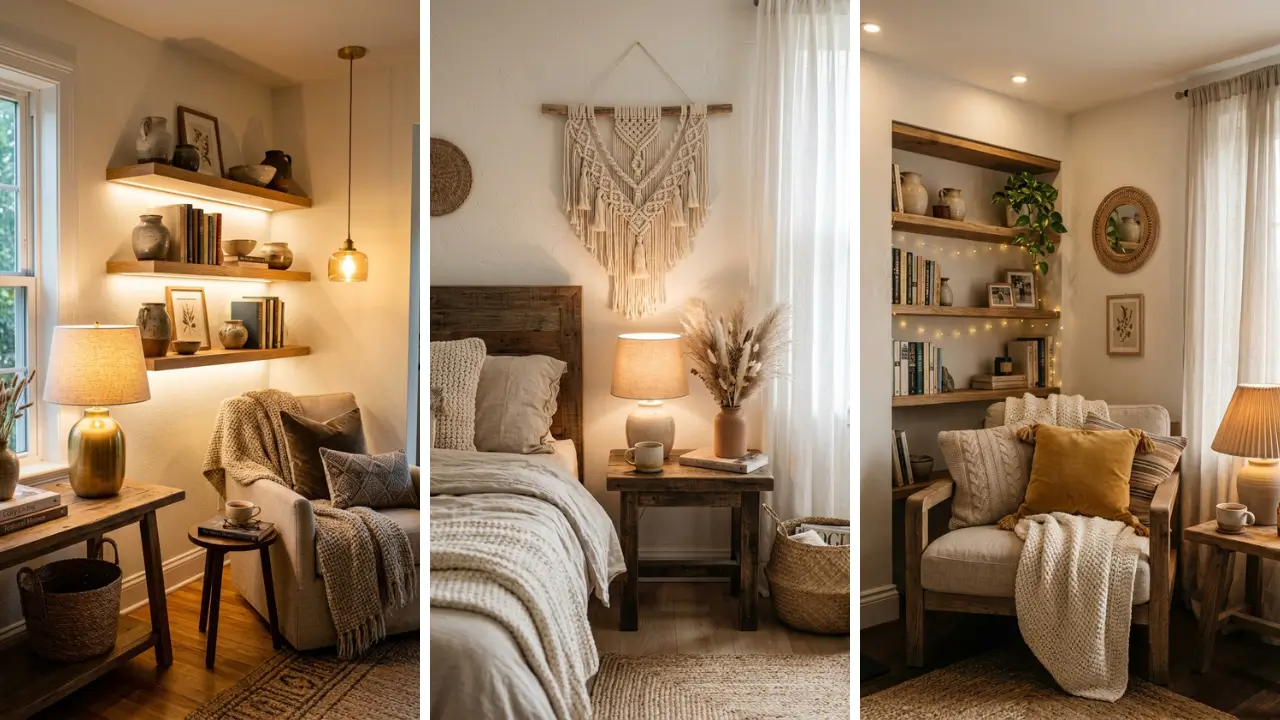
Designers layer three types of light in every room: ambient light on a dimmer using warm white 2700K–3000K bulbs, task lighting positioned to kill shadows, and accent lighting roughly three to five times brighter than your ambient layer. Plan at least three light sources per room, at ceiling, table and floor height.
The result? Flat, harsh, and uninviting spaces. In this guide, you’ll learn exactly how professionals build lighting from the ground up — using three distinct layers — so every room feels intentional, warm, and magazine-worthy.
Whether you’re redesigning your living room or just refreshing a bedroom, these strategies are practical, affordable, and easy to implement starting today.
Why Lighting Layers Matter More Than You Think
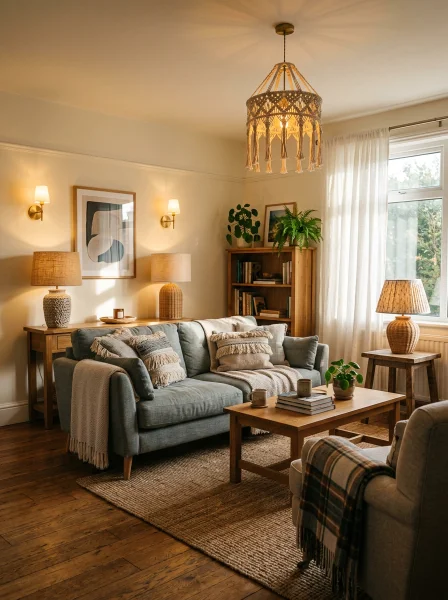
Professional interior designers rarely rely on a single light source. Instead, they think in layers — stacking different types of light to create depth, mood, and functionality all at once. This approach mimics natural light, which changes direction, intensity, and warmth throughout the day.
A room with only overhead lighting tends to cast unflattering shadows and makes everything feel flat. By contrast, a well-layered room draws the eye around the space, highlights architectural features, and makes people feel comfortable the moment they walk in. Think of lighting layers like seasoning in cooking.
Each layer on its own isn’t enough, but combined correctly, they elevate the entire experience. The three core layers every designer uses are: ambient lighting, task lighting, and accent lighting.
Layer 1 — Ambient Lighting: Your Foundation
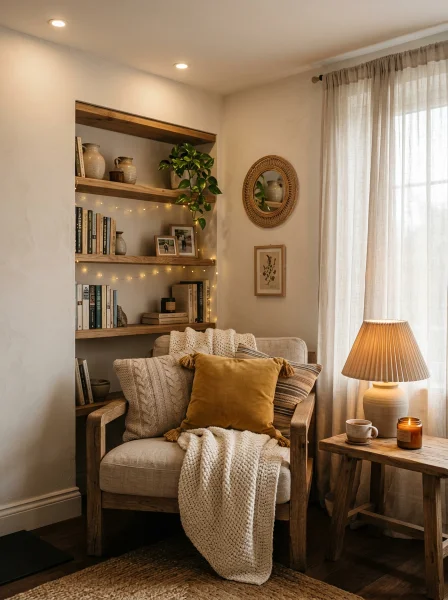
Ambient lighting is your room’s base layer. It’s the general, overall illumination that replaces natural light once the sun goes down. This is usually a ceiling fixture, recessed lights, or a large pendant light positioned centrally in the room.
The key mistake most homeowners make? Setting ambient light too bright. Designers recommend using a dimmer switch on your ambient source so you can control the intensity depending on the time of day or activity.
Bright for cleaning, dim for a relaxed evening — it’s that simple. For living rooms and bedrooms, aim for warm white bulbs (2700K–3000K). They create a cozy, inviting atmosphere that cooler bulbs simply can’t replicate.
In kitchens or bathrooms, slightly cooler temps (3500K–4000K) work better for visibility. If you’re updating your home on a budget, even swapping bulbs and adding a dimmer to existing fixtures makes a noticeable difference before spending anything else.
Layer 2 — Task Lighting: Where Function Meets Style
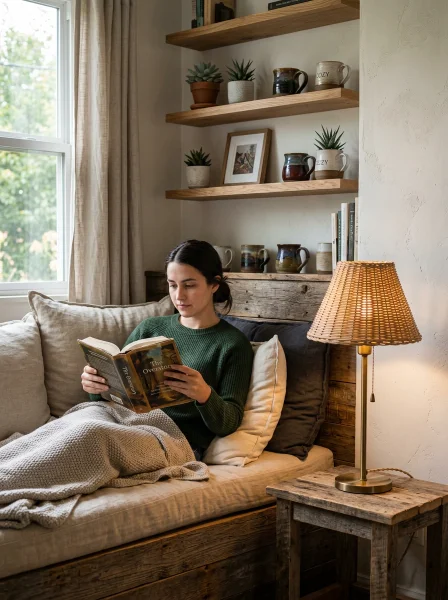
Task lighting targets specific areas where you need focused, brighter light to complete an activity. Reading, cooking, applying makeup, working at a desk — all of these benefit from dedicated task lighting that’s separate from your ambient source. Common examples include:
- Bedside table lamps for reading
- Under-cabinet lighting in the kitchen
- Vanity lights framing a bathroom mirror
- Adjustable desk lamps for home offices
The trick here is positioning. Task lights should be placed to eliminate shadows on your work surface, not create them. For desk lamps, position the light source to the opposite side of your dominant hand to avoid casting shadows as you write or work.
Task lighting doesn’t have to be boring, either. A sculptural table lamp doubles as a design statement while serving a functional purpose — this is where style and utility meet perfectly.
Layer 3 — Accent Lighting: The Designer’s Secret Weapon
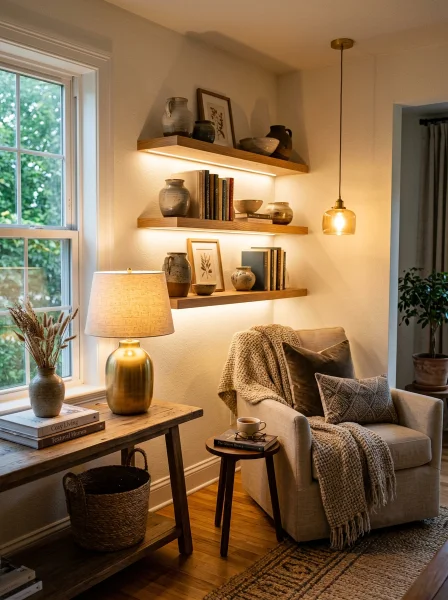
This is the layer most homeowners skip entirely — and it’s the one that makes the biggest visual impact. Accent lighting is purely decorative. It draws attention to art, architectural details, plants, bookshelves, or any feature worth highlighting.
Picture frames lit from above, a glowing bookshelf, or LED strips under a floating console — these are all accent lighting techniques. They add dimension and drama to a space that would otherwise feel one-dimensional.
Popular accent lighting options include:
- Picture lights mounted above artwork
- Directional spotlights or track lighting aimed at focal points
- LED strip lights tucked behind shelves or under furniture
- Candles or flameless candles for intimate warmth
The general rule of thumb: accent lighting should be 3–5 times brighter than your ambient light to create that highlight effect. But placement matters more than power — a soft spotlight aimed directly at a textured wall creates an entirely different mood than a strip of light hidden behind a headboard.
How to Layer Lighting in a Room Like an Interior Designer: Room-by-Room Tips
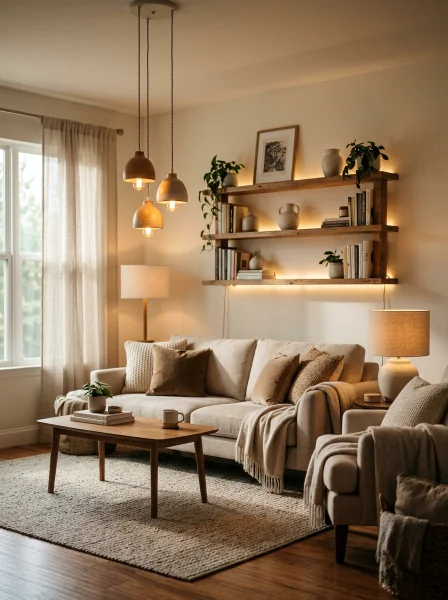
Knowing the three layers is one thing — applying them to specific rooms is where things get practical. Here’s how designers think room by room.
Living Room
The living room needs the most versatility. Start with a central ambient fixture on a dimmer, then add floor lamps in corners to eliminate dark zones. Layer in table lamps on side tables for warmth, and finish with accent lights aimed at your TV wall, artwork, or shelving unit.
Table lamps do not have to match your decor straight out of the box, either. Learning how to paint a lamp base is an easy way to make a thrifted lamp fit your color scheme.
A pro tip: always have light sources at different heights — floor level, table level, and ceiling level. This prevents that flat, single-layer look immediately.
Bedroom
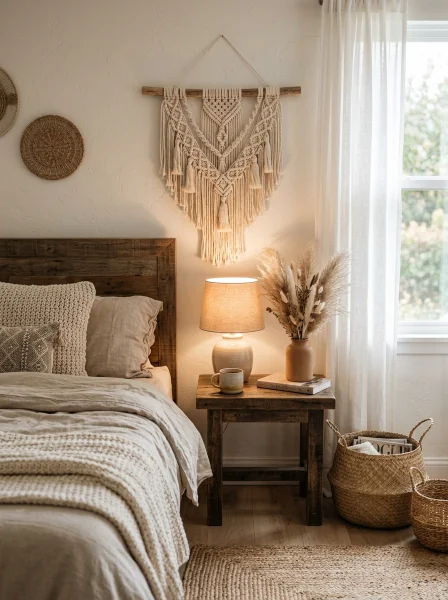
Bedrooms thrive on softness. Skip harsh overhead lights as your primary source — instead, use a soft pendant or flush mount on a dimmer, pair it with bedside lamps for reading, and consider LED strips behind a headboard or under the bed frame for a calming glow. This layered approach makes the bedroom feel like a retreat rather than just a place to sleep.
Kitchen
Kitchens need both function and atmosphere. Recessed ceiling lights handle your ambient layer, under-cabinet lighting handles the task layer, and a decorative pendant above the island adds accent and character. Even in a purely functional space, layering transforms the experience.
Common Lighting Mistakes (and How to Avoid Them)
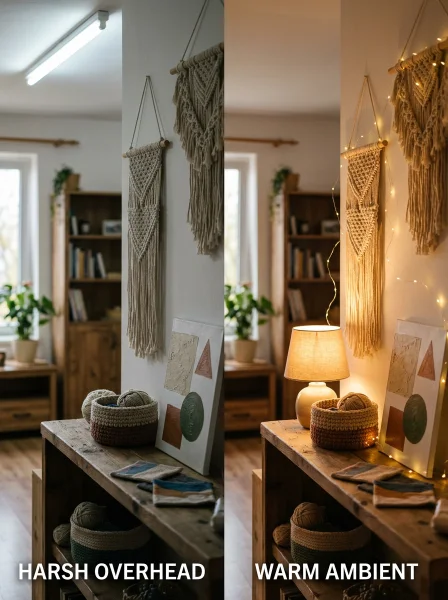
Even with good intentions, a few common errors can undermine an otherwise beautiful room. Here’s what to watch out for:
- Relying solely on overhead lighting — This is the number-one mistake. It flattens a room instantly.
- Using bulbs with inconsistent color temperatures — Mixing warm and cool tones in the same room looks jarring and unintentional.
- Ignoring dimmers — Dimmers are inexpensive and give you enormous control over mood and energy use.
- Placing task lights in the wrong position — Always test where shadows fall before committing to a fixture location.
- Skipping the accent layer — Without it, rooms look fine but never feel special.
If you love hands-on home improvement projects, pairing great lighting with thoughtful décor accessories makes a huge impact. Exploring home craft projects quick wins like decorative vases or custom lampshades can help personalize every layer of your room’s look.
If your current shade is dated or the wrong color for the room, you can recover a lampshade with fabric in an afternoon instead of buying a new one.
Choosing the Right Bulbs for Each Layer
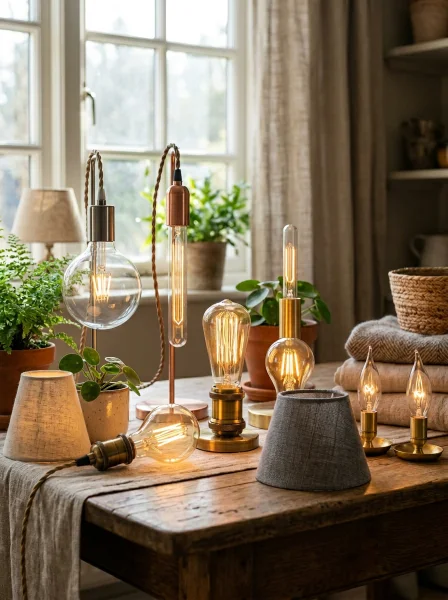
Bulb choice is often an afterthought, but it shapes the entire character of a room. Here’s a simple breakdown:
- Ambient layer: Warm white LEDs (2700K–3000K), medium wattage, always dimmable
- Task layer: Slightly brighter (3000K–4000K), high CRI (Color Rendering Index of 90+) so colors appear true
- Accent layer: Warm or neutral LEDs, narrow beam angle (25°–36°) to create focused highlights
LED bulbs are the clear choice today — they’re energy-efficient, long-lasting, and come in every color temperature you need. Avoid fluorescent bulbs for living spaces; the color rendering is poor and the flicker, even when invisible, causes eye fatigue over time.
Budget-Friendly Ways to Build Your Lighting Layers
You don’t need a designer budget to achieve layered lighting. Some of the most effective upgrades cost under $30. Adding a floor lamp from a thrift store, installing LED strip lights, or simply buying a dimmer switch and new warm bulbs can completely change a room’s energy.
If you enjoy getting creative with décor, there are plenty of fun crafts to make at home that double as ambient or accent lighting — think mason jar lanterns, woven pendant shades, or painted glass candleholders that cast beautiful shadows on the wall. Even budget-friendly finds can look elevated with the right placement. Checking out dollar store crafts ideas is a great way to source affordable decorative items that complement your accent lighting without overspending.
And if you want to go the extra mile for gifting a newly designed room to someone you love, browsing DIY handmade gifts for inspiration on custom lampshades, personalized light fixtures, or handcrafted candleholders can make the space feel even more thoughtful and unique. For those who love personalizing every corner of their home, exploring handmade gift craft ideas can spark creative ways to incorporate homemade decorative pieces that work beautifully within your layered lighting setup.
Conclusion
Mastering how to layer lighting in a room like an interior designer doesn’t require a degree in design or a massive renovation budget. It simply requires understanding the three layers — ambient, task, and accent — and applying them intentionally in each space. Start with your ambient foundation, add task lighting where you need focus, and then use accent lighting to bring drama, depth, and personality to the room.
The transformation can be subtle or dramatic, but it will always be noticeable. Rooms with layered lighting feel warmer, more purposeful, and genuinely more beautiful. Once you experience the difference, you’ll never look at a single overhead bulb the same way again.
Start small — swap one overhead bulb for a warmer LED and add a floor lamp in a dark corner. Build from there, one layer at a time, and watch your rooms come alive. Ready to transform your space?
Try implementing just one new lighting layer in your room this week and see how dramatically it changes the feel. Share your before-and-after results in the comments — we’d love to see the difference layered lighting makes in your home!
Frequently Asked Questions
Q: What is the easiest way to start layering lighting in a room if I’m a beginner? A: The simplest starting point is adding a floor lamp or table lamp to a room that currently only has overhead lighting. This instantly creates a second layer of light at a lower height, adding warmth and depth.
From there, you can gradually introduce accent lighting like LED strips or a picture light to complete the look. Q: How do I layer lighting in a room like an interior designer on a tight budget? A: Focus on high-impact, low-cost changes first.
Install a dimmer switch on your existing overhead fixture (usually under $20), swap bulbs to warm white LEDs, and add one affordable floor lamp. These three steps alone can dramatically change a room’s atmosphere without a major investment. Q: How many light sources should a room typically have?
A: Most interior designers recommend a minimum of three light sources per room — one for each layer (ambient, task, and accent). Larger rooms may benefit from five or more sources to ensure even light distribution and eliminate dark corners. Q: What color temperature bulbs should I use for a cozy living room?
A: For a warm, cozy atmosphere in a living room, stick to bulbs in the 2700K–3000K range. These emit a soft yellow-white light similar to traditional incandescent bulbs. Avoid anything above 4000K in living spaces, as it creates a clinical, office-like feel that works against relaxation.
Q: How to layer lighting in a room like an interior designer when the ceiling only has one fixture? A: This is very common, and the solution is simple — use plug-in fixtures and battery-operated lights to add layers without any electrical work. Floor lamps, table lamps, plug-in wall sconces, and battery-powered LED puck lights or strip lights all allow you to build a fully layered lighting scheme around a single hardwired ceiling fixture.