How to Fix Common Resin Mistakes: Bubbles, Yellowing, and Sticky Spots

Have you ever poured what felt like a perfect batch of resin, only to pull it out of the mold and find it cloudy, sticky, or riddled with tiny bubbles? You’re not alone. Knowing how to fix common resin mistakes: bubbles, yellowing, and sticky spots is one of the most important skills any resin crafter can develop.
These issues are frustrating, but the good news is that almost every one of them is preventable — and often fixable. In this guide, you’ll learn exactly what causes each problem, how to correct it mid-project, and how to avoid it the next time around.
Why Resin Projects Go Wrong (And How to Fix Common Resin Mistakes)
Resin is a beautiful but unforgiving medium. It reacts to temperature, humidity, mixing ratios, and even the tools you use. Most beginners assume something went wrong with the product itself, but 90% of resin failures come down to technique.
Understanding the chemistry behind epoxy resin helps a lot. Resin cures through a chemical reaction between two components — the resin and the hardener. When that reaction is off, you get visual problems and texture issues.
Whether you’re creating DIY handmade gifts or home décor pieces, nailing the basics makes all the difference. Let’s break down the three most common resin mistakes and walk through exactly how to fix each one.
Problem 1: Bubbles in Resin — Causes and Fixes

Bubbles are the number one complaint from resin crafters at every skill level. They can ruin an otherwise flawless pour and are surprisingly easy to introduce without realizing it.
What Causes Bubbles?
- Mixing too fast or too vigorously — rapid stirring whips air into the mixture
- Cold resin — thicker resin traps air bubbles more easily
- Porous surfaces or molds — air escapes from the substrate into the resin
- Pouring from too high — the resin free-falls and traps air on impact
How to Fix Bubbles After Pouring
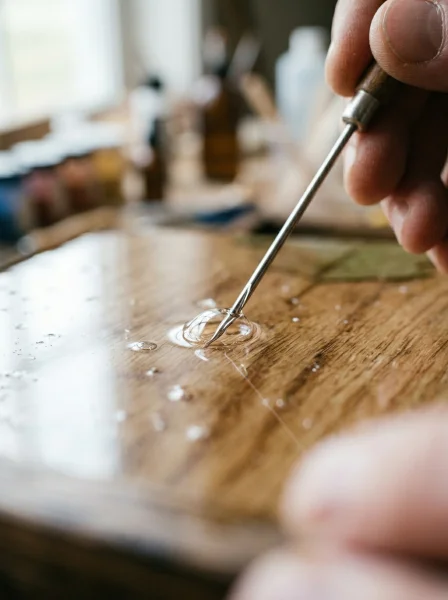
The most effective fix is a heat gun or butane torch passed quickly over the surface within the first 10–20 minutes of pouring. The heat breaks the surface tension of the bubbles, popping them almost instantly. Keep the tool moving — don’t hover in one spot or you risk scorching the resin.
A quick spritz of isopropyl alcohol (91% or higher) from a spray bottle also works well. The alcohol lowers surface tension and pops small bubbles without overheating the piece.
Prevention Tips for Bubble-Free Resin
Warm your resin bottles in a warm water bath for 5–10 minutes before mixing. This thins the viscosity and allows air to escape naturally. Always stir slowly and deliberately — scraping the sides and bottom of your cup without whipping the mixture.
Pour close to the surface, not from a height. If you’re working on fun crafts to make at home, taking an extra five minutes on your mixing technique will save you hours of frustration later.
Problem 2: Yellowing Resin — Why It Happens and How to Fix It

Nothing is more disheartening than opening a cured resin piece only to find it has turned a warm yellow or amber tint — especially when you used a clear or white pigment. Yellowing is one of the trickiest resin problems because it often happens after the piece is already finished.
Common Causes of Yellowing
- UV exposure — sunlight degrades most standard epoxy resins over time
- Low-quality resin — budget resins often lack UV stabilizers
- Overheating during cure — excess heat accelerates yellowing
- Old or improperly stored resin — oxidation affects color stability
How to Fix Already-Yellowed Resin
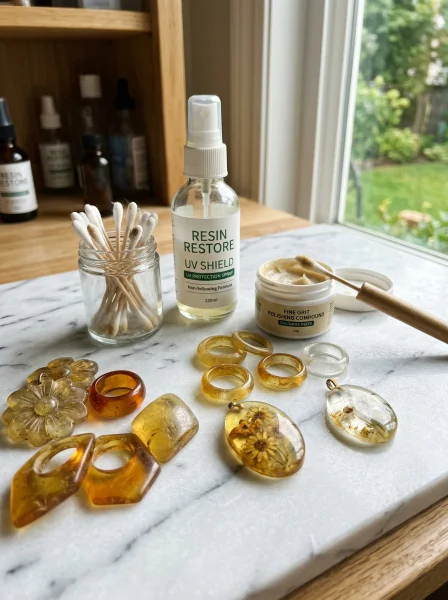
Unfortunately, you cannot reverse yellowing in already-cured resin. However, you can mask it. Sand the surface lightly (start at 400 grit, work up to 2000 grit), then apply a fresh coat of UV-resistant resin on top.
This won’t undo the color change, but it creates a clear, glossy top layer that minimizes the visual impact. For decorative pieces, you can also add an opaque pigment or alcohol ink in a top pour to redirect the aesthetic entirely. Sometimes a mistake becomes the design.
Preventing Yellowing from the Start
Invest in a UV-resistant or UV-stabilized epoxy resin. These are specifically formulated to resist photo-oxidation and stay clear for much longer. Keep finished pieces out of direct sunlight, and store unused resin in a cool, dark place with caps tightly closed.
If you’re making pieces as gifts or for sale, UV protection is non-negotiable. Explore more handmade gift craft ideas that pair beautifully with high-quality resin work.
Problem 3: Sticky or Soft Spots — Diagnosing and Fixing Uncured Resin

A sticky, tacky, or rubbery surface after the expected cure time is one of the most alarming resin problems. It feels like something went seriously wrong — and it usually means the resin didn’t cure properly.
Why Is Your Resin Still Sticky?
- Incorrect mixing ratio — this is the most common cause; even a small deviation throws off the chemical reaction
- Incomplete mixing — unmixed resin or hardener left on the cup walls creates soft spots
- Too cold an environment — resin needs warmth (ideally 75–85°F / 24–29°C) to cure properly
- Too much colorant or additives — overloading resin with pigment, glitter, or alcohol ink can inhibit curing
How to Fix Sticky Resin
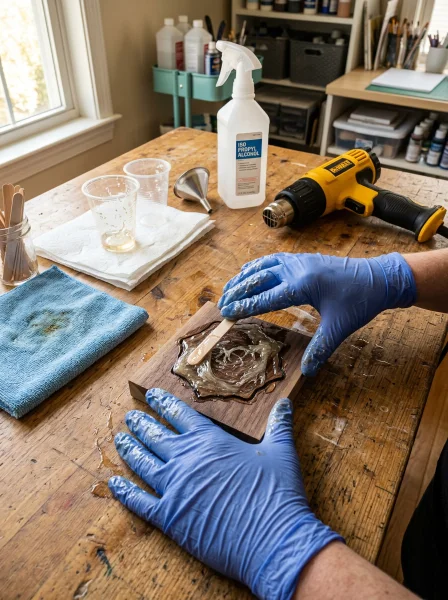
If the piece is still in the mold and only slightly tacky, move it to a warmer area and give it another 24–48 hours. Sometimes resin just needs more time and heat to finish curing. If sections remain permanently sticky after 72 hours, you have two options.
For small sticky spots, sand the area down aggressively (80–120 grit), remove all the uncured material, wipe clean with isopropyl alcohol, and pour a fresh thin layer of properly mixed resin over the top. For widespread stickiness, the entire pour may need to be scraped out and redone — painful, but necessary.
Getting Your Mixing Ratio Right Every Time
Always use measuring cups with clear ml markings — eyeballing ratios never ends well. Mix for a full 3–5 minutes, scraping the sides and bottom constantly. Then transfer to a second clean cup and mix for another 1–2 minutes.
This two-cup method dramatically reduces unmixed pockets. Resin crafting fits perfectly into bigger creative projects. If you enjoy home craft projects quick to complete on weekends, resin casting is a satisfying addition once you’ve got the basics down.
Bonus Tips: Avoiding All Three Problems at Once

The best craftspeople don’t just fix mistakes — they create systems that prevent them. Here are a few habits that address bubbles, yellowing, and sticky spots simultaneously:
- Work in a temperature-controlled space between 70–80°F (21–27°C)
- Use a digital kitchen scale for precise ratio measurements by weight
- Choose quality resin formulated for your specific project type (casting vs. coating)
- Do a small test pour before committing to a large piece
- Cover curing pieces with a dust cover to prevent surface contamination and UV exposure
Resin also pairs amazingly well with budget-friendly embellishments. If you’re looking to keep costs down without sacrificing style, check out these dollar store crafts ideas that look genuinely high-end inside a resin cast.
Conclusion: Master the Fixes and Level Up Your Resin Work
Once you understand why things go wrong, resin becomes far less intimidating. Learning how to fix common resin mistakes: bubbles, yellowing, and sticky spots is really about building awareness — of your environment, your materials, and your technique. Bubbles can be popped with heat or alcohol.
Yellowing can be minimized with UV-stable resin and smart storage. Sticky spots can be diagnosed, sanded, and repoured with a properly mixed batch. Every resin crafter, even the most experienced ones, has had a pour go sideways.
What separates the good ones is knowing exactly what to do next. With the tips in this guide, you’re equipped to troubleshoot confidently and finish with results you’re proud of. Whether you’re crafting gifts, home décor, or jewelry, these fixes will keep your projects on track and your resin game strong.
Ready to put these tips into practice? Try your next resin project with fresh eyes — apply one new technique from this guide and see the difference it makes. Share your results or questions in the comments below.
We’d love to hear what you’re working on!
Frequently Asked Questions
Q: What is the fastest way to fix bubbles in resin after pouring? A: The fastest method is to use a butane torch or heat gun passed quickly over the surface within 10–20 minutes of pouring. Alternatively, a light spritz of 91%+ isopropyl alcohol will pop surface bubbles almost immediately.
Always keep your heat source moving to avoid scorching. Q: Can yellowed resin be restored to its original clear color? A: Unfortunately, yellowing in cured resin cannot be reversed.
Your best option is to sand the surface and apply a fresh top coat of UV-resistant resin to restore clarity and gloss. To prevent future yellowing, always use UV-stabilized resin and keep finished pieces away from direct sunlight. Q: How do I fix common resin mistakes like sticky spots without starting over?
A: If the sticky area is localized, sand it down to remove the uncured resin, wipe the area with isopropyl alcohol, and apply a fresh layer of properly mixed resin. If the stickiness is widespread, the root cause is usually an incorrect mixing ratio — and a full redo may be necessary to get a clean result. Q: How long should I mix resin to avoid sticky spots?
A: Mix for at least 3–5 minutes, scraping the sides and bottom of your mixing cup throughout. Then pour into a second clean cup and mix for an additional 1–2 minutes. This two-cup method ensures thorough blending and significantly reduces the chance of unmixed pockets causing sticky areas.
Q: Does temperature really affect how resin cures? A: Yes, temperature is one of the most critical factors in resin curing. Resin cures best between 75–85°F (24–29°C).
Working in a cold environment slows or stalls the chemical reaction, often resulting in soft or sticky spots. If your workspace is cool, warm your resin bottles before mixing and consider using a small space heater nearby during the cure period.