Best Macrame Cord for Beginners: What to Buy and What to Avoid
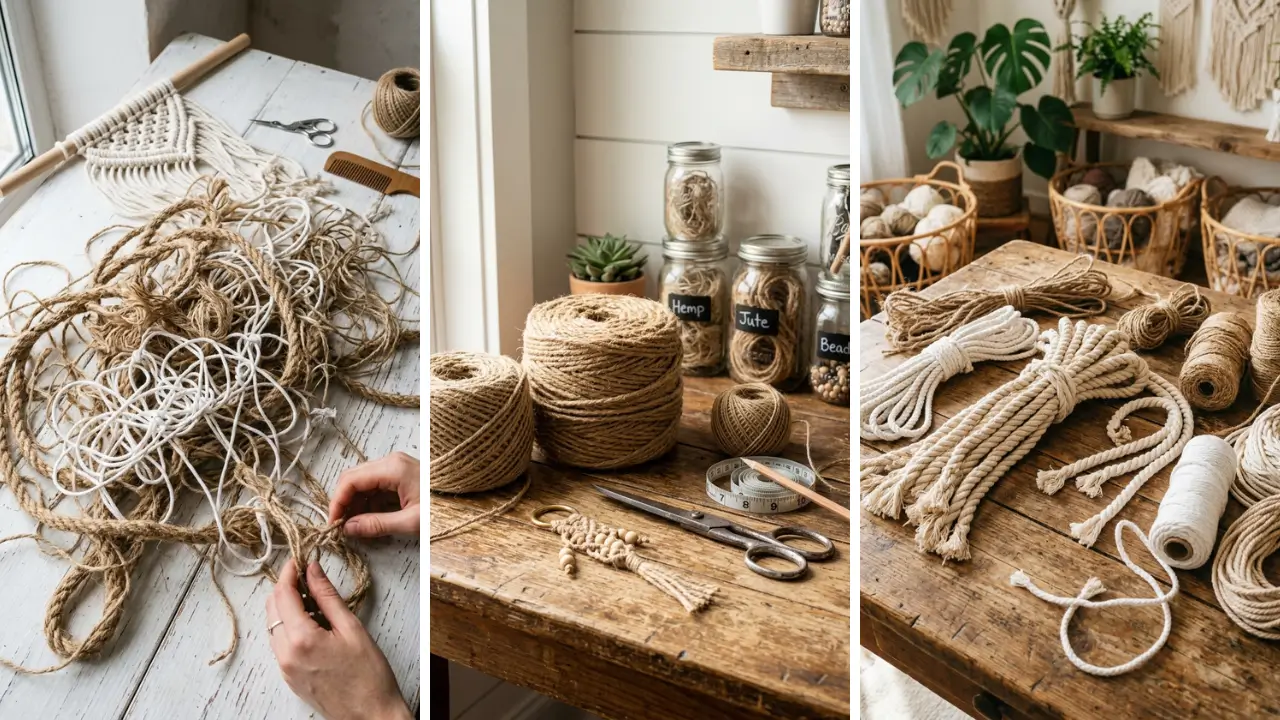
So you’ve decided to try macrame — welcome to one of the most satisfying fiber arts out there. But before you tie your first knot, there’s one decision that can make or break your entire experience: choosing the right cord. Knowing the best macrame cord for beginners isn’t just a nice-to-have — it’s the difference between a beautiful wall hanging and a tangled, frustrating mess.
This guide walks you through exactly what to look for, what materials to trust, what to skip, and how to set yourself up for success from day one.
Why the Right Macrame Cord Matters More Than You Think
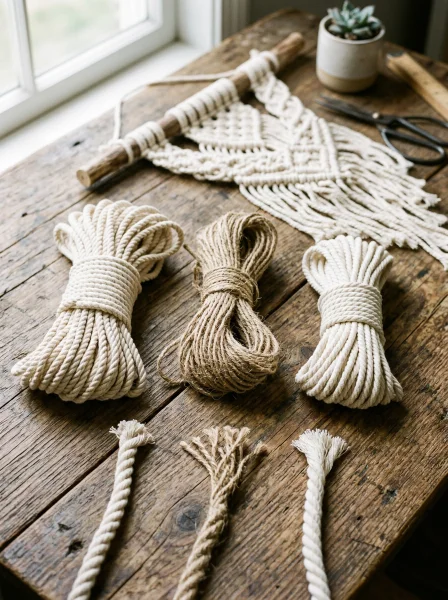
Beginners often underestimate how much the cord itself affects the outcome. The wrong material can be too stiff to knot comfortably, too slippery to hold its shape, or so cheap it frays after a few rows. Your hands will feel it immediately.
Good cord works with you. It holds knots firmly, unravels cleanly when you make mistakes (and you will — everyone does), and looks polished once the project is finished. Think of it as your most important tool, not just a raw material.
Macrame has also exploded in popularity as a creative outlet and a source of DIY handmade gifts — from wall art to plant hangers to keychains. Starting with quality cord means your finished pieces actually look like the inspiration photos you saved.
Best Macrame Cord for Beginners: Top Material Types
1. Single Strand Twisted Cotton Cord
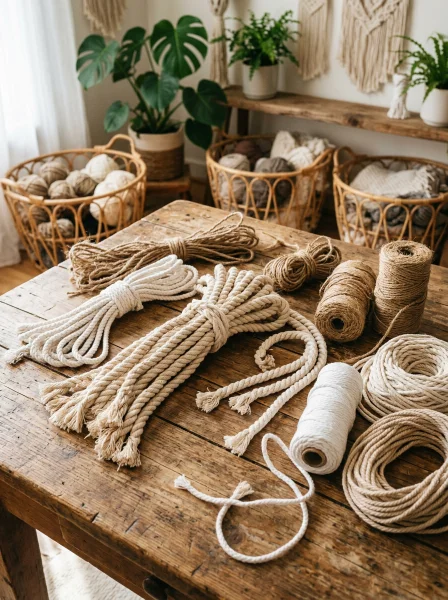
This is the top recommendation for most beginners. Single strand twisted cotton is soft, flexible, and holds square knots and spiral knots beautifully. It’s forgiving when you need to undo a section, and it comes in a huge range of thicknesses.
For wall hangings, a 3mm to 5mm thickness is ideal. For smaller projects like keychains or jewelry, go with 1mm to 2mm. Cotton is also easy to brush out into fringe with a pet comb or stiff brush — perfect for that fluffy boho aesthetic.
2. 3-Ply Twisted Cotton Cord
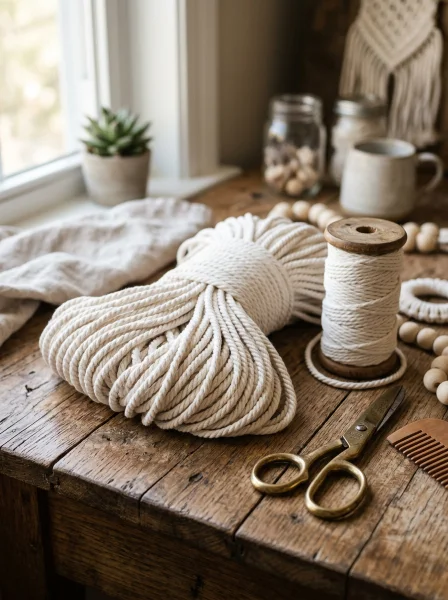
Three-ply twisted cord has more body and structure than single strand. It’s excellent for plant hangers and anything that needs to bear weight. The texture also photographs beautifully, which matters if you plan to sell or share your work online.
The slight downside: it can be harder to unravel when correcting mistakes. For your very first project, single strand might feel more forgiving, but 3-ply is worth trying as soon as you’re comfortable with basic knots.
3. Braided Cotton Cord
Braided cord creates a smoother, more uniform look. It’s less fluffy when brushed out but gives a cleaner, more modern finish. Many beginners love it for minimalist designs and geometric patterns.
It knots well and is quite durable. Just note that braided cord doesn’t unravel as easily as twisted, so mistakes require a bit more patience to fix.
What Cord Thickness Should Beginners Use?
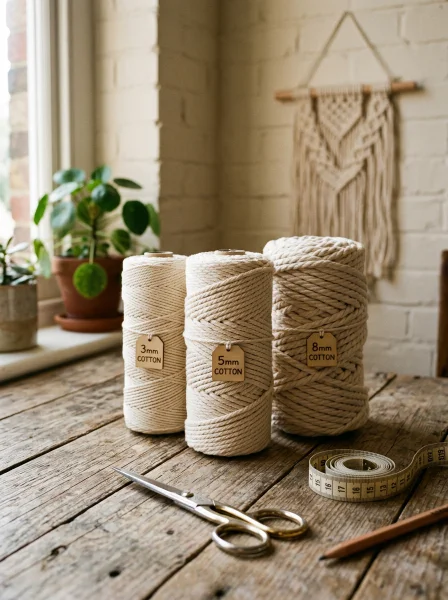
Thickness is one of the most confusing parts when you’re just starting out. Here’s a simple breakdown:
- 1mm–2mm: Jewelry, keychains, small ornaments
- 3mm–4mm: Wall hangings, dream catchers, table runners
- 5mm–6mm: Plant hangers, larger wall art, bags
- 7mm+: Statement pieces, chunky boho decor
If you’re completely new and haven’t decided on a project yet, 3mm single strand twisted cotton is the most versatile starting point. It works for a wide range of beginner patterns and is widely available.
What to Avoid: Cord Types That Frustrate Beginners
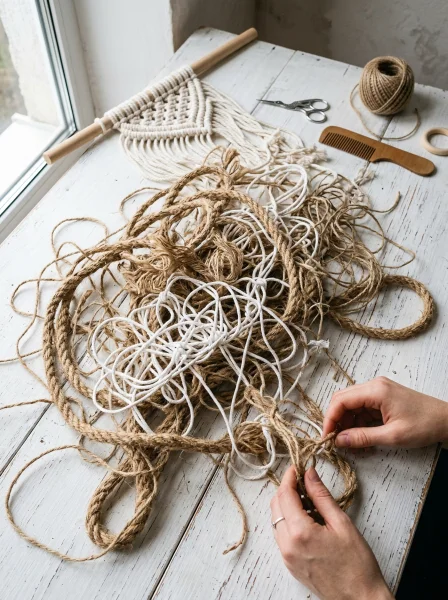
Not all cord is created equal, and some types will genuinely make learning harder than it needs to be. Here’s what to steer clear of as a beginner.
Nylon and Polyester Cord
Synthetic cords are slippery. Knots don’t stay tight, especially with square knots and half hitches. You’ll spend more time retightening than actually making progress.
Save synthetic materials for more advanced projects where you specifically want that texture.
Jute and Hemp (for Absolute Beginners)
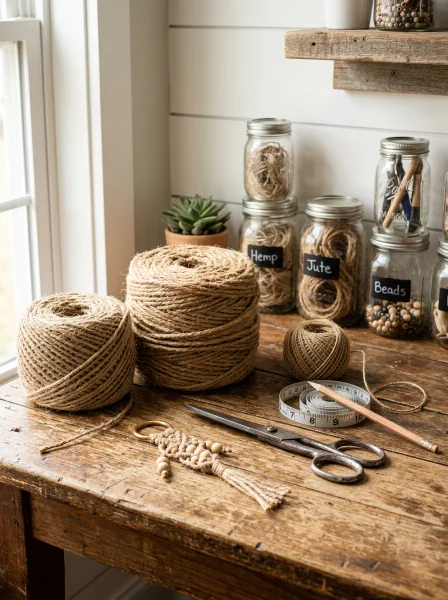
Jute looks beautiful in photos, but it’s rough on your hands and sheds constantly. Hemp is more durable but still coarser than cotton. Both can work once you’ve got the basics down, but as your very first cord?
They’ll make the experience less enjoyable than it should be.
Very Thin Cord Under 1mm for Large Projects
Trying to make a wall hanging with ultra-thin cord is like writing a book with a toothpick. It takes forever, the knots are nearly invisible, and hand fatigue sets in fast. Match your cord thickness to your project size — always.
Cheap, Unlabeled Cord from Unknown Brands
This is where beginners lose money thinking they’re saving it. Bargain bin cord often has inconsistent thickness, breaks under tension, and pills or fuzzes up in ugly ways. You don’t need to spend a fortune, but do buy from brands that clearly label their cord weight and material.
This kind of project is actually one of the most rewarding fun crafts to make at home — don’t let bad materials ruin it.
Best Brands to Look For (and What to Expect)
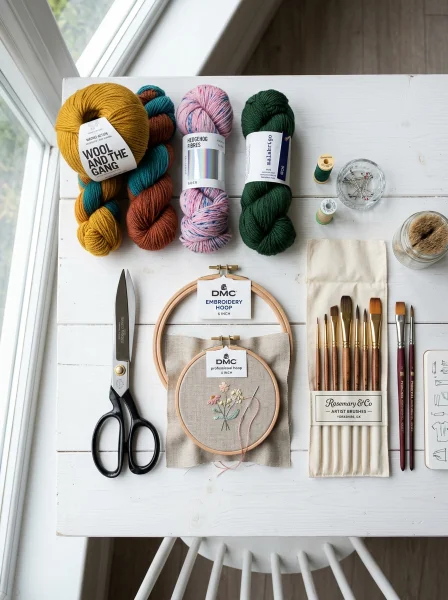
When shopping for your first macrame cord, look for brands that specialize in fiber arts or crafting supplies. Key things to check on the label:
- 100% natural cotton (not cotton blend with synthetic filler)
- Clear weight/thickness in millimeters
- Twist or braid type noted
- Single-color spool (variegated cord is harder to work with as a beginner)
You can find excellent options at craft stores, online marketplaces, and even dollar stores for smaller sample rolls. If you enjoy exploring dollar store crafts ideas, some locations carry basic cotton cord that’s perfectly usable for practice pieces and small beginner projects.
How Much Cord Do You Need for Your First Project?
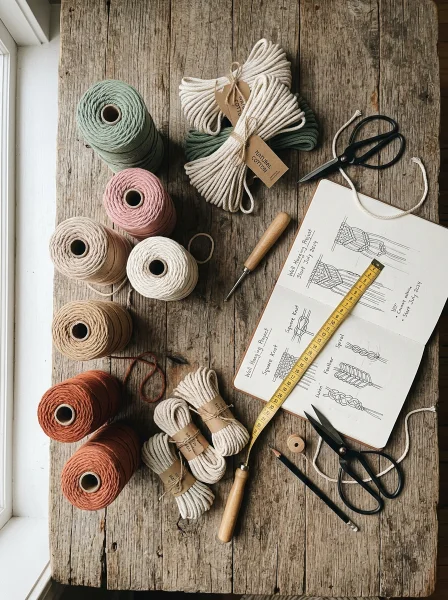
A very common beginner mistake is buying too little cord. Macrame uses far more material than you’d expect because of how the knots consume length. A general rule of thumb: each working cord should be 4 times the finished length of your piece — and some knot-heavy patterns require up to 8 times.
For a simple 12-inch wall hanging, plan for individual cords of at least 48 inches each, ideally longer. When in doubt, buy more. Leftover cord is always useful for practice or small accent pieces.
If you’re looking for structured starter ideas, many home craft projects quick guides include supply estimates specifically designed for beginners so you don’t waste cord or money on your first attempt.
Setting Up for Success: A Few Final Tips
Beyond cord selection, a few setup habits will dramatically improve your early results. First, always work with your cord at room temperature — cold cord is stiffer and harder to manipulate. Second, keep your workspace clean; dust and pet hair stick to natural cotton fibers and are hard to remove once knotted in.
Start with a dowel rod or a piece of driftwood as your anchor point. It gives you something stable to work against and helps keep tension consistent as you learn. Consistent tension is the single biggest factor in how professional your finished piece looks.
Macrame is also a fantastic way to create thoughtful handmade gift craft ideas for friends and family. Even a beginner-level plant hanger or small wall hanging feels genuinely special when it’s handmade.
Conclusion
Choosing the best macrame cord for beginners comes down to a few simple principles: go with 100% natural cotton, choose single strand twisted cord in 3mm–5mm for most starter projects, and avoid slippery synthetics or unlabeled bargain cord that’ll fight you every step of the way. The good news is that once you have the right materials, macrame is genuinely one of the most accessible and rewarding crafts you can pick up. Your hands learn fast, the knots become muscle memory quickly, and the results are beautiful enough to display or gift with pride.
Understanding the best macrame cord for beginners — what to buy and what to avoid — is your first real step toward becoming confident in this craft. From here, it’s just practice, creativity, and the joy of making something with your own hands. Ready to start knotting?
Grab a spool of 3mm natural cotton cord, pick a simple pattern, and give yourself permission to enjoy the process. Drop a comment below with your first project idea — we’d love to cheer you on!
Frequently Asked Questions
Q: What is the best macrame cord for beginners who are just starting out? A: The best macrame cord for beginners is 100% natural single strand twisted cotton in 3mm to 5mm thickness. It’s soft on the hands, holds knots well, and is easy to undo when you need to correct mistakes.
It’s also widely available and affordable, making it ideal for learning without a big upfront investment. Q: What macrame cord thickness should I buy for a wall hanging? A: For a standard wall hanging, 3mm to 5mm twisted cotton cord is the sweet spot.
Thinner cord works for small decorative pieces, while 5mm and above is better suited for larger statement pieces or anything requiring structural strength like plant hangers. Q: Is jute cord good for beginner macrame projects? A: Jute can work for macrame, but it’s not ideal for absolute beginners.
It’s rougher on the hands, sheds fibers, and is less forgiving when undoing knots. Cotton is a much more comfortable and beginner-friendly starting point. Once you’re comfortable with basic knots, you can experiment with jute for a more rustic look.
Q: How do I know if I’m buying quality macrame cord? A: Quality cord will clearly state the material (100% cotton), the thickness in millimeters, and the type (twisted or braided). It should feel consistent in thickness throughout and not shed excessively when rubbed.
Avoid cord that is labeled vaguely or sold without any material details — inconsistent quality can ruin an otherwise well-executed project. Q: Can I use regular rope or yarn instead of macrame cord for beginner projects? A: Regular yarn is too thin and soft for most macrame — the knots won’t hold their definition.
Regular rope can work in a pinch but is often too stiff or rough. For the cleanest results and the best learning experience, investing in proper macrame cord specifically designed for knotting is always worth it, even for practice pieces.