DIY Bird Feeders: 12 Easy Ideas and Recipes
Quick summary
- Hard fat sets around seed and holds; soft spreads and cooking oils smear on feathers and turn rancid.
- Nylon mesh bags catch feet and beaks, which is why no bird charity recommends hanging them out.
- A feeder nobody scrubs spreads disease, so this is a craft that carries a small ongoing duty.
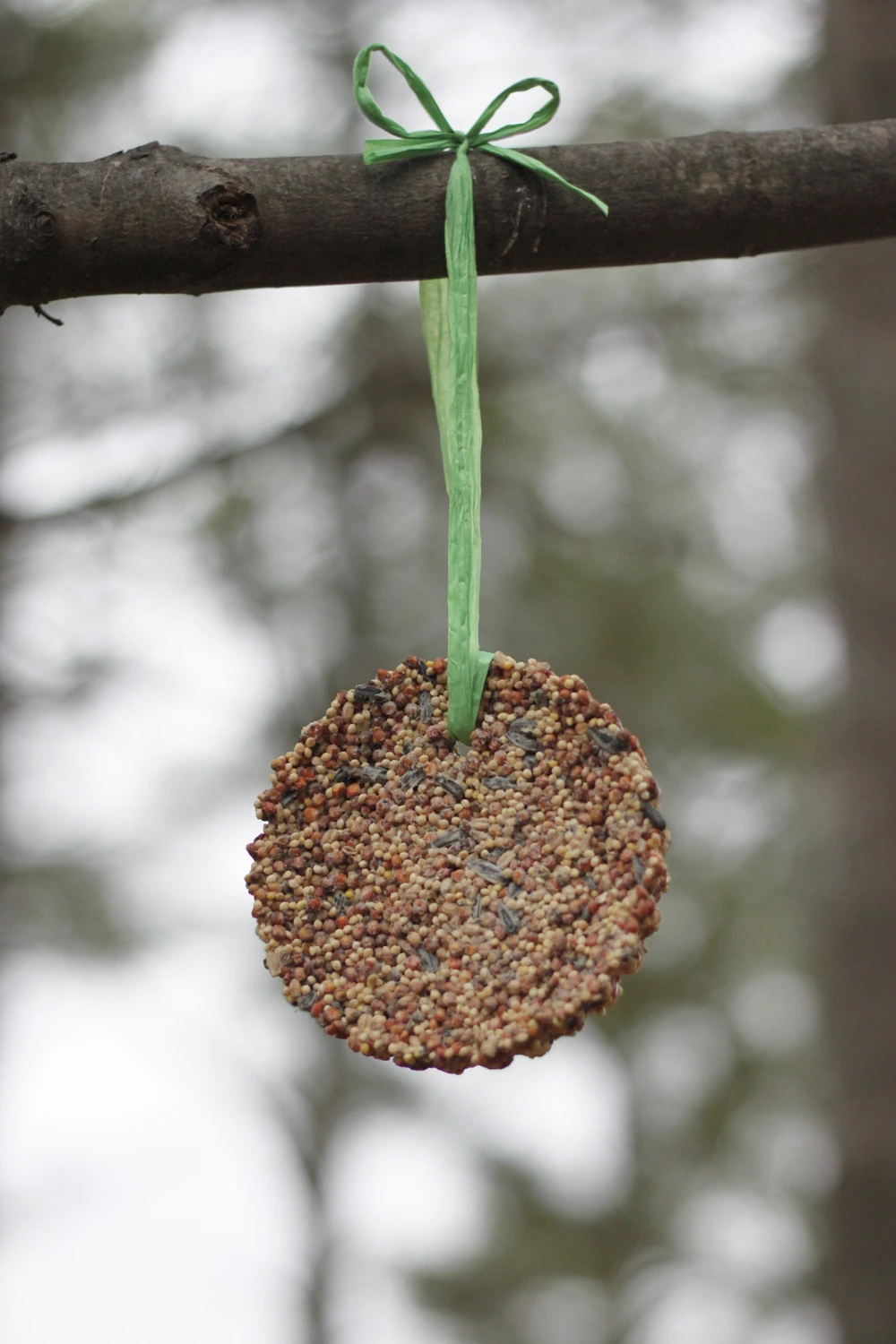
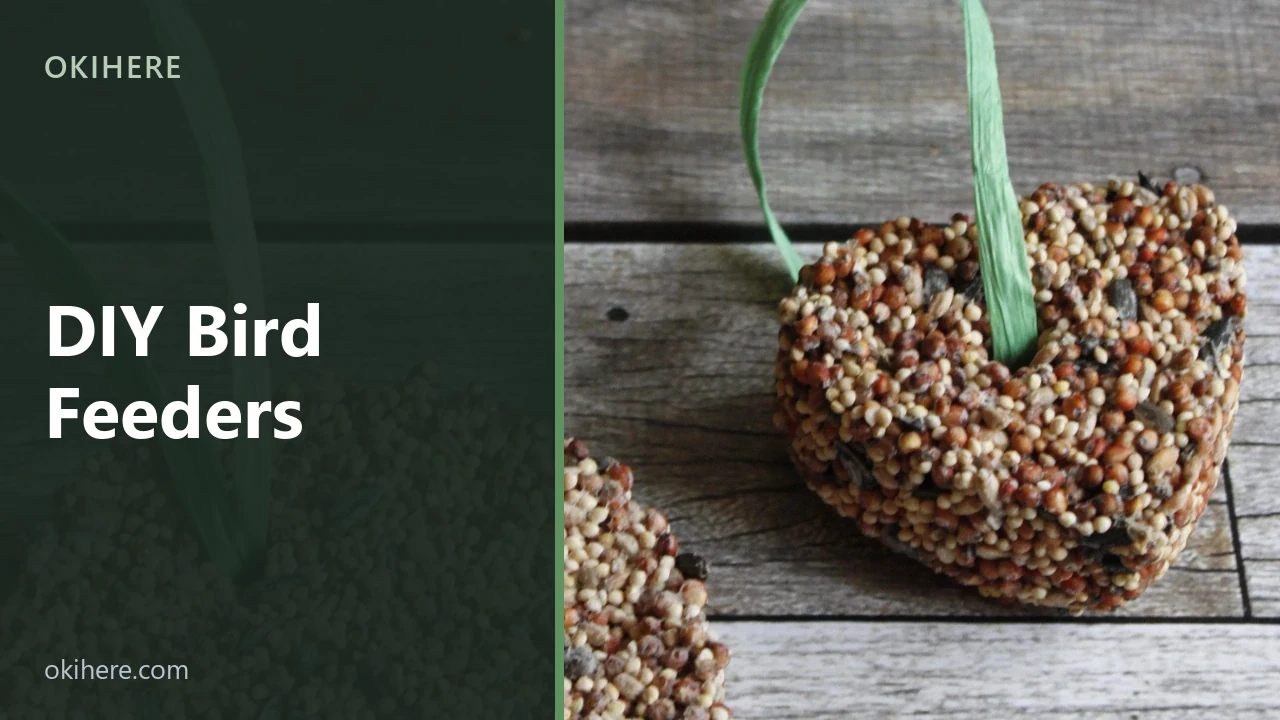
Quick answer: Melt one part hard fat, such as suet or lard, stir in two parts dry bird seed, press the mixture into a tin or mould with a loop of string laid in it, and chill until firm. Turn it out, hang it somewhere with cover nearby, and clean the spot regularly. The whole thing takes twenty minutes plus an hour in the fridge.
Have you ever had a garden that looked finished and still felt empty? You are not alone. This site has seventeen articles about garden and outdoor decorating and not one about the only addition that moves on its own.
These twelve feeders run from a twenty-minute seed cake upward. Each lists what it takes, who it suits, and the detail that decides whether birds actually use it.
What Goes In the Mix
Short list, and the exclusions matter more than the inclusions.
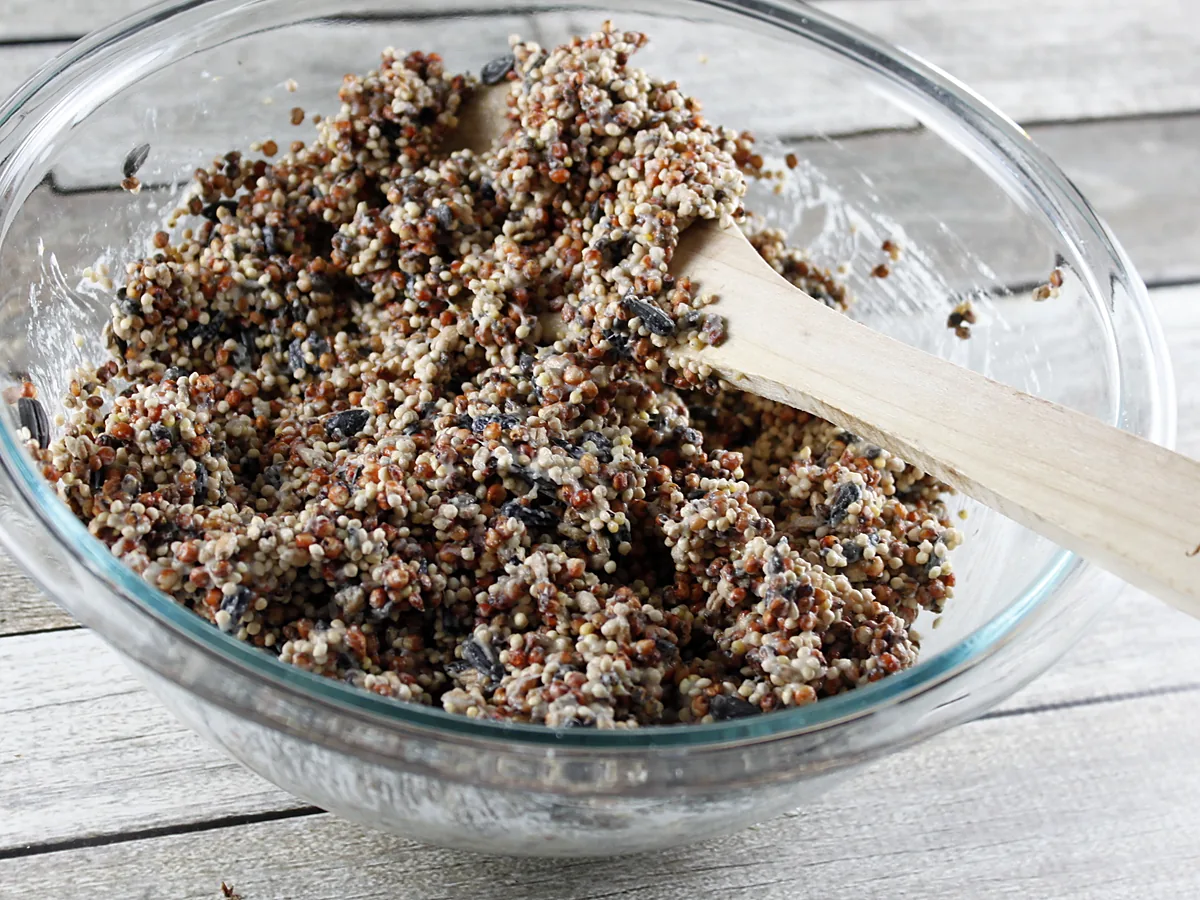
- A good seed mix. Sunflower hearts, millet and crushed peanuts suit the widest range of garden birds. Cheap mixes padded with split peas and lentils get kicked onto the ground and left.
- Hard fat. Suet or lard. These set solid at room temperature, which is the whole point, and they stay put on a bird’s feathers for no time at all.
- String or raffia, not mesh. See below. This is the one choice here that can actually hurt something.
- A tin or mould. A tart tin, a cookie cutter, a yoghurt pot. Nothing needs to be bought.
What never goes in: soft margarine and vegetable oils, which smear onto feathers and ruin their waterproofing; fat poured off a roasting tin, which carries meat juices and spoils quickly; anything salted; desiccated coconut, which swells after being eaten; and anything mouldy. Bread fills birds up without feeding them and should not be a staple.
The Base Seed Cake
Every moulded feeder below is this, shaped differently.
- Melt the fat gently. Low heat, just until liquid. It does not need to be hot and it should never smoke.
- Stir in the seed. Roughly two parts dry mix to one part fat. Keep adding seed until a squeezed handful holds its shape.
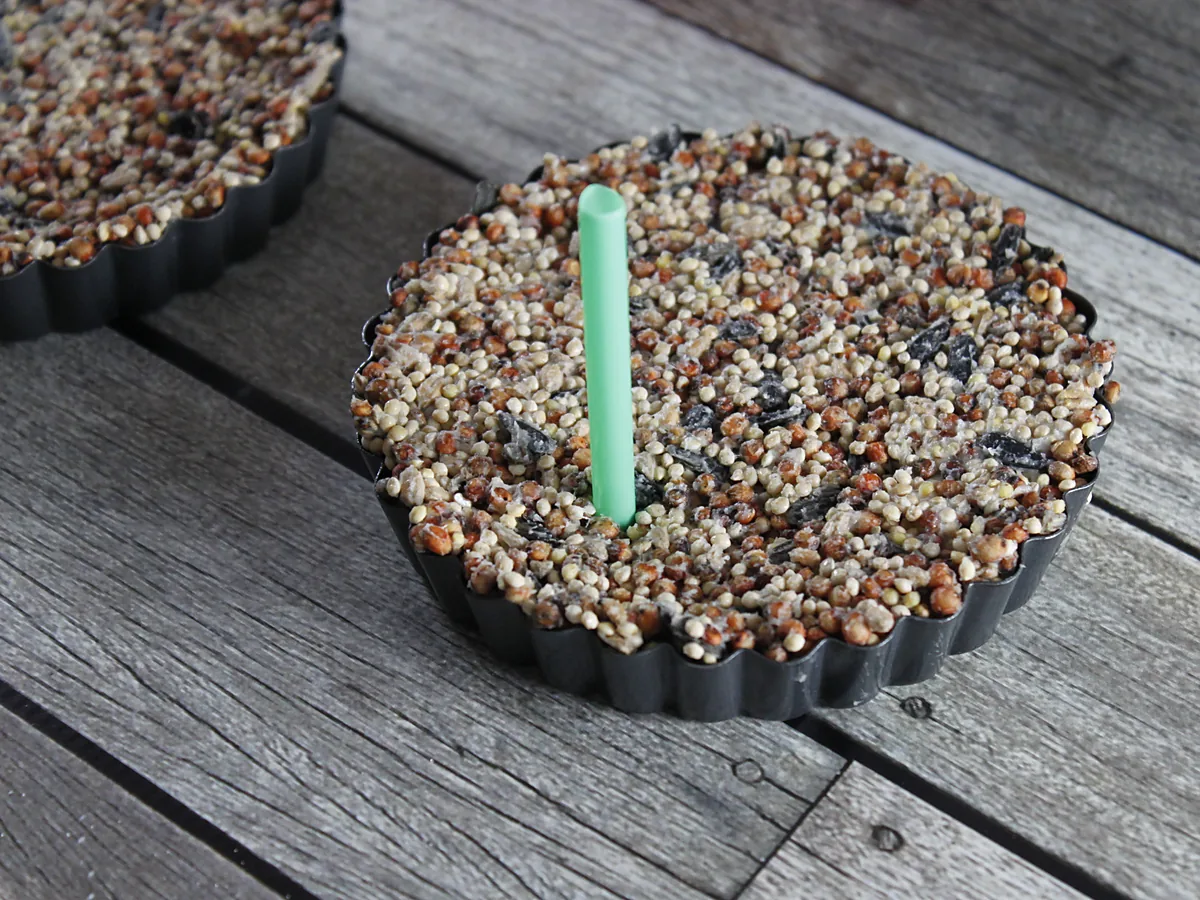
- Lay the loop in first. Put the string into the mould before the mixture, with the knot at the bottom, so the cake sets around it rather than hanging off its surface.
- Press firmly. Push it down with the back of a spoon. Air pockets are what make a cake crumble apart in the first frost.
- Chill for an hour, then turn out. If it sticks, a minute in warm water round the outside of the tin releases it.
12 Feeders to Make
1. Moulded Seed Cake
Needs: tart tin, string. Time: 20 minutes plus chilling. The recipe above, and the one to start with.
2. Pine Cone Feeder
Needs: an open pine cone, fat, seed. Time: 15 minutes.
Press the mixture between the scales and roll the whole thing in loose seed. The classic, and the one that works best for small clinging birds.
More to do with the same material is in these pine cone craft ideas.
3. Teacup Feeder
Needs: an odd cup and saucer, strong glue. Time: half an hour plus curing.
Glue the cup on its side to the saucer and hang the pair level. Charming, and genuinely useful because the saucer catches what spills.
4. Orange Half Feeder
Needs: half an orange, string. Time: 10 minutes.
Scoop it out, fill with seed, hang from three strings. It lasts a few days rather than weeks, which is the honest trade for the easiest one here.
5. Log Feeder
Needs: a short log, a wide drill bit. Time: an hour.
Drill holes part way through and pack them with the fat mixture. It looks like nothing at all in a tree, which is the appeal, and it lasts years.
6. Hanging Tray
Needs: a plate or shallow dish, cord. Time: half an hour.
Four cords knotted above a dish. Suits ground-feeding birds that will not cling to a cake, which is a group most feeders ignore completely.
7. Jar and Saucer Feeder
Needs: a jar, a saucer, wire. Time: an hour.
The jar holds the seed and releases it slowly into the saucer as it empties. Mount it under cover, because an open jar collects rain and the seed spoils.
8. Seed Wreath
Needs: a ring mould or bundt tin. Time: 20 minutes plus chilling.
The same recipe in a ring. It is the one that looks deliberate enough to hang at the front of the house.
The hanging and finishing side of it carries over from these simple seasonal wreaths.
9. Window Ledge Tray
Needs: a shallow tray with a lip. Time: 20 minutes.
Best for watching from indoors. Read the siting section below first, because a tray at the wrong distance from glass causes collisions rather than preventing them.
10. Terracotta Saucer on a Post
Needs: a saucer, a post, screws. Time: an hour.
Simple, heavy enough not to swing, and easy to lift off and scrub, which matters more than it sounds.
11. Apple Feeder
Needs: an apple, a stick, string. Time: 10 minutes.
A whole apple threaded on a stick as a perch. Thrushes and blackbirds take fruit that will not touch a seed cake, and windfalls left on the lawn do the same job for nothing.
12. Milk Carton Feeder
Needs: a clean carton, scissors. Time: half an hour.
Cut a wide opening, leave a lip at the bottom, punch drainage holes. The one to make with children, and the one to replace rather than clean when it gets grubby. Anything left outdoors fails in ways indoor projects do not, which is the subject of these outdoor DIY mistakes.
Where to Hang It
Siting decides whether a feeder gets used, and in one case whether it does harm.
- Near cover, but not against it. Birds want a branch to bolt to, roughly two metres away. Dense shrubs right beneath a feeder give cats somewhere to wait.
- Very close to a window, or well away from it. Glass reflections cause fatal strikes. A feeder within about a metre means birds cannot build up speed; beyond about ten metres they are unlikely to mistake the reflection for sky. The middle distance is the dangerous one.
- Out of the wind and the midday sun. Wet seed spoils and warm fat goes soft and rancid.
- Put water out too. A shallow dish, kept unfrozen, matters as much as the food and is the thing most gardens are missing.
The surrounding decisions are covered in garden decor for beginners, and renters working with a balcony rather than a garden will find more in balcony garden decor ideas.
The Part That Is Not Optional
This is the only craft on this site that creates an ongoing responsibility, and it is worth saying plainly rather than burying it.
Feeders concentrate birds in one spot, and that spreads disease between them. Trichomonosis and salmonellosis both travel this way, and both are unpleasant deaths. The counter is not complicated: scrub feeders and trays in hot soapy water regularly, rinse well, let them dry, and move the feeding spot around the garden rather than leaving it in one place for years. Sweep up spilled seed underneath.
If you see birds that look lethargic, fluffed up and reluctant to move, take the feeders down and stop feeding for a couple of weeks so the birds disperse. Put them back only after cleaning everything.
Two other rules, both absolute. Never hang seed or nuts in nylon mesh bags of the kind peanuts are sometimes sold in; feet get tangled and beaks get trapped. And avoid loose whole peanuts in spring and summer, when a parent can carry one back to a chick that cannot swallow it. Crushed or in a proper mesh feeder is fine year round.
Common Questions
When should you feed garden birds?
Year round is now the general advice, with the food adjusted by season. Winter is when it matters most, because natural food is scarce and the nights are long. The one thing to avoid is feeding heavily, stopping suddenly in a cold spell, and leaving birds that have come to depend on it.
Can you use gelatine instead of fat?
Yes, and it is the usual no-cook alternative for seed cakes made with children. It sets softer than suet and does not survive warm days as well, so make smaller cakes and expect to replace them sooner.
Why is nothing coming to my feeder?
Usually time. A new feeder can sit untouched for two or three weeks before anything trusts it. After that, check the siting: no cover nearby, too exposed, or too close to a door all keep birds away. Stale seed is the other common answer.
How do you stop squirrels taking everything?
You mostly do not, but you can make it harder. Hang feeders well away from anything that can be jumped from, use a baffle on the pole, and accept that a determined squirrel is a more interesting problem than an empty garden.
Is homemade cheaper than bought feeders?
The cakes are, especially made in a batch from one block of fat. The structures mostly are not, once you count a decent cup, cord and glue. Make them because they suit the garden, not to save money, and see the beginner crafting mistakes worth avoiding before buying supplies for a project you have not tested.
Where to Start This Weekend
Make the moulded seed cake. It uses one tin, one block of fat and a bag of seed, it is finished in an afternoon including chilling, and it tells you quickly whether birds in your garden are interested before you build anything permanent.
Then put a dish of water out next to it. For the rest of the garden, handmade garden decoration ideas covers what else can be made from the same shed, and outdoor paint for garden decor is worth reading before painting anything that will live outside.
Featured image: Personal Creations / Wikimedia Commons, CC BY 2.0, title text added by OKI HERE.