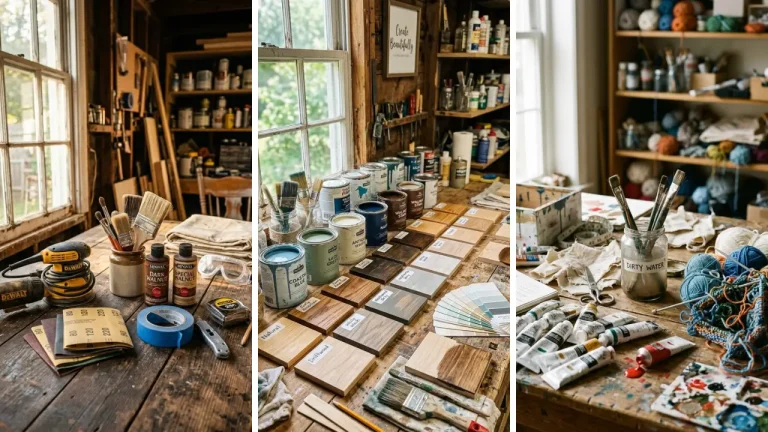
How to Style a Gallery Wall With Handmade Art (Room by Room)
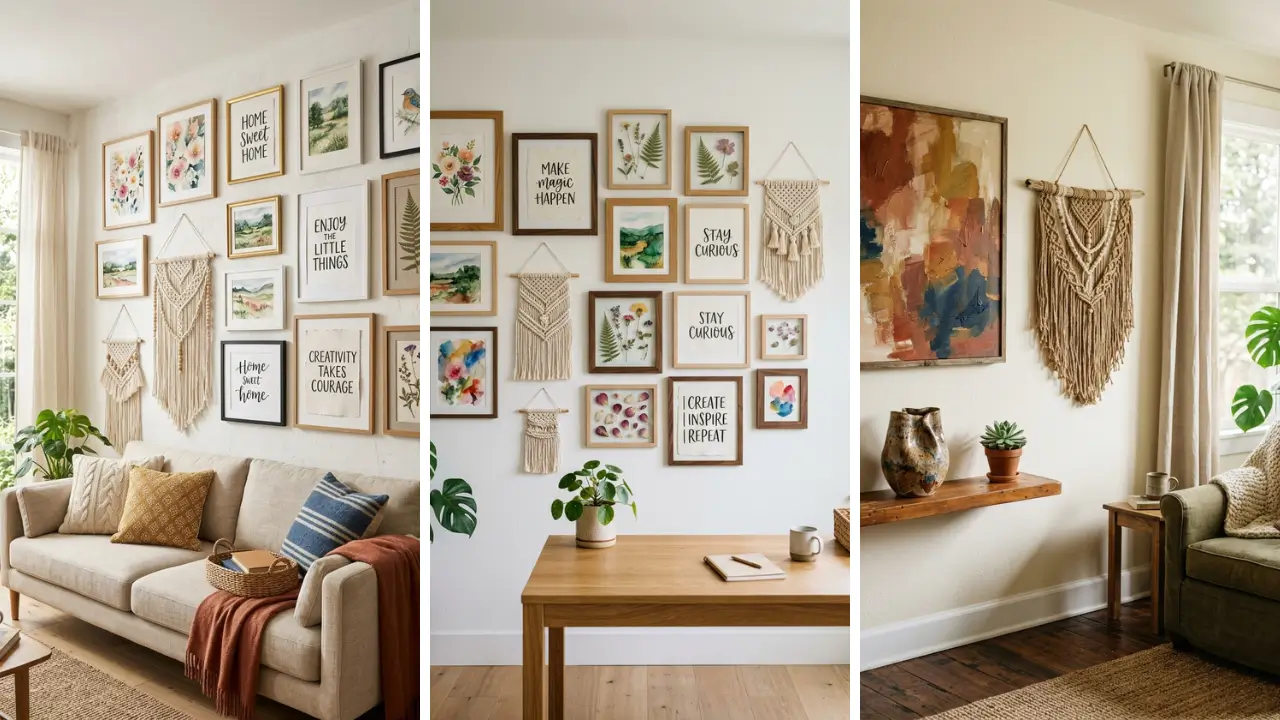
Have you ever walked into someone’s home and felt instantly captivated by their gallery wall? That perfectly curated collection of art pieces tells a story, creates atmosphere, and transforms blank walls into conversation starters. But here’s the secret most people miss: how to style a gallery wall with handmade art (room by room) is actually easier and more rewarding than buying mass-produced prints.
Handmade art adds soul, personality, and a unique touch that store-bought pieces simply cannot replicate. Whether you’re an experienced crafter or just starting your creative journey, this guide will walk you through everything you need to know. You’ll discover specific strategies for each room in your home, learn which handmade pieces work best where, and pick up professional styling tips that interior designers charge hundreds of dollars to share.
Ready to transform your walls into stunning displays of creativity? Let’s dive into the room-by-room breakdown that will make your gallery wall dreams a reality.
Understanding Gallery Wall Basics Before You Begin
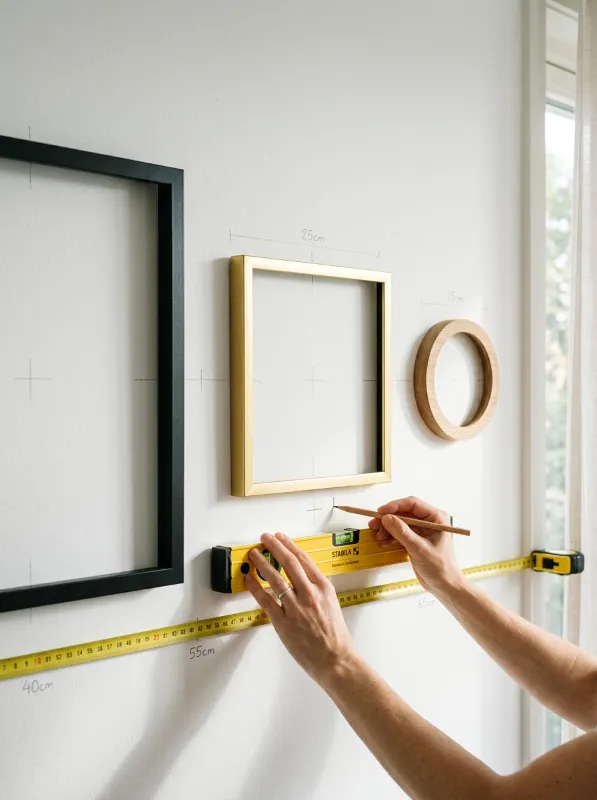
Before hanging a single piece, you need to understand the foundational principles that make gallery walls work. The most successful displays balance three key elements: scale, color harmony, and negative space. Scale refers to how your pieces relate to each other and to the wall itself.
Mix larger statement pieces with smaller supporting works. A good rule is the 60-30-10 approach: 60% medium-sized pieces, 30% small pieces, and 10% large anchor pieces. Color harmony doesn’t mean everything matches perfectly.
Instead, choose a cohesive palette with 3-5 colors that appear throughout your collection. This creates visual unity even when styles vary dramatically. Negative space—the empty areas between frames—is just as important as the art itself.
Aim for consistent spacing of 2-3 inches between pieces for a polished look. If you enjoy creating things yourself, exploring fun crafts to make at home can help you build a collection of pieces that work beautifully together.
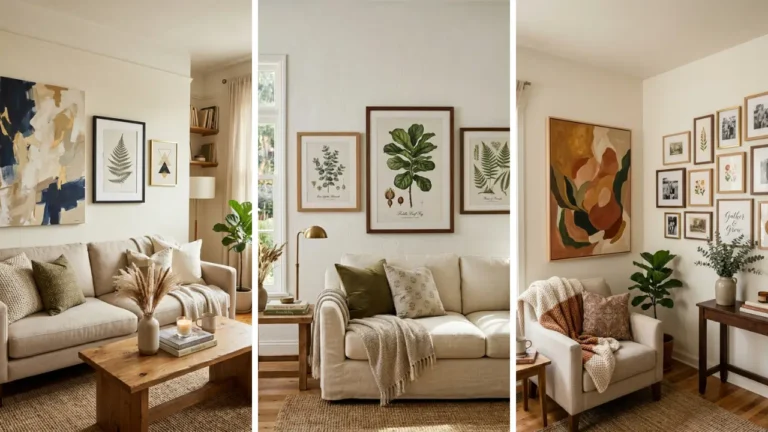
How to Style a Gallery Wall With Handmade Art in Your Living Room
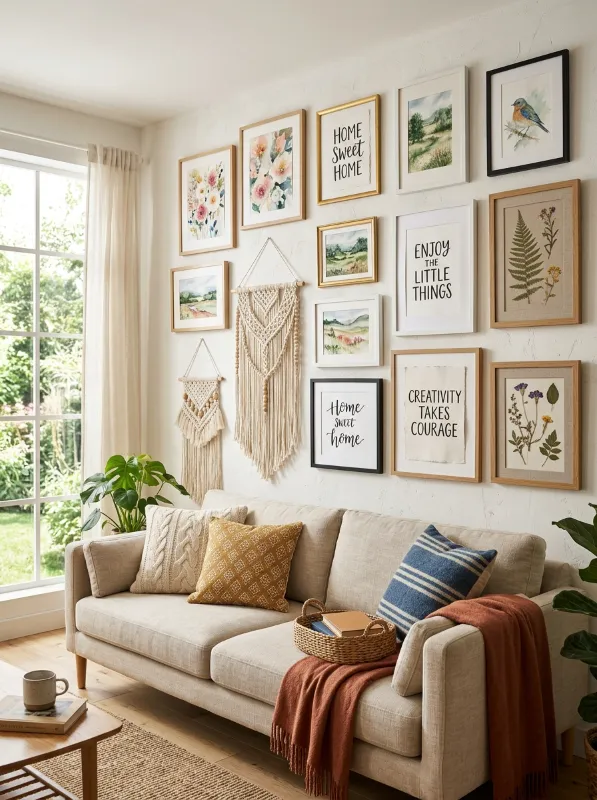
The living room is typically the first space guests see, making it prime real estate for your best gallery wall. This room calls for statement pieces that spark conversation while reflecting your personal style.
Choosing the Right Wall
Look for a wall that’s visible from your main seating area but doesn’t compete with other focal points like a fireplace or large window. The wall behind your sofa is classic for good reason—it creates a natural backdrop for the room’s primary gathering spot. Measure your wall carefully.
Your gallery should occupy roughly two-thirds of the available wall space above furniture. Going too small looks timid; too large feels overwhelming.
Best Handmade Art Types for Living Rooms
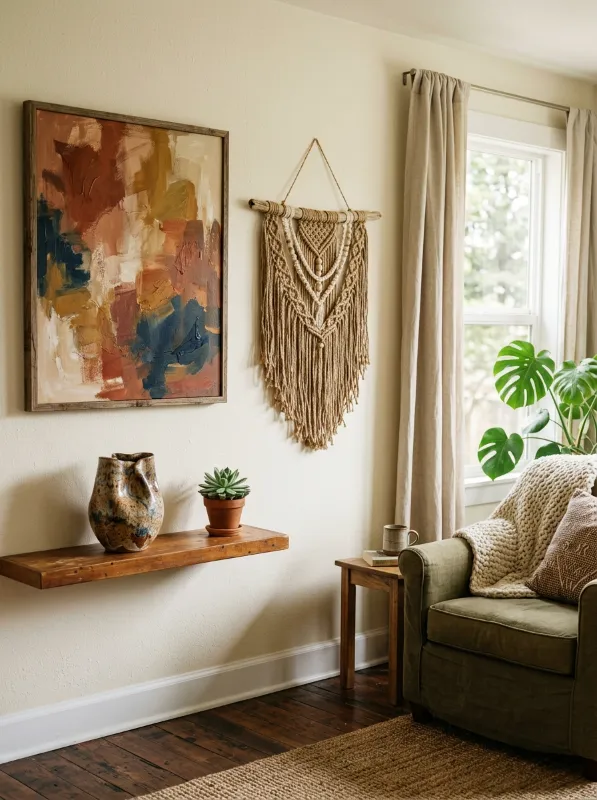
Living rooms thrive with diverse handmade pieces. Consider including:
- Textile art like macramé, woven wall hangings, or embroidered hoops
- Original paintings or sketches in varying sizes
- Framed pressed flowers or botanical prints you’ve created
- Mixed media collages that incorporate personal memorabilia
- Hand-lettered quotes that reflect your family values
The beauty of handmade art is its uniqueness. When you’re looking for inspiration, checking out handmade gift craft ideas can give you fresh perspectives on what to create for your own walls.
Styling Your Bedroom Gallery Wall for Relaxation
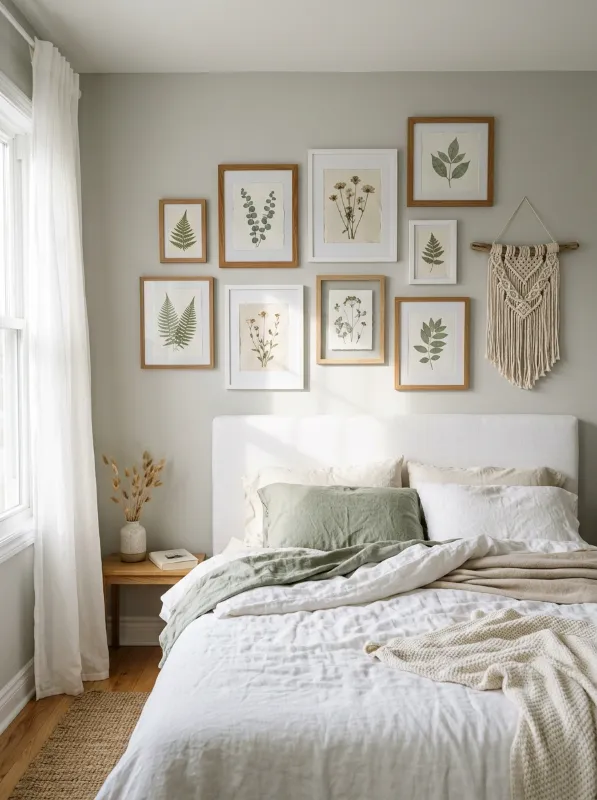
The bedroom demands a different approach than public spaces. Here, your gallery wall should promote calm and personal retreat. This is the room where you wake up and wind down, so every piece should contribute to that peaceful atmosphere.
Placement Strategies for Bedrooms
The wall above your headboard is the natural choice, but don’t overlook other options. A narrow gallery running along a hallway to your bathroom or a small cluster beside your dresser mirror can be equally impactful. For above-bed galleries, keep pieces at least 8-10 inches above the headboard.
This prevents the art from visually “floating” disconnected from the furniture below.
Handmade Art That Promotes Sleep
Choose art with soft, muted tones and calming subjects. Abstract watercolors with gentle curves work wonderfully. Avoid pieces with high contrast, busy patterns, or stimulating colors like bright red or electric orange. Handmade options perfect for bedrooms include:
- Soft watercolor abstracts in blues, greens, or neutrals
- Nature-inspired pieces like leaf prints or moon phase illustrations
- Personal photography from peaceful places you’ve visited
- Minimalist line drawings with simple, flowing forms
Kitchen and Dining Room Gallery Wall Ideas
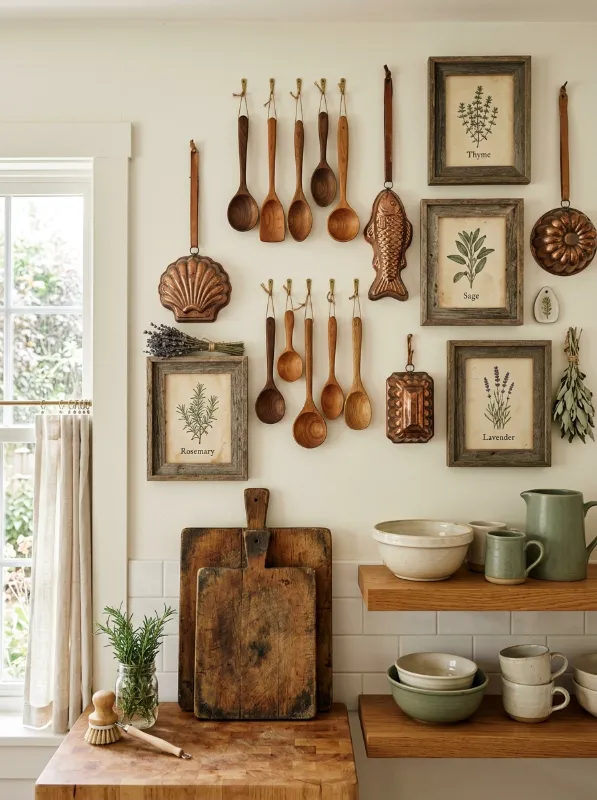
Kitchens and dining areas present unique challenges and opportunities. These high-traffic spaces need art that can handle humidity, occasional splashes, and the general chaos of daily life.
Practical Considerations for Kitchen Art
Position your gallery wall away from the stove and sink to protect handmade pieces from moisture and grease. The area above a breakfast nook, beside the refrigerator, or in an adjacent dining space works beautifully. Frame protection matters here.
Use glass-fronted frames or consider laminating delicate paper pieces. Alternatively, choose naturally durable art like ceramic plates or metal works that can handle kitchen conditions.
Thematic Art for Food Spaces
Food-related themes feel natural in kitchens but don’t limit yourself. Consider handmade botanical prints of herbs you actually cook with, or create framed vintage recipe cards from family members. If you’re working with a tight budget, dollar store crafts ideas can help you create impressive frames and displays without spending a fortune.
Sometimes the most elegant solutions come from creative resourcefulness.
How to Style a Gallery Wall With Handmade Art in Home Offices
Your workspace gallery wall serves a dual purpose: it should inspire productivity while representing your professional identity. The key is finding art that motivates without distracting.
Positioning for Video Calls
In our remote work era, consider what appears behind you on camera. A thoughtfully curated gallery wall makes excellent Zoom backgrounds. Position your best pieces where they’ll be visible during calls, but keep them subtle enough not to steal focus from you.
Productivity-Boosting Handmade Art
Studies show that viewing art reduces stress and increases creative thinking. For home offices, choose pieces that:
- Feature aspirational imagery related to your goals
- Include meaningful quotes that motivate you personally
- Display achievement reminders like framed certificates or photos from proud moments
- Incorporate color psychology—blue for focus, green for creativity, yellow for optimism
Creating art for your office space can be a rewarding weekend project. When you need quick creative outlets, home craft projects quick offers ideas you can complete in just a few hours.
Children’s Rooms and Playroom Gallery Walls
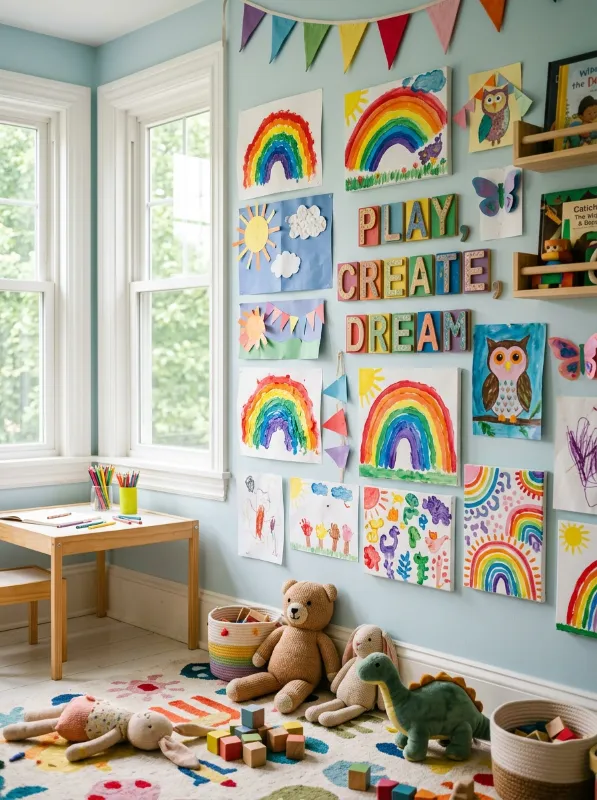
Kids’ spaces offer the most freedom for creative expression. These gallery walls can—and should—evolve as your children grow. The goal is creating displays that celebrate their creativity while teaching them about art appreciation.
Involving Kids in the Process
The best children’s gallery walls feature their own artwork. This builds confidence and creates lasting memories. Use clipboards, magnetic strips, or interchangeable frame systems that make updating the display easy.
Let kids help choose frame colors and arrangement patterns. This ownership makes them more likely to appreciate and care for the space.
Age-Appropriate Handmade Art
For nurseries, create or commission soft, whimsical pieces in calming colors. Animal illustrations, alphabet art, and simple shape patterns work well for babies. For older children, mix their artwork with inspiring pieces from artists they admire.
Include interactive elements like a chalkboard panel or a section where they can pin their latest creations.
Bathroom Gallery Walls: Yes, They Work!
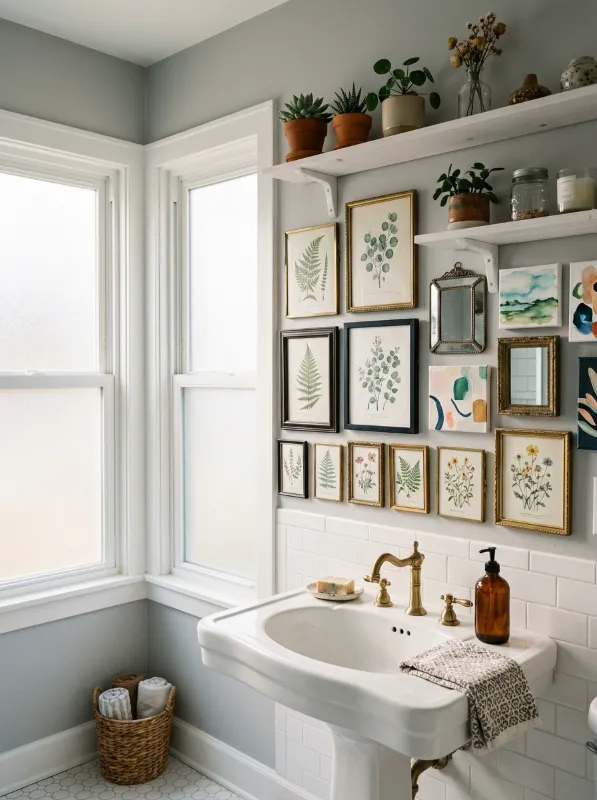
Bathrooms are often overlooked for gallery walls, but they’re actually perfect small-space candidates. The key is proper protection from moisture and choosing appropriate themes.
Moisture-Safe Display Methods
Always use sealed frames with moisture-resistant backing. Position art away from direct water sources. The wall opposite the shower or above the toilet (if there’s enough space) works best.
Consider naturally water-resistant handmade art like painted tiles, small ceramic pieces, or sealed wooden signs.
Themes That Work in Bathrooms
Bathrooms suit smaller, more intimate gallery arrangements. Think three to five pieces maximum. Botanical themes, ocean-inspired art, and minimalist abstracts create spa-like atmospheres.
Hallways and Entryways: The Often-Forgotten Spaces
Hallways and entryways are transition zones that deserve attention. A well-styled gallery wall here creates a welcoming first impression and makes even narrow spaces feel intentional.
Working With Narrow Walls
Long, narrow hallways benefit from linear gallery arrangements. Create a horizontal line of frames at eye level, or stack pieces vertically in a column. The repetition draws the eye through the space.
For entryways, a single statement piece or a small cluster immediately sets the tone for your entire home. This is where DIY handmade gifts you’ve received can find a perfect home, creating a warm welcome for visitors.
Installation Tips for Handmade Gallery Walls
Even the most beautiful art collection falls flat with poor installation. Follow these professional techniques for gallery walls that look intentionally designed.
The Paper Template Method
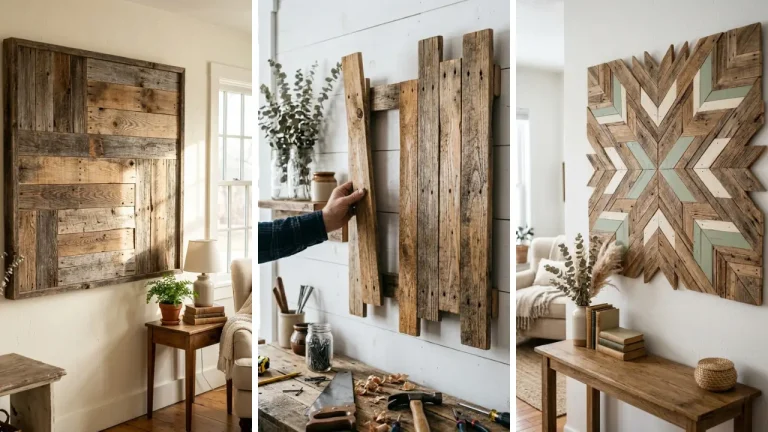
Before putting any holes in your walls, trace each piece onto kraft paper or newspaper. Cut out the shapes and tape them to the wall. Adjust the arrangement until it feels perfect, then mark nail positions through the paper.
Leveling and Spacing
Use a laser level for perfectly straight horizontal lines. For organic, salon-style arrangements, some variation is acceptable—but it should look intentional, not sloppy. Maintain consistent spacing throughout.
Whether you choose 2 inches or 4 inches between frames, stick to it across the entire display.
Conclusion: Bringing Your Handmade Gallery Wall Vision to Life
Learning how to style a gallery wall with handmade art (room by room) transforms your home in ways mass-produced décor simply cannot achieve. Each piece tells a story, reflects your creativity, and creates spaces that feel genuinely yours. Remember the core principles: balance scale and color, respect negative space, and choose art that serves each room’s unique purpose.
Living rooms welcome statement pieces, bedrooms need calming imagery, kitchens require practical protection, and offices should inspire productivity. The most important thing is to start. Your gallery wall doesn’t need to be perfect on day one.
Begin with a few pieces you love and let it grow organically over time. The beauty of handmade art is that your collection—like your style—evolves continuously. Ready to begin your gallery wall journey?
Start by identifying one wall in your home that’s been calling for attention. Sketch a rough layout, gather some handmade pieces you already own, and take the first step toward creating a space that’s uniquely, beautifully yours. Share your progress in the comments below—we’d love to see what you create!
FAQ
Q: How many pieces do I need to start a gallery wall with handmade art? A: You can start with as few as three pieces for a small cluster or five to seven for a more substantial display. The key isn’t quantity but how well the pieces work together.
Start small and add over time as you find or create pieces that complement your existing collection. Q: What’s the best way to hang handmade art without damaging walls? A: Command strips work excellently for lighter pieces under 5 pounds.
For heavier items, use proper wall anchors in drywall or find studs for the most secure hold. Rental-friendly options include leaning larger pieces on shelves or using picture rail molding systems. Q: How do I style a gallery wall with handmade art when my pieces are different styles?
A: Unify diverse pieces through consistent framing, a cohesive color palette appearing throughout, or similar matting. Eclectic galleries work beautifully when there’s at least one connecting thread—whether that’s frame finish, dominant color, or subject matter. Q: Should gallery walls match the room’s existing décor exactly?
A: Not exactly, but they should complement it. Pick up two or three colors from your room’s palette and incorporate them into your art selection. Slight contrast creates visual interest, while some harmony maintains cohesion.
Q: How often should I update my handmade gallery wall? A: There’s no set rule. Some people rotate seasonally, others update when they acquire new pieces, and many leave their walls unchanged for years.
The advantage of handmade art is that timeless, personal pieces never feel dated. Update when inspiration strikes or when your style evolves.