Best Scrapbooking Supplies for Beginners: The Starter Kit List You Actually Need
Ever looked at a gorgeous scrapbook and thought, “I wish I could make something like that” — only to feel completely lost the moment you walk into a craft store? You’re not alone. Starting a new creative hobby can feel overwhelming, especially when there are hundreds of products staring back at you from the shelves.
The good news is, getting started is much simpler than it looks. This guide breaks down the best scrapbooking supplies for beginners: the starter kit list you actually need — no fluff, no overpriced extras, just the essentials that will help you create something beautiful right away. By the end of this article, you’ll know exactly what to buy, what to skip, and how to build your first scrapbook with confidence.
Why Scrapbooking Is the Perfect Creative Hobby for Beginners
Scrapbooking sits at a sweet spot between art and storytelling. You don’t need drawing skills, technical experience, or a big budget to get started. All you need is a handful of basic supplies and a desire to preserve your favorite memories in a meaningful way.
It’s also one of those fun crafts to make at home that naturally grows with you. As a beginner, you’ll start simple — and before long, you’ll be layering textures, mixing patterns, and developing your own signature style. Scrapbooking is also incredibly versatile.
You can create albums for travel memories, family milestones, pet adventures, or even a dedicated journal for a single year. The possibilities are wide open, which is exactly what makes this hobby so addictive.
Best Scrapbooking Supplies for Beginners: The Starter Kit List Explained
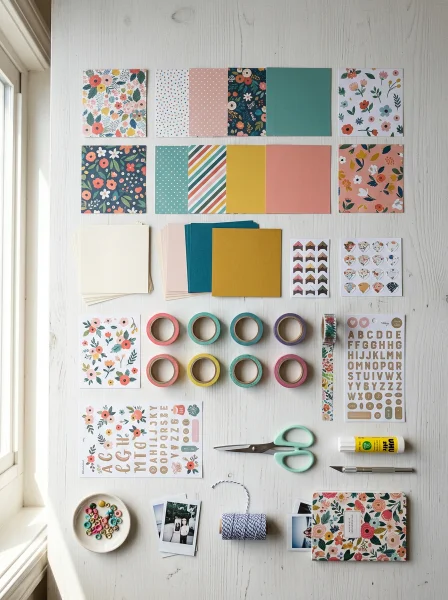
Let’s get into the core supplies. This list focuses on what you genuinely need to start — not everything you could ever buy. Think of it as your foundation kit.
Once you get comfortable, you can expand from here.
1. A Scrapbook Album
Your album is the home for everything you create. For beginners, a 12×12 inch three-ring binder album is the most popular choice because it’s flexible, easy to rearrange, and widely compatible with standard page protectors. You can also go with a smaller 8×8 format if you prefer something more compact and portable.
Look for albums with a solid spine and sturdy rings. Cheap albums tend to warp over time, which can damage your pages. Investing a little more upfront pays off in the long run.
2. Cardstock and Patterned Paper
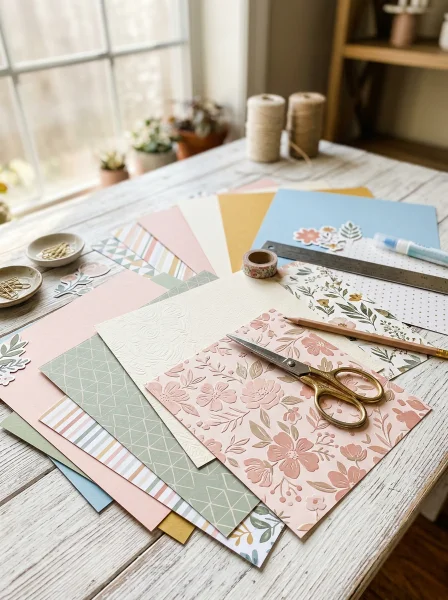
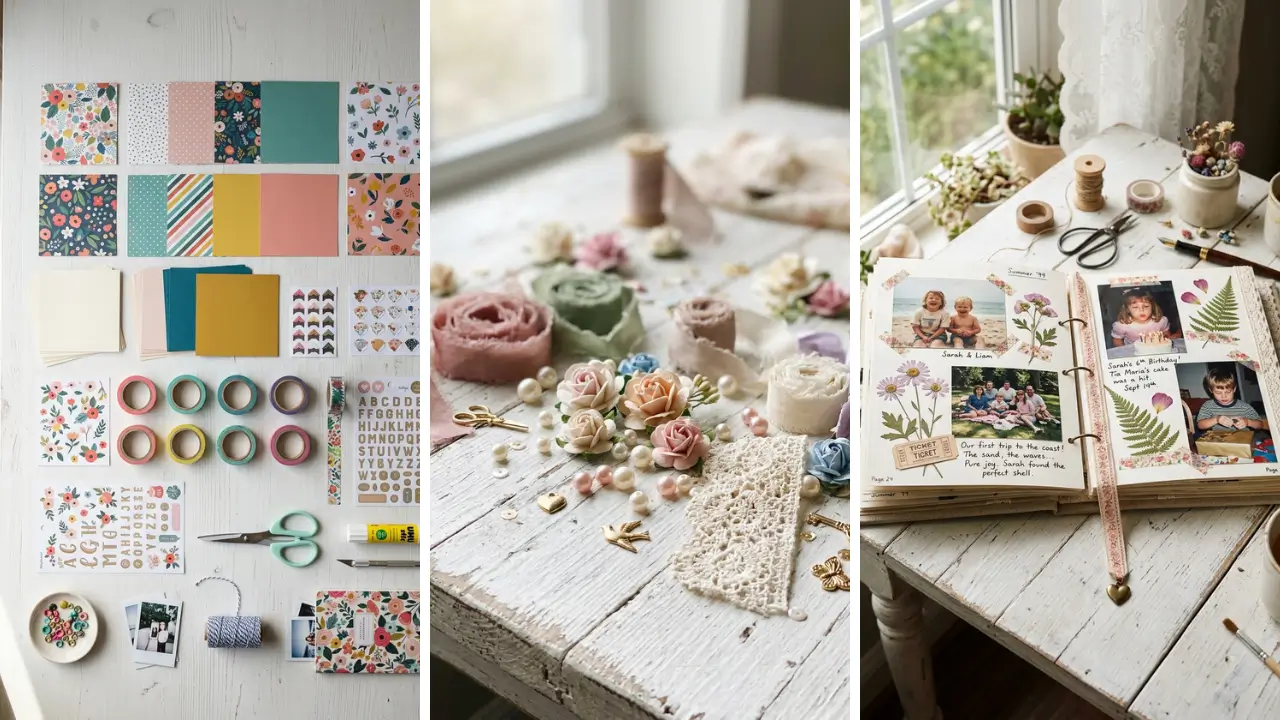
Paper is the backbone of scrapbooking. You’ll need two types: cardstock (thick, solid-colored paper) as your base layer, and patterned paper for decorative accents and backgrounds. Most beginner kits come with coordinated paper packs that match in color and theme — a great way to take the guesswork out of pairing patterns.
Start with neutral cardstock colors like white, cream, kraft, and gray. These work with virtually every photo and theme. For patterned paper, pick one or two themed packs based on what you plan to scrapbook first — travel, family, seasons, etc.
3. Adhesives
Not all glue is created equal in scrapbooking. You’ll want at least two types of adhesive in your kit. A tape runner or photo tape is ideal for attaching photos and paper cleanly without warping.
Foam adhesive squares add dimension by lifting elements off the page — a simple trick that instantly makes layouts look more professional. Avoid regular liquid glue for photos and paper — it tends to wrinkle and doesn’t hold as cleanly. Stick with acid-free adhesives to ensure your memories stay preserved for years.
4. Scissors and a Paper Trimmer
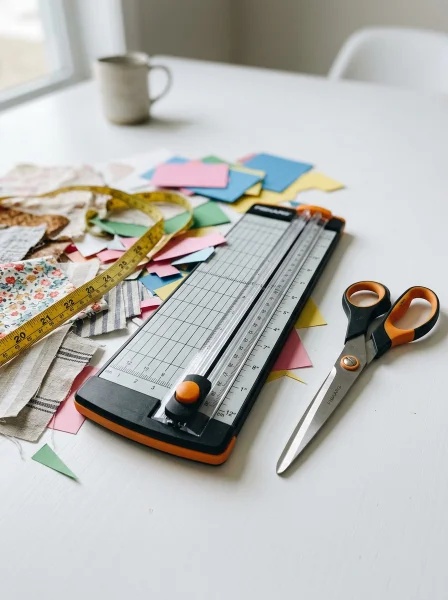
A paper trimmer is one of the most underrated tools in a beginner’s kit. It makes straight, clean cuts in seconds — no measuring, no crooked edges. For detail work and decorative cuts, a sharp pair of craft scissors is equally important.
Some beginners also enjoy decorative edge scissors that create scalloped, zigzag, or wavy borders. They’re a cheap way to add a handmade touch to your pages without buying extra embellishments.
5. Stamps, Ink Pads, and Markers
Stamping adds quick, consistent decorative elements to your pages. A starter set of clear stamps with a small acrylic block is easy to use and store. Pair them with a dye ink pad in black or a coordinating color for clean impressions every time.
A set of fine-tip markers or journaling pens is also essential. You’ll use them to write captions, titles, and journaling blocks — the storytelling layer that makes a scrapbook truly personal.
6. Embellishments
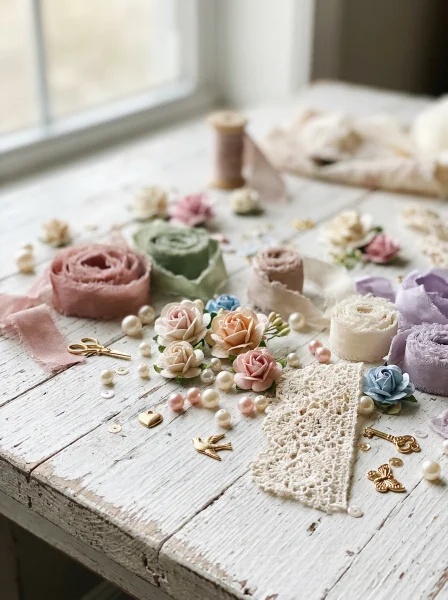
Embellishments are the fun extras that give your pages personality. For beginners, start small and curated rather than buying everything at once. Good starter embellishments include:
- Washi tape — decorative, repositionable, and incredibly versatile
- Sticker sheets — alphabets, icons, and themed stickers for quick accents
- Brads and eyelets — metal fasteners that add a polished, structured look
- Die cuts — pre-cut paper shapes in coordinating designs
Here’s a pro tip: you don’t have to spend a lot on embellishments. Many crafters find beautiful options at discount stores — exploring dollar store crafts ideas is a smart way to stretch your budget without sacrificing style.
7. Page Protectors
Acid-free page protectors keep your completed layouts safe from dust, fingerprints, and fading. They slide into your album and protect your work long-term. Always choose archival-quality protectors to ensure your memories are truly preserved.
How to Organize Your Starter Kit Without Getting Overwhelmed
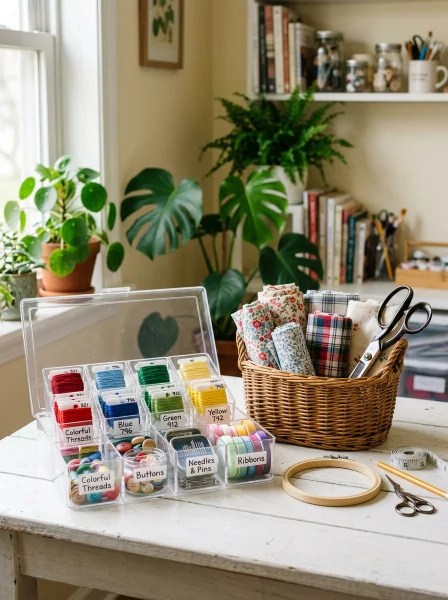
One of the biggest beginner mistakes is buying too much at once. It’s easy to fall in love with every paper pad and embellishment pack you see — but an overwhelming stash can actually kill your creative momentum. Start focused.
Pick a theme or memory you want to scrapbook first. Buy supplies specifically for that project. Once you finish your first layout, you’ll have a much clearer sense of what you actually enjoy working with.
Storage matters too. A simple rolling cart with drawers or a dedicated craft box keeps everything visible and accessible. When your supplies are organized, you’re much more likely to sit down and create regularly.
Scrapbooking pairs wonderfully with other home craft projects quick enough to finish in a single afternoon session, so don’t underestimate how satisfying a short creative burst can be.
Turning Your Scrapbook Pages Into Meaningful Gifts
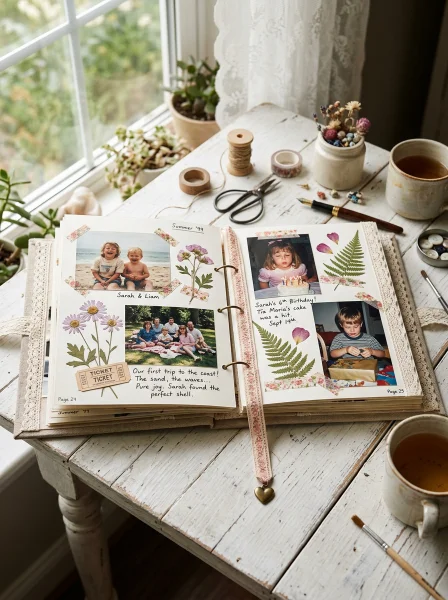
Once you’ve completed a few pages, you’ll quickly realize that scrapbooks make some of the most heartfelt, personal presents imaginable. A custom album filled with photos and handwritten notes is worth far more than anything you could buy in a store. Birthdays, anniversaries, graduations, holidays — a personalized scrapbook fits every occasion perfectly.
It’s one of the most beloved forms of DIY handmade gifts because it combines creativity with genuine sentiment. You can also create mini albums as gifts — small, theme-based scrapbooks that are quicker to make and just as meaningful. Think: a “Year in Review” mini album for a parent, or a travel memory book for a friend.
These smaller formats are great practice projects while you’re still building your skills. Looking for even more inspiration? There are plenty of handmade gift craft ideas that pair beautifully with scrapbooking — from decorative card making to personalized photo books and beyond.
Common Beginner Mistakes to Avoid
Knowing what not to do is just as valuable as knowing what to buy. Here are the most common pitfalls new scrapbookers fall into — and how to sidestep them.
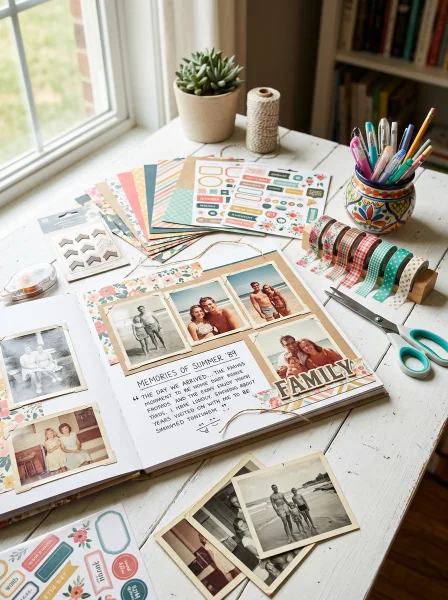
- Overcomplicating your first layout. Simple is always better when you’re starting out. A clean photo, a strip of patterned paper, and a title go a long way.
- Skipping journaling. The photos show what happened, but your words explain why it mattered. Even a single sentence adds enormous value.
- Using non-archival products. Regular tape, acidic paper, and cheap adhesives will yellow and deteriorate over time. Always choose acid-free, archival-quality supplies.
- Waiting for the “perfect” supplies. You don’t need everything before you start. Begin with what you have and build from there.
Conclusion: Your First Scrapbook Starts Here
Scrapbooking is one of those hobbies that rewards you immediately — not just with beautiful pages, but with the joy of slowing down and appreciating your memories. The best scrapbooking supplies for beginners: the starter kit list doesn’t have to be expensive or complicated. A good album, quality paper, reliable adhesives, and a few well-chosen embellishments are genuinely all you need to get started.
As your confidence grows, so will your supply collection — naturally and at your own pace. The most important thing is to begin. Pick one memory, gather your starter supplies, and give yourself permission to create something imperfect and wonderful.
Your first layout won’t be your best — and that’s exactly how it should be. Every page you make teaches you something new. So take that first step, enjoy the process, and let the creativity flow.
Ready to dive in? Share your first scrapbook layout in the comments below — we’d love to see what you create! And if you found this guide helpful, pass it along to a friend who’s been wanting to try scrapbooking too.
Frequently Asked Questions
Q: What are the most essential items in the best scrapbooking supplies for beginners: the starter kit list? A: The absolute essentials are a quality album, cardstock and patterned paper, reliable acid-free adhesive, a paper trimmer, and a few basic embellishments like washi tape and sticker sheets. These items will cover everything you need for your first several layouts.
As you get more comfortable, you can add tools like stamps, die-cutting machines, and specialty inks. Q: How much does a beginner scrapbooking starter kit typically cost? A: You can build a solid beginner kit for anywhere between $30 and $80, depending on where you shop and whether you catch sales.
Many craft stores offer starter bundles that include coordinated paper packs, an album, and basic embellishments at a reduced price. Buying a kit rather than individual items is often the most budget-friendly way to begin. Q: Do I need a Cricut or cutting machine to start scrapbooking?
A: Absolutely not. A cutting machine is a nice-to-have tool, but it’s far from a necessity for beginners. A basic paper trimmer and a pair of sharp craft scissors will handle everything you need in your early projects.
Many experienced scrapbookers still prefer working without machines for certain layouts. Q: What’s the best scrapbooking supplies for beginners: the starter kit list if I’m on a tight budget? A: If budget is a concern, prioritize acid-free adhesive, a simple album, and one or two coordinated paper packs.
Skip expensive embellishments for now and use what you already have — old stamps, ribbon scraps, or buttons work beautifully. Discount and dollar stores often carry surprisingly good craft supplies that keep costs low without sacrificing creativity. Q: How do I choose a theme or style for my first scrapbook?
A: Start with something that genuinely excites you — a recent trip, a holiday, a pet, or a year’s worth of family moments. Choosing a theme you love makes the creative process feel natural rather than forced. Once you have your theme, select a coordinated paper collection that matches the mood, and let the photos guide the rest of your design decisions.