Best Epoxy Resin for Beginners: Top Kits That Are Actually Easy to Use
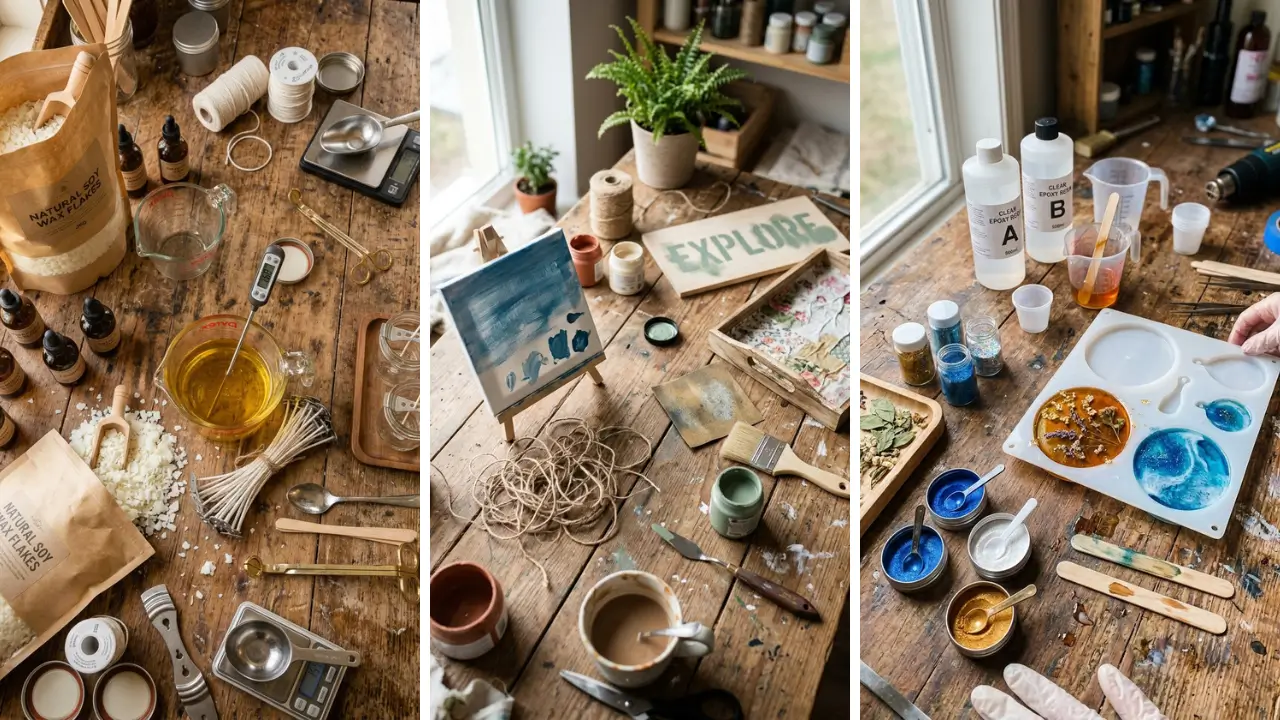
Ever seen those gorgeous resin coasters, jewelry, or keychains on social media and thought, “I could never make that”? Good news — you absolutely can. Finding the best epoxy resin for beginners: top kits that are actually easy to use is the first step to unlocking a hobby that’s both satisfying and surprisingly beginner-friendly.
The resin crafting world has exploded in popularity, and kit manufacturers have responded by creating products specifically designed for people who have never touched epoxy in their lives. In this guide, you’ll learn what to look for in a beginner resin kit, which kits consistently earn top marks from new crafters, and how to set yourself up for a successful first pour. Let’s dive in.
What Makes Epoxy Resin Beginner-Friendly?
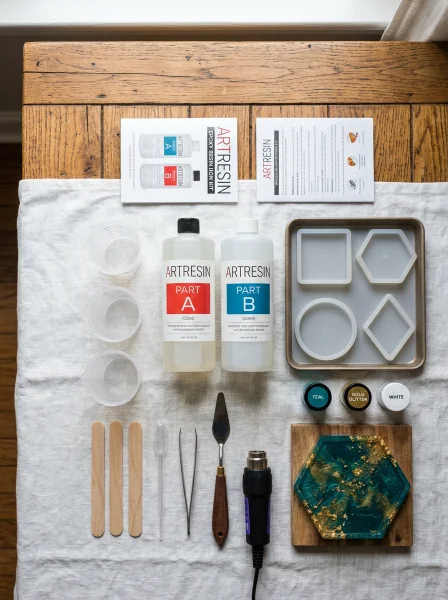
Not all epoxy resin is created equal. Some formulas are finicky, require precise temperature control, or produce strong fumes that make them unsuitable for casual home use. Beginner-friendly resin kits stand out because they simplify the process without sacrificing quality results. Here’s what to look for when shopping for your first kit:
- 1:1 or 2:1 mixing ratio — Simple ratios reduce the chance of sticky, uncured resin.
- Low odor formula — Essential if you’re working indoors without professional ventilation.
- Long working time (30–45 minutes) — Gives beginners room to work without rushing.
- Clear instructions — A well-written guide or online tutorial support makes a huge difference.
- All-in-one kit — Includes molds, pigments, gloves, and mixing cups so you’re not hunting for extras.
A kit that checks these boxes means your first project is about creativity, not troubleshooting chemistry.
Best Epoxy Resin Kits for Beginners: Top Picks That Are Actually Easy to Use
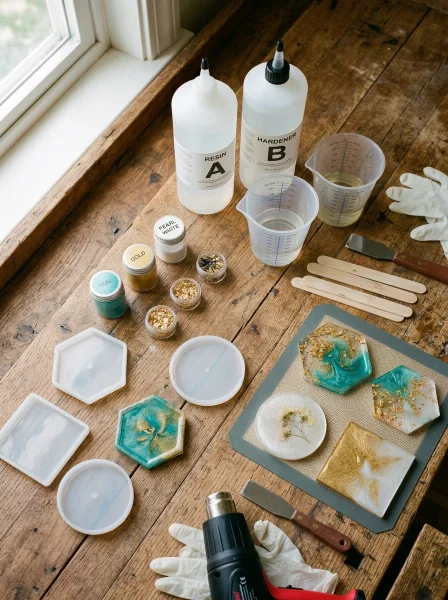
After sifting through dozens of options, these kits consistently rise to the top for beginners — based on ease of use, included supplies, and quality of finished results.
1. ArtResin Epoxy Resin Starter Kit
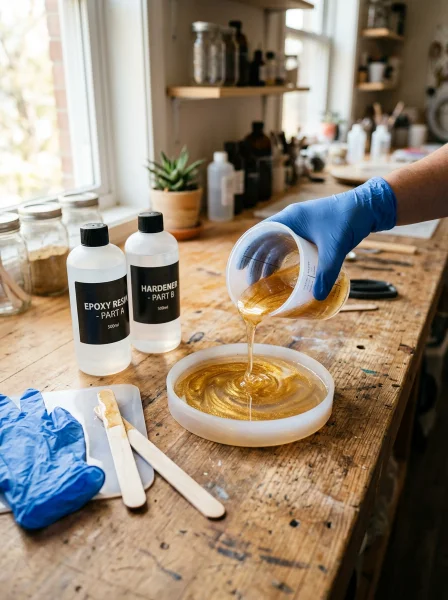
ArtResin is one of the most popular choices in the crafting community, and for good reason. It uses a simple 1:1 mixing ratio by volume, is non-toxic when cured, and has very low fumes. The formula is self-leveling, which means it smooths itself out — perfect when you’re still learning to work with the material.
It’s especially great for coating artwork, photos, and flat surfaces. Many beginners use it to create personalized DIY handmade gifts like custom photo trays or painted wood pieces sealed in glass-clear resin.
2. Puduo Epoxy Resin Kit for Beginners
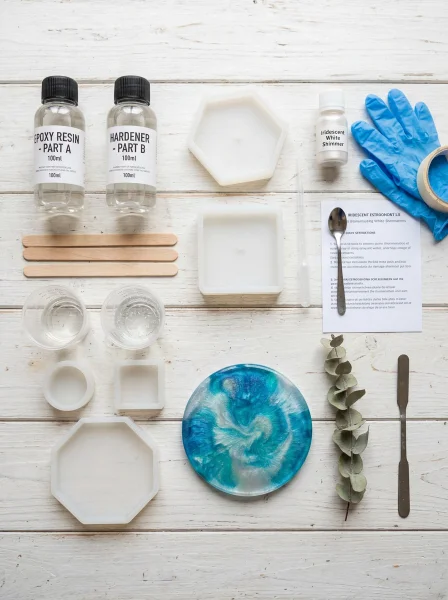
Puduo’s kit is an all-in-one starter bundle that includes silicone molds, pigment powders, mixing sticks, gloves, and dropper bottles. Everything arrives in one box, which eliminates the scramble to source supplies separately. The resin has a 45-minute working time, giving you plenty of opportunity to add color, embed flowers, or layer effects.
This kit is excellent for making jewelry, keychains, and small decorative items. If you’re exploring fun crafts to make at home, resin jewelry is one of the most rewarding projects to start with.
3. Alumilite Amazing Clear Cast
If crystal clarity is your priority, Alumilite Amazing Clear Cast delivers one of the clearest finishes on the market. It uses a 1:1 ratio and cures hard within 24 hours. The bubbles dissipate naturally during the cure process, which is a big win for beginners who haven’t yet mastered the heat gun technique.
It works beautifully for river tables (on a small scale), coasters, and paperweights. The results look professional even when your technique is still developing.
4. Dr. Crafty Epoxy Resin Kit
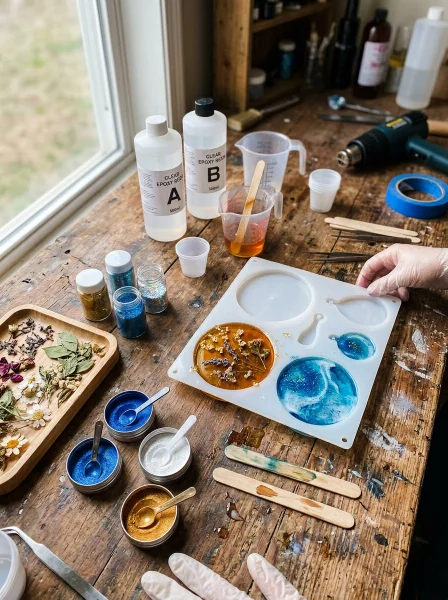
Dr. Crafty targets crafters directly, and their beginner kit reflects that. It comes with a detailed instruction booklet, which many users say is the clearest they’ve ever read.
The resin produces minimal yellowing over time, and the UV resistance is solid for a budget-friendly option. It’s a smart pick if you’re looking for home craft projects quick results without investing a lot upfront. At its price point, it’s hard to beat.
Essential Tips Before You Pour Your First Batch
Even the best kit won’t save you if you skip the basics. These tips come straight from experienced resin crafters who learned the hard way so you don’t have to.
- Measure by weight, not just volume — A kitchen scale gives you more accurate ratios than eyeballing cups.
- Mix slowly for 3–4 minutes — Rushing introduces air bubbles that are hard to remove later.
- Work in a warm room (75–85°F) — Cold temperatures cause resin to cure cloudy or stay tacky.
- Use a torch or heat gun after pouring — A quick pass removes surface bubbles in seconds.
- Cover your project while it cures — Dust and pet hair are the enemy of a flawless finish.
Following these steps consistently will dramatically improve your results from the very first pour.
Creative Project Ideas to Get You Started
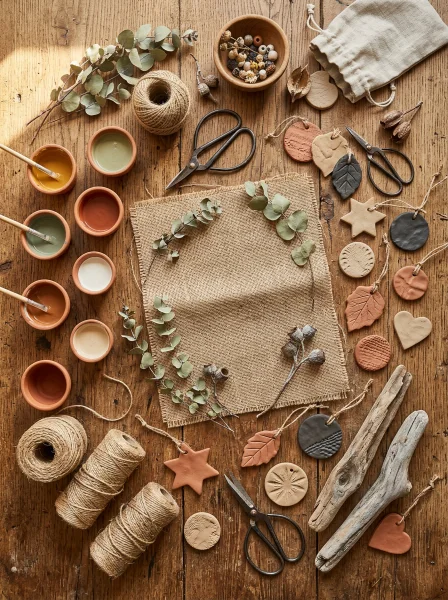
One of the best parts of learning resin crafting is that the creative possibilities are almost endless. Once you’re comfortable with the basics, you can start experimenting with different molds, pigments, and inclusions. Here are some beginner-friendly project ideas to try with your first kit:
- Resin coasters with dried flowers or glitter
- Personalized keychains with photos or initials
- Geode-style bookmarks using alcohol ink
- Decorative trays with swirled pigment colors
- Small jewelry pieces like pendants or earrings
These projects make excellent handmade gift craft ideas for birthdays, holidays, or just because. People genuinely love receiving something made by hand, especially when it looks this polished. If you’re working with a limited budget, don’t overlook creative sourcing.
Molds, glitter, and small decorative elements can often be found affordably — and some crafters even source embellishments from dollar store crafts ideas that punch way above their price tag.
Common Beginner Mistakes (And How to Avoid Them)

Resin has a bit of a learning curve, but most mistakes are easy to avoid once you know what to watch for. Incorrect mixing ratio is the number one culprit behind sticky, tacky resin that never fully cures. Always double-check the manufacturer’s ratio and measure carefully.
Even being slightly off can ruin an entire batch. Adding too much pigment can also interfere with curing. As a rule of thumb, keep pigment to 6% or less of the total resin volume.
A little goes a long way, especially with powder pigments and alcohol inks. Not using protective gear is another common slip. Even low-odor, non-toxic resins can cause skin sensitization with repeated exposure.
Always wear gloves, and work in a ventilated space. Skipping the cure time — Touching or demolding your piece too early can leave fingerprints or distort the shape. Patience pays off.
Most beginner resins need 24–72 hours for a full, hard cure.
Conclusion: Your Resin Journey Starts Here
Getting into resin crafting doesn’t require an art degree, a professional studio, or an expensive setup. The best epoxy resin for beginners: top kits that are actually easy to use are specifically designed to help you skip the steep learning curve and jump straight into creating. From simple coasters to stunning jewelry, the projects you can make are limited only by your imagination.
Start with an all-in-one kit like Puduo or Dr. Crafty, follow the mixing and curing tips outlined above, and don’t be afraid to experiment. Every pour teaches you something new, and the results — even imperfect ones — are deeply satisfying.
Resin crafting also pairs beautifully with other creative hobbies. Once you’ve mastered the basics, you’ll find yourself combining it with painting, woodworking, and other techniques to create truly one-of-a-kind pieces. So go ahead — crack open that kit and make something beautiful.
Ready to start your resin adventure? Share your first project in the comments below — we’d love to see what you create! And if you found this guide helpful, pass it along to a friend who’s been curious about resin crafting.
The more the merrier.
Frequently Asked Questions
Q: What is the best epoxy resin for beginners who have never crafted before? A: The best epoxy resin for beginners: top kits that are actually easy to use include options like ArtResin, Puduo, and Dr. Crafty — all of which feature simple mixing ratios, low odor, and clear instructions.
For a true first-timer, an all-in-one kit that includes molds and pigments removes the guesswork entirely. Start with a small project like a keychain or coaster to get comfortable with the process. Q: How long does epoxy resin take to cure for beginners?
A: Most beginner-grade epoxy resins reach a demolding stage within 12–24 hours, but a full hard cure typically takes 48–72 hours. Rushing the process by demolding too early can cause distortion or leave surface marks. Working in a warm room (around 75–85°F) helps speed up and even out the curing process.
Q: Can I use epoxy resin indoors safely? A: Yes, many beginner kits are formulated specifically for indoor use with low-fume or non-toxic ingredients. However, you should still work in a well-ventilated area, wear nitrile gloves, and avoid prolonged skin contact.
Even low-odor resins can cause sensitization over time with unprotected, repeated exposure. Q: What’s the easiest epoxy resin project for a complete beginner? A: Resin coasters and keychains are widely considered the easiest starter projects.
They require small amounts of resin, simple silicone molds, and minimal technique. Both also make fantastic gifts — personalized resin items are among the most popular DIY handmade gift ideas shared in crafting communities online. Q: Do I need special tools for beginner epoxy resin kits?
A: Most starter kits include the essentials — mixing cups, stir sticks, and gloves. The additional tools that make the biggest difference are a kitchen scale (for accurate measurement), a heat gun or butane torch (for removing bubbles), and silicone molds in shapes you love. These are relatively inexpensive and dramatically improve your finished results from the very first project.