Faux vs Real Greenery for DIY Christmas Decor: Which is Better?
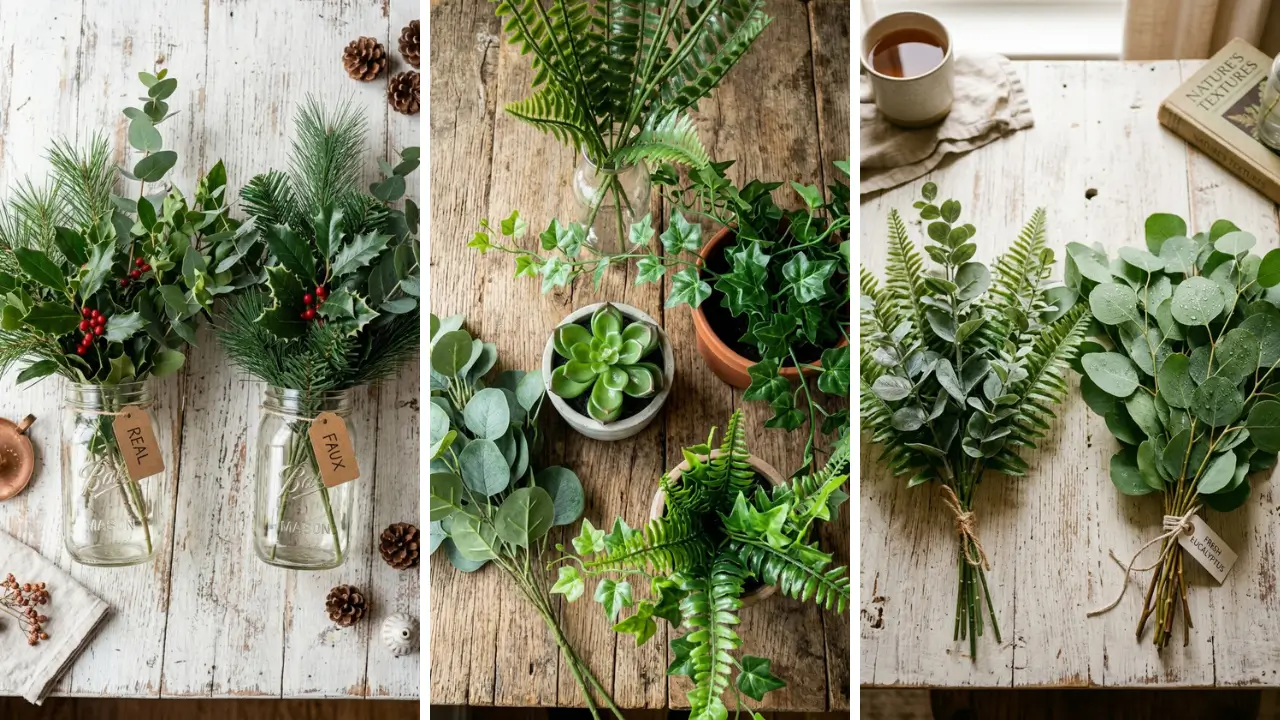
Every December, the same question pops up in crafters’ minds: should you head to the forest for fresh pine branches, or raid the craft store for realistic-looking faux garlands? The debate around Faux vs Real Greenery for DIY Christmas Decor: Which is Better? isn’t as simple as it sounds.
Both options have passionate fans — and both come with real trade-offs. Whether you’re decorating a mantel, crafting a wreath, or building a full holiday vignette, the type of greenery you choose can completely change the outcome of your project. In this guide, you’ll get a clear, honest breakdown of both options — covering cost, realism, sustainability, ease of use, and longevity — so you can make the best choice for your home and your budget.
Why the Choice Between Faux and Real Greenery Matters More Than You Think
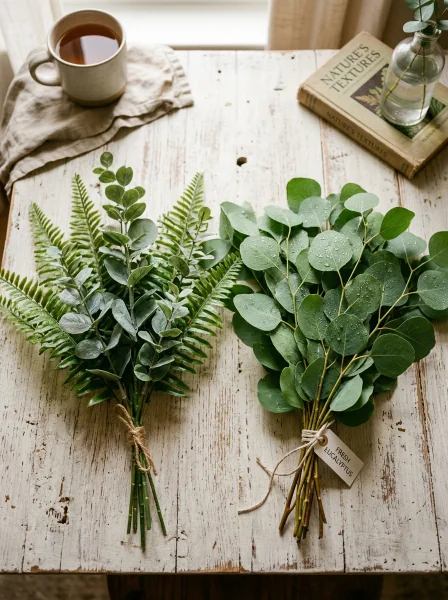
Most people assume greenery is greenery. But when you’re deep into a DIY project, the differences become very real, very fast. Fresh greenery dries out.
Faux greenery can look plastic if you pick the wrong quality. The wrong choice can derail even the most carefully planned holiday decor. Real greenery brings that unmistakable piney, earthy scent that no candle can truly replicate.
Faux greenery, on the other hand, gives you total control — over timing, placement, and reuse. For anyone diving into DIY handmade gifts and holiday crafts this season, choosing the right material upfront saves you time, money, and frustration later. This isn’t just about aesthetics.
It’s about making smart, practical decisions that match your lifestyle and crafting goals.
Real Greenery: The Case for Going Natural
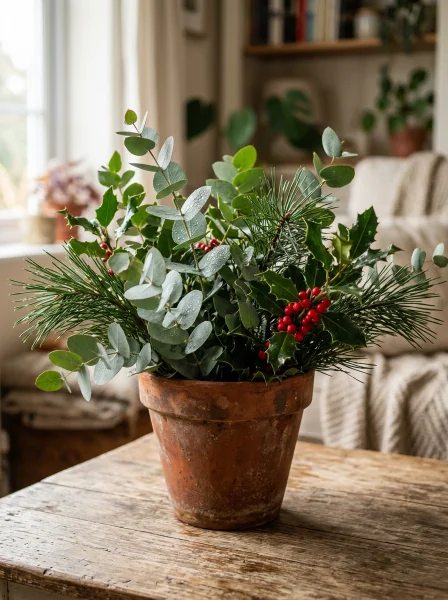
There’s something undeniably magical about working with real pine boughs, eucalyptus, cedar, or holly. Natural greenery has texture, depth, and fragrance that photos don’t do justice to. When you walk into a room decked with fresh garland, you feel it.
Pros of Real Greenery
- Authentic scent: That fresh pine or eucalyptus aroma is a sensory experience that instantly sets the holiday mood.
- Natural texture and color variation: No two branches look the same, which gives your decor a rich, organic feel.
- Biodegradable and compostable: When the season ends, real greenery goes back to the earth with no waste guilt.
- Affordable if sourced locally: Farmers’ markets, tree farms, and even your own backyard can be free or budget-friendly sources.
Cons of Real Greenery
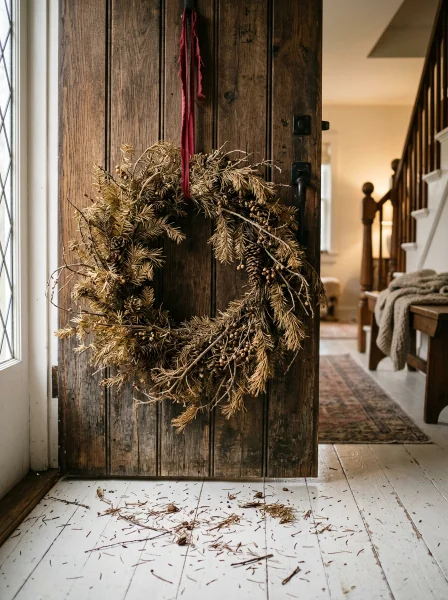
- Short lifespan: Most fresh cuttings last 2–4 weeks indoors before drying out or dropping needles.
- Requires moisture management: You’ll need to mist or water real arrangements regularly to keep them looking fresh.
- Allergies and pests: Fresh greenery can harbor insects or trigger allergic reactions in sensitive individuals.
- Limited availability: Depending on your location, sourcing quality fresh greenery can be difficult or expensive.
If you’re planning fun crafts to make at home during a single holiday weekend, real greenery can be a beautiful and rewarding choice — just plan around its lifespan.
Faux Greenery: The Case for Going Artificial
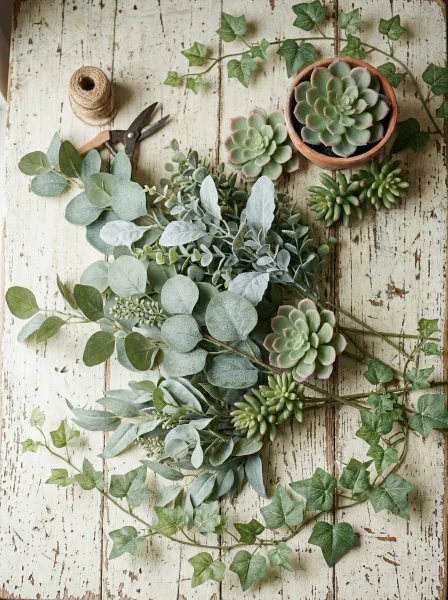
Artificial greenery has come a long way. The stiff, obviously plastic garlands of the 1990s have been replaced by UV-resistant, wire-branched, hyper-realistic versions that can fool guests at close range. High-quality faux options now mimic the look of fresh pine, boxwood, eucalyptus, and more with impressive accuracy.
Pros of Faux Greenery
- Reusable for years: A quality faux garland or wreath base can last 5–10 years with proper storage.
- No maintenance required: No watering, misting, or needle cleanup. Just set it and forget it.
- Available year-round: You can craft in July if inspiration strikes — no seasonal sourcing stress.
- Allergy-friendly: Perfect for households with sensitivities to pollen, pine, or mold from fresh plant material.
- Budget-friendly long-term: The upfront cost is higher, but the per-year cost drops significantly over time.
Cons of Faux Greenery
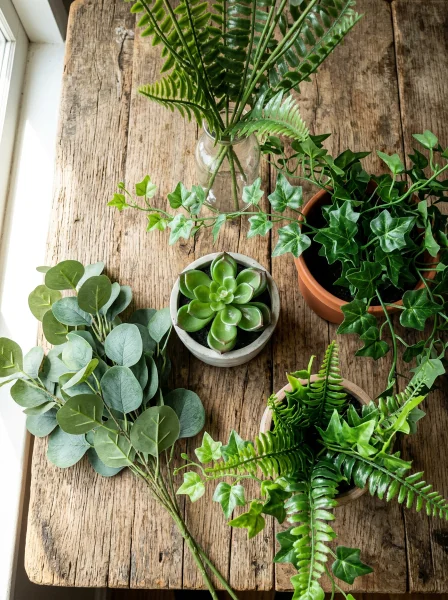
- No natural scent: You’ll need candles or diffusers to recreate that holiday fragrance.
- Quality varies wildly: Cheap faux greenery looks cheap. Investing in better quality is essential for realistic results.
- Environmental footprint: Most artificial greenery is plastic-based and non-recyclable at end of life.
- Can look flat without styling: Faux pieces need fluffing and shaping to avoid looking two-dimensional.
For crafters who love home craft projects quick to set up and easy to manage, faux greenery is often the go-to solution — especially when juggling a busy holiday schedule.
Faux vs Real Greenery for DIY Christmas Decor: Side-by-Side Comparison
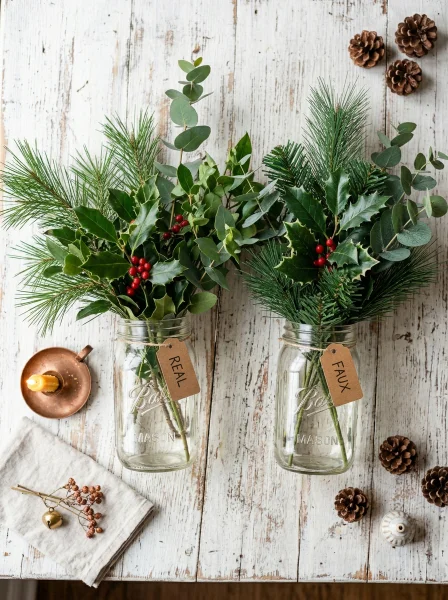
Let’s break it down visually so you can make a fast, informed decision based on what matters most to you.
- Cost upfront: Real is cheaper short-term; faux requires more initial investment.
- Cost over time: Faux wins long-term due to reusability.
- Scent: Real greenery wins hands down.
- Realism: High-quality faux can be surprisingly close to real.
- Ease of use: Faux is simpler, especially for multi-piece arrangements.
- Eco-impact: Real greenery is biodegradable; faux is plastic waste at end of life.
- Lifespan in use: Real lasts 2–4 weeks; faux lasts years.
- Craft flexibility: Both are highly workable — real can be cut and shaped; faux can be bent and fluffed.
The honest answer to Faux vs Real Greenery for DIY Christmas Decor: Which is Better? is that it depends entirely on your priorities. Speed and budget over multiple seasons?
Go faux. Sensory authenticity and a single-season project? Go real.
Tips for Getting the Best Results from Either Option
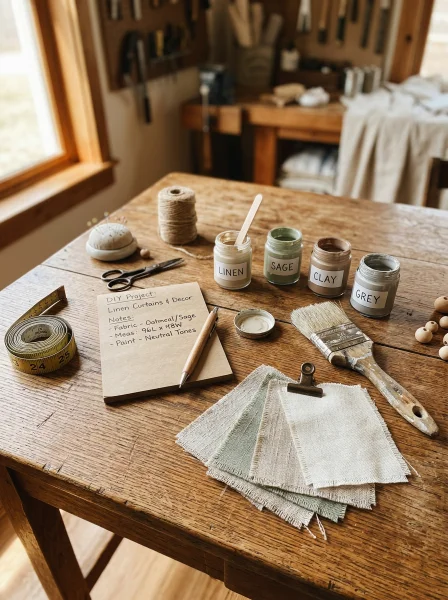
Whichever route you choose, a few smart strategies will dramatically improve your final look.
For Real Greenery
- Cut stems at a 45-degree angle to help them absorb water and last longer.
- Soak stems in water for 24 hours before arranging to extend freshness.
- Keep arrangements away from heat sources like fireplaces and radiators.
- Mix different types — pine, cedar, eucalyptus, and holly — for depth and visual interest.
For Faux Greenery
- Fluff every single branch before using — this step alone transforms the look from flat to full.
- Mix faux with real elements like pinecones, dried orange slices, or ribbon to add dimension.
- Choose pieces with wire stems so you can shape them precisely around frames or wreaths.
- Store in breathable bags (not plastic) to prevent mold and maintain shape.
If you’re working on a tight budget, you’d be surprised how stunning results can be when you use dollar store crafts ideas to supplement your greenery with affordable accessories like ribbon, ornaments, and picks.
Mixing Both: The Hybrid Approach That Many Crafters Swear By
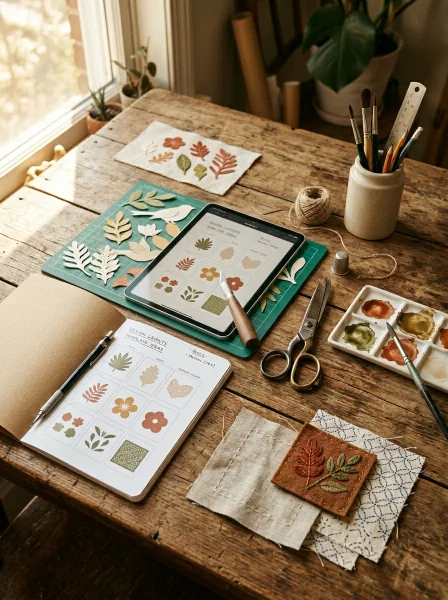
Here’s a little secret the most experienced holiday decorators know: you don’t have to choose. Combining faux and real greenery gives you the best of both worlds — the longevity and structure of artificial pieces, plus the fragrance and organic texture of fresh elements. Use a faux garland as your base (it holds shape and stays green for weeks), then layer in fresh pine sprigs, real eucalyptus, or small holly branches for color and scent.
This hybrid approach also saves money — you buy less of the pricier fresh greenery while still getting that magical natural aroma. It’s one of the smartest handmade gift craft ideas strategies you can apply — building on a reusable base and refreshing it with affordable natural accents each year.
Conclusion: Making the Right Choice for Your Holiday Crafts
The question of Faux vs Real Greenery for DIY Christmas Decor: Which is Better? doesn’t have one universal answer — and that’s actually good news. It means you have flexibility.
Real greenery is perfect if you want a sensory-rich, one-season project with an eco-friendly finish. Faux greenery is the smarter long-term investment if you want hassle-free, reusable decor that looks great year after year. The hybrid approach may be the best of all — combining durability with authenticity in a way that’s both practical and beautiful.
Whatever you decide, the most important thing is that you enjoy the creative process and feel proud of what you build this holiday season. Start small, experiment with both options, and let your space guide you. The perfect Christmas decor is the one that feels right to you.
Ready to start crafting? Share your greenery choice in the comments below — are you team faux, team real, or team hybrid? We’d love to see what you create this holiday season.
Tag your projects and inspire fellow crafters!
Frequently Asked Questions
Q: In the debate of Faux vs Real Greenery for DIY Christmas Decor, which option is more budget-friendly? A: Real greenery tends to be cheaper upfront, especially if you source it locally or from a tree farm. However, faux greenery is more cost-effective over multiple seasons since it can be reused for 5–10 years.
Your best budget move depends on how often you plan to decorate. Q: How long does real Christmas greenery last once cut? A: Most fresh-cut greenery lasts between 2 to 4 weeks indoors when properly cared for.
Soaking the stems in water before arranging, keeping them away from heat sources, and misting them regularly can extend their life noticeably. Q: Can faux greenery look as realistic as real greenery for DIY Christmas decor? A: High-quality faux greenery can be remarkably realistic, especially when properly fluffed and styled.
The key is investing in mid-to-premium quality pieces with wire stems and varied branch lengths. Cheap faux greenery tends to look flat and obviously artificial. Q: Is faux or real greenery better for people with allergies during the holidays?
A: Faux greenery is the safer choice for allergy sufferers. Fresh greenery can carry pollen, mold spores, and even small insects. Artificial options eliminate these risks entirely, making them ideal for households with asthma or seasonal allergies.
Q: What is the hybrid approach to using Faux vs Real Greenery for DIY Christmas Decor? A: The hybrid approach means using a faux garland or wreath base for structure and longevity, then adding fresh greenery accents — like real pine sprigs, eucalyptus, or holly — for natural scent and organic texture. This method is cost-effective, visually stunning, and gives you the advantages of both materials in one arrangement.