Best Beginner Sewing Machines Home Decor Projects (Ranked)
Have you ever walked into a home goods store, spotted a beautiful throw pillow or a set of curtains, and thought — I could totally make that myself? You absolutely can. And the right sewing machine makes all the difference.
If you’re new to sewing and want to dive into home decor projects, choosing from the best beginner sewing machines for home decor projects (ranked) is the smartest first step you can take. With the right machine, you’ll be stitching up cushion covers, table runners, tote bags, and window treatments in no time — no professional training required. This guide breaks down the top machines for beginners, what features actually matter for home decor work, and how to get the most out of your new hobby.
Whether you’re crafting for your own space or creating DIY handmade gifts for friends and family, you’ll find everything you need to make a confident purchase right here.
Why the Right Sewing Machine Matters for Home Decor
Home decor sewing is a little different from garment sewing. You’re often working with heavier fabrics — canvas, denim, upholstery fabric, thick cotton — and you need a machine that can handle multiple layers without skipping stitches or jamming. Beginner machines vary wildly in quality, and picking the wrong one can make your experience frustrating before it even begins.
The good news? You don’t need to spend a fortune. Several mid-range machines are specifically designed to handle the demands of home decor sewing projects while staying beginner-friendly.
The key is knowing which features to prioritize.
Here’s what matters most for home decor work:
- Stitch variety — at least 15–20 built-in stitches for decorative and functional use
- Motor power — a stronger motor handles thick fabrics with ease
- Throat space — wider throat space means you can maneuver large fabric pieces like curtains
- Feed dogs — adjustable feed dogs help with quilting and layered projects
- Automatic needle threader — a beginner’s best friend, period
Best Beginner Sewing Machines for Home Decor Projects (Ranked)
Here’s a curated ranking of the top beginner-friendly sewing machines that work exceptionally well for home decor. Each has been evaluated on ease of use, fabric handling capability, durability, and value for money.
1. Brother CS6000i — Best Overall for Beginners
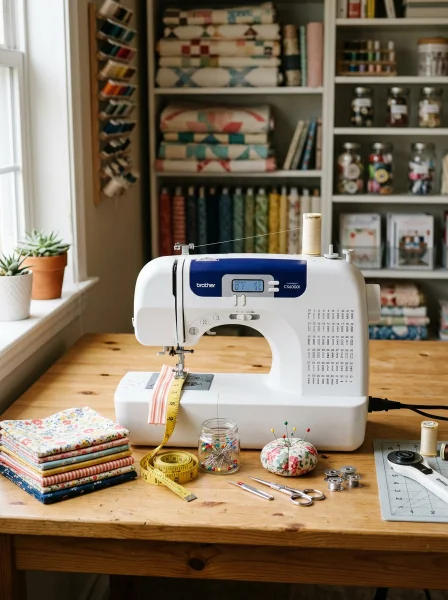
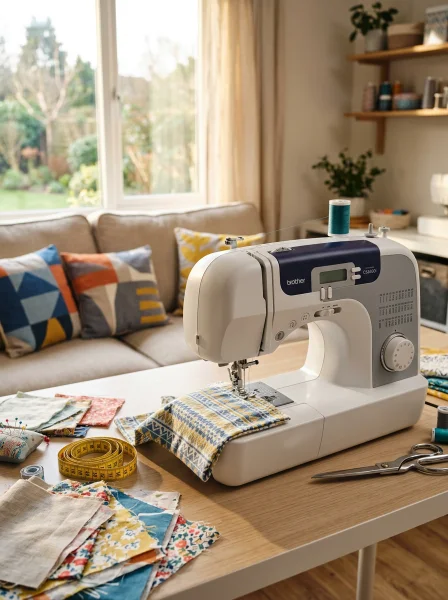
The Brother CS6000i consistently tops beginner lists for good reason. It offers 60 built-in stitches, a wide table extension for large projects, and a quiet motor that’s surprisingly powerful. The LCD screen makes navigating stitch settings simple, even for total newcomers.
For home decor projects like pillow covers, curtains, and table runners, this machine handles medium to heavy fabrics well. The wide extension table alone makes it worth considering — it supports fabric weight evenly, which reduces drag and improves stitch quality on large pieces.
2. Singer Heavy Duty 4452 — Best for Thick Fabrics
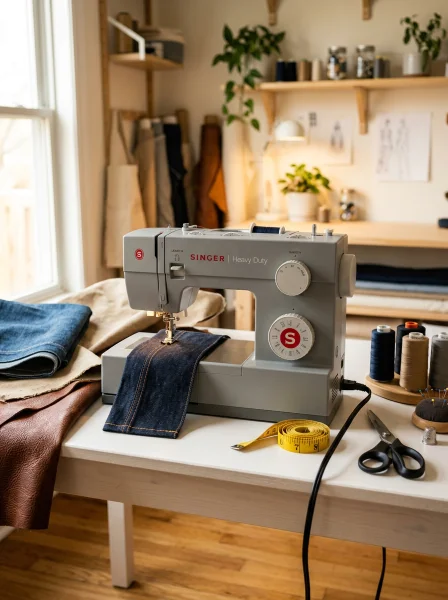
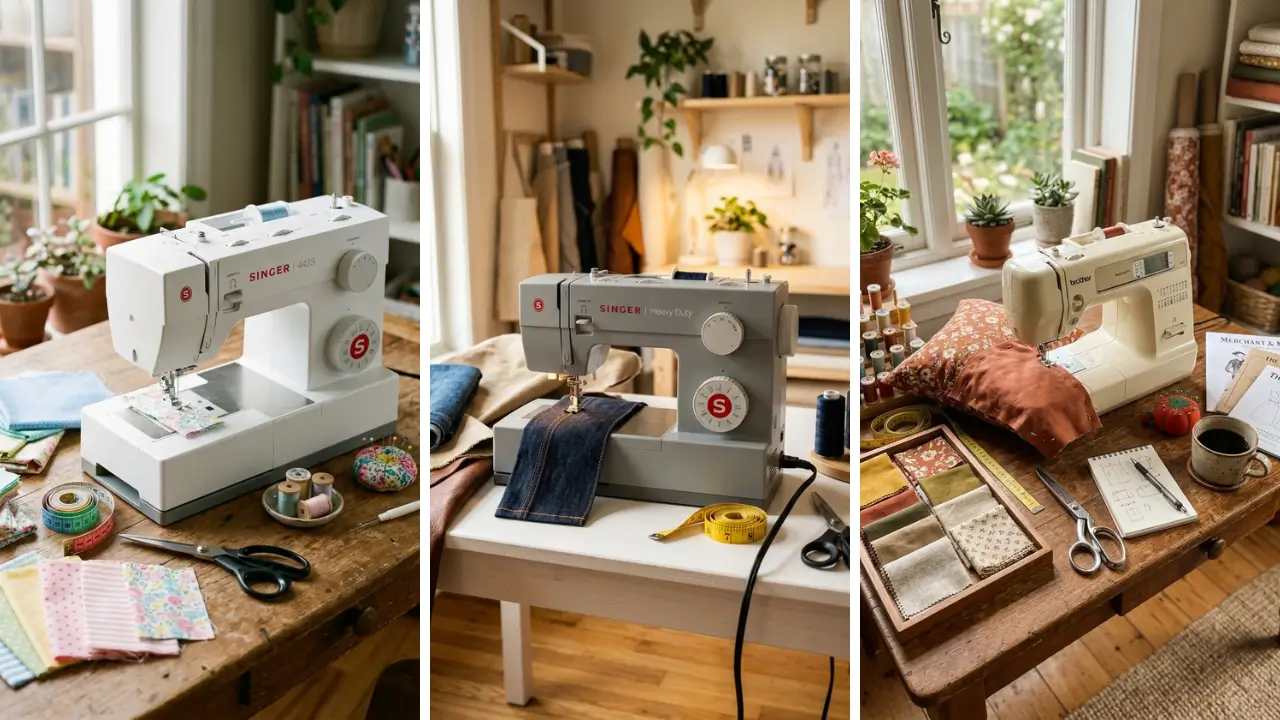
If you’re planning to sew upholstery fabric, canvas bags, or multi-layer quilted placemats, the Singer Heavy Duty 4452 is a powerhouse. It sews up to 1,100 stitches per minute and features a reinforced metal frame for stability. Beginners often underestimate how quickly a weak motor struggles with home decor materials.
This machine eliminates that problem entirely. It’s also straightforward to thread and operate, making it ideal for those just getting started with home decor sewing.
3. Janome 2212 — Best Budget Pick
Not ready to invest heavily? The Janome 2212 is a reliable, no-frills machine that delivers consistent stitching on everyday fabrics. It has 12 built-in stitches, a 4-step buttonhole, and a free arm for versatile use.
It won’t handle very heavy upholstery, but for lighter home decor projects like napkins, fabric baskets, bunting, and simple curtains, it’s more than capable. It’s also one of the most durable machines in its price range — many sewists keep their Janome machines for 10+ years.
4. Brother SE700 — Best for Embroidery + Sewing Combo
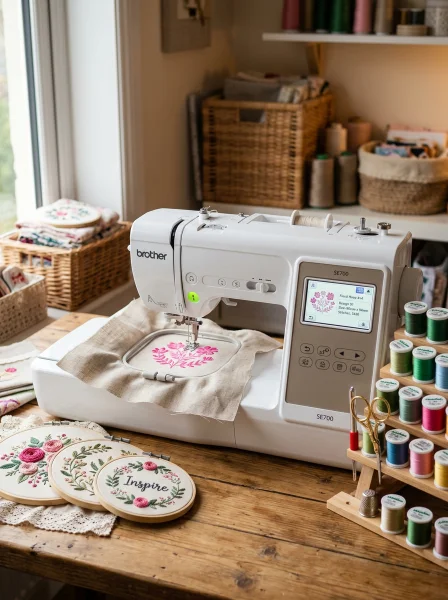
Want to add embroidered details to your home decor? The Brother SE700 combines a capable sewing machine with built-in embroidery functionality. You can personalize pillowcases, towels, and table linens with monograms or floral designs — all from one machine.
It connects via USB and has a color touchscreen display. For beginners who want to eventually level up their skills, this machine grows with you. It’s a smart long-term investment for creative home decor projects.
5. Singer Confidence 7469Q — Best for Quilters
Quilted throws, patchwork cushion covers, and fabric wall art all fall under the home decor umbrella — and the Singer Confidence 7469Q handles them beautifully. It comes with a quilting table, walking foot, and 98 built-in stitches. The quilting-specific accessories set this machine apart.
If your home decor vision includes anything layered or patchwork, this is your machine. It’s still beginner-accessible, with an automatic needle threader and clear stitch selection interface.
Tips for Getting Started with Home Decor Sewing
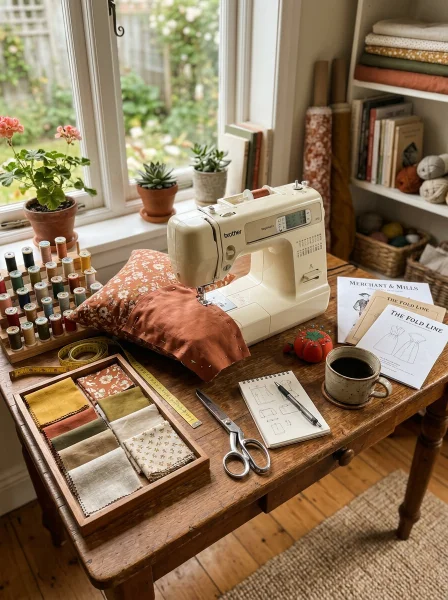
Choosing your machine is just the beginning. Here are practical tips to make your first home decor sewing projects a success — even if you’ve never threaded a bobbin before. Start with simple projects.
A throw pillow cover is the perfect beginner project — it’s just a few straight seams and an envelope closure at the back. There’s no zipper required and the results are immediately satisfying. Looking for inspiration?
There are plenty of fun crafts to make at home that pair perfectly with a new sewing machine. Pre-wash your fabric. Fabric shrinks.
Always wash and dry your fabric before cutting to avoid a beautifully sewn cushion cover that no longer fits your pillow after the first launder. Use the right needle. Home decor fabrics often require a denim or upholstery needle.
A universal needle will struggle and break. Match your needle type to your fabric weight — it’s a small detail that makes a huge difference. Iron as you go.
Pressing seams open with an iron might feel tedious, but it’s the secret to professional-looking finished pieces. Flat seams, crisp edges, and neat corners all start at the ironing board. Once you’re comfortable with your machine, you’ll find yourself naturally expanding into more complex home craft projects quick that combine sewing with other creative techniques like painting or stamping.
Home Decor Projects Perfect for Beginner Sewists
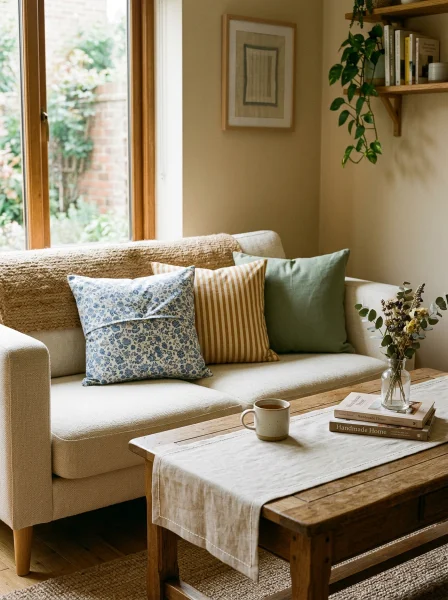
Wondering what to actually make once your machine arrives? These projects are beginner-friendly, visually impactful, and use minimal materials.
- Pillow covers — swap out every season, use bold prints or textures
- Table runners — a 3-hour project that instantly elevates a dining table
- Fabric placemats — great for practicing straight seams and mitered corners
- Simple curtain panels — rod pocket curtains are just one long seam on each side
- Tote bags — functional and fast, perfect for gifting
- Fabric storage bins — stiffen with interfacing for structure
Many of these projects also double as thoughtful gifts. If you enjoy making things for others, explore more handmade gift craft ideas that can be sewn, styled, or wrapped beautifully for any occasion. You’d be surprised how far basic sewing skills take you.
Even simple projects with affordable materials can look high-end when executed with care. Speaking of affordable — if you’re crafting on a budget, you might want to check out some dollar store crafts ideas that look surprisingly luxurious without breaking the bank.
What to Avoid When Buying Your First Sewing Machine
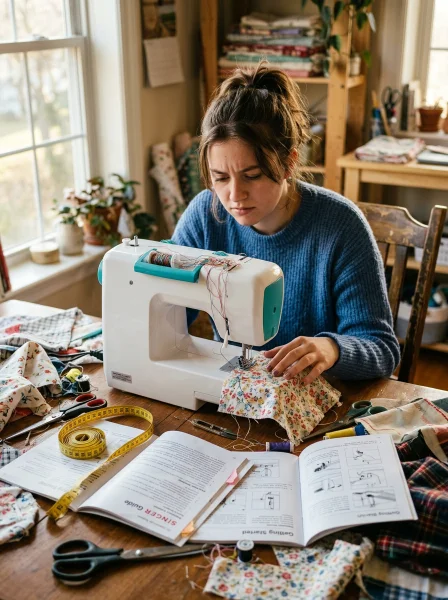
The sewing machine market is full of cheap, plastic machines that look appealing but fall apart within months. Here are the biggest mistakes first-time buyers make. Buying purely on price.
The cheapest machines often have weak motors, plastic internal parts, and poor tension control. Spending a little more upfront on a trusted brand like Brother, Singer, or Janome saves money and frustration long-term. Ignoring throat space.
Small throat space makes it nearly impossible to maneuver large fabric panels. For home decor sewing, this is a critical spec that many beginners overlook. Skipping the manual.
Every machine has quirks. Reading the manual — even just the threading and tension sections — will prevent 80% of beginner problems. Seriously, read it.
Conclusion
Getting into home decor sewing is one of the most rewarding creative hobbies you can pick up. The best beginner sewing machines for home decor projects (ranked) in this guide — from the versatile Brother CS6000i to the heavy-duty Singer 4452 — each offer a solid entry point into the craft without overwhelming complexity. The most important thing?
Just start. Pick a machine that fits your budget and project goals, grab some fabric, and make something. Your home will look better for it, your skills will grow faster than you expect, and you’ll wonder why you didn’t start sooner.
Sewing is also a gateway skill that opens up a whole world of handcrafting. Once you can sew, every creative project feels more achievable — from custom home decor to thoughtful, personal gifts that mean far more than anything store-bought. Ready to start your sewing journey?
Drop a comment below and share what home decor project you’re planning to tackle first — or share this article with a friend who’s been thinking about picking up sewing. Let’s inspire each other to create more and buy less!
Frequently Asked Questions
Q: What is the best beginner sewing machine for home decor projects? A: The Brother CS6000i is widely considered the best beginner sewing machine for home decor projects thanks to its 60 built-in stitches, wide extension table, and quiet but powerful motor. It handles a range of fabrics well and is intuitive for complete beginners.
The Singer Heavy Duty 4452 is a close second if you plan to work with thicker materials like canvas or upholstery fabric. Q: Can a cheap sewing machine handle home decor fabrics? A: It depends on the project.
Very budget machines (under $80) often struggle with thick fabrics like canvas, denim, or multiple layers of quilting cotton. For lighter home decor projects like simple curtains or napkins, a basic machine may work fine. But if you plan to sew pillow inserts, upholstery, or multi-layer items, investing in a mid-range machine will save you a lot of frustration.
Q: How long does it take to learn to sew home decor projects as a beginner? A: Most beginners can complete a simple throw pillow cover within their first two to three hours of practice. Within a few weeks of consistent sewing, you can comfortably tackle table runners, curtain panels, and tote bags.
Home decor sewing is more forgiving than garment sewing because fit isn’t a factor — straight seams and clean edges are all you need. Q: Which features should beginners look for in the best sewing machines for home decor? A: When evaluating the best beginner sewing machines for home decor projects, prioritize these features: a wide throat space for maneuvering large fabric pieces, a strong motor for thick fabrics, an automatic needle threader, adjustable stitch length and width, and at least 15 built-in stitches.
A free arm and extension table are also highly useful for home decor work. Q: Do I need an expensive sewing machine to make professional-looking home decor? A: Not at all.
Professional-looking results come from technique, not just equipment. Pressing seams, cutting fabric accurately, using the correct needle, and sewing slowly all contribute more to quality than the price of your machine. Many stunning home decor pieces are sewn on machines that cost under $200.
Master the basics first, and upgrade your machine only when your skills outgrow it.